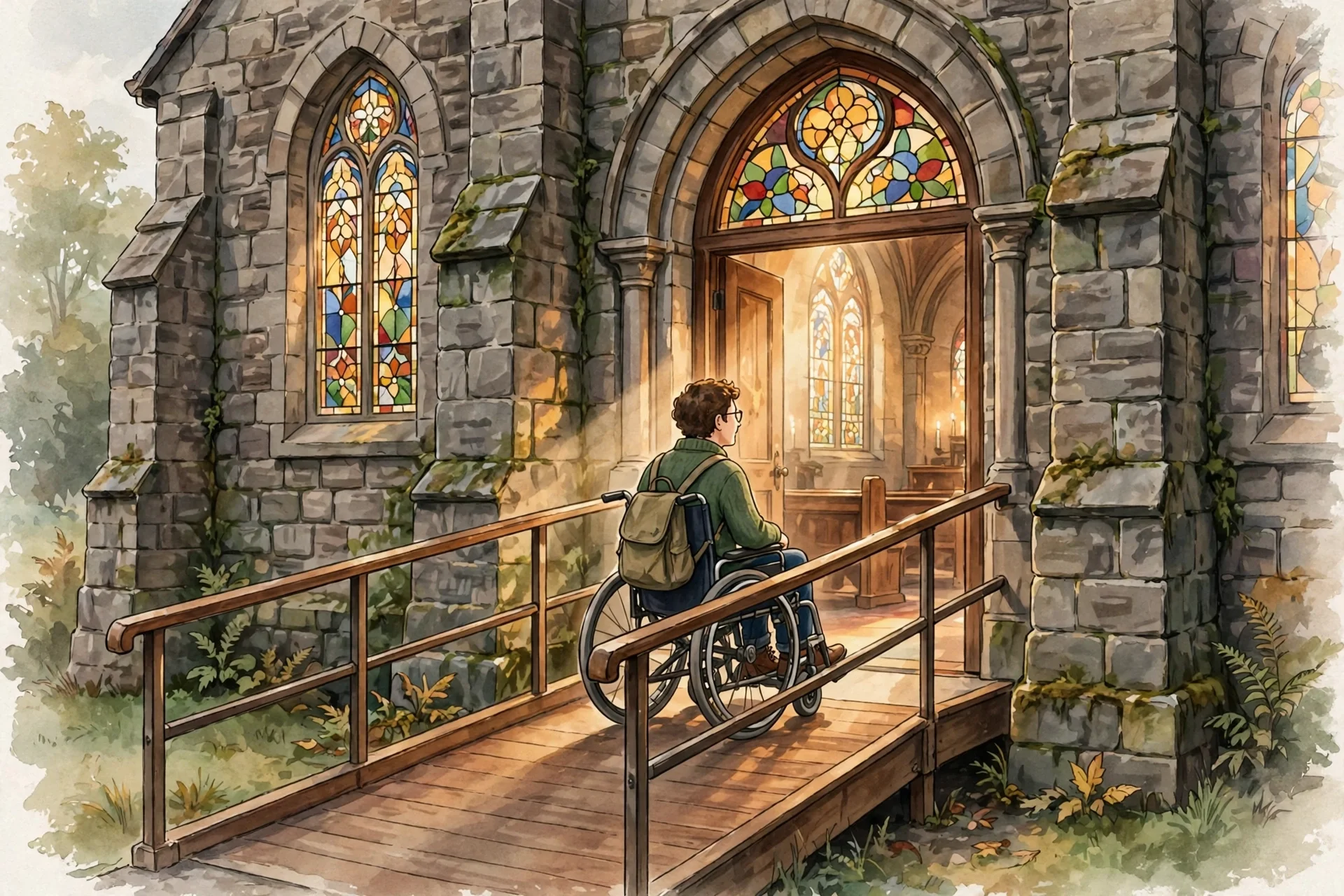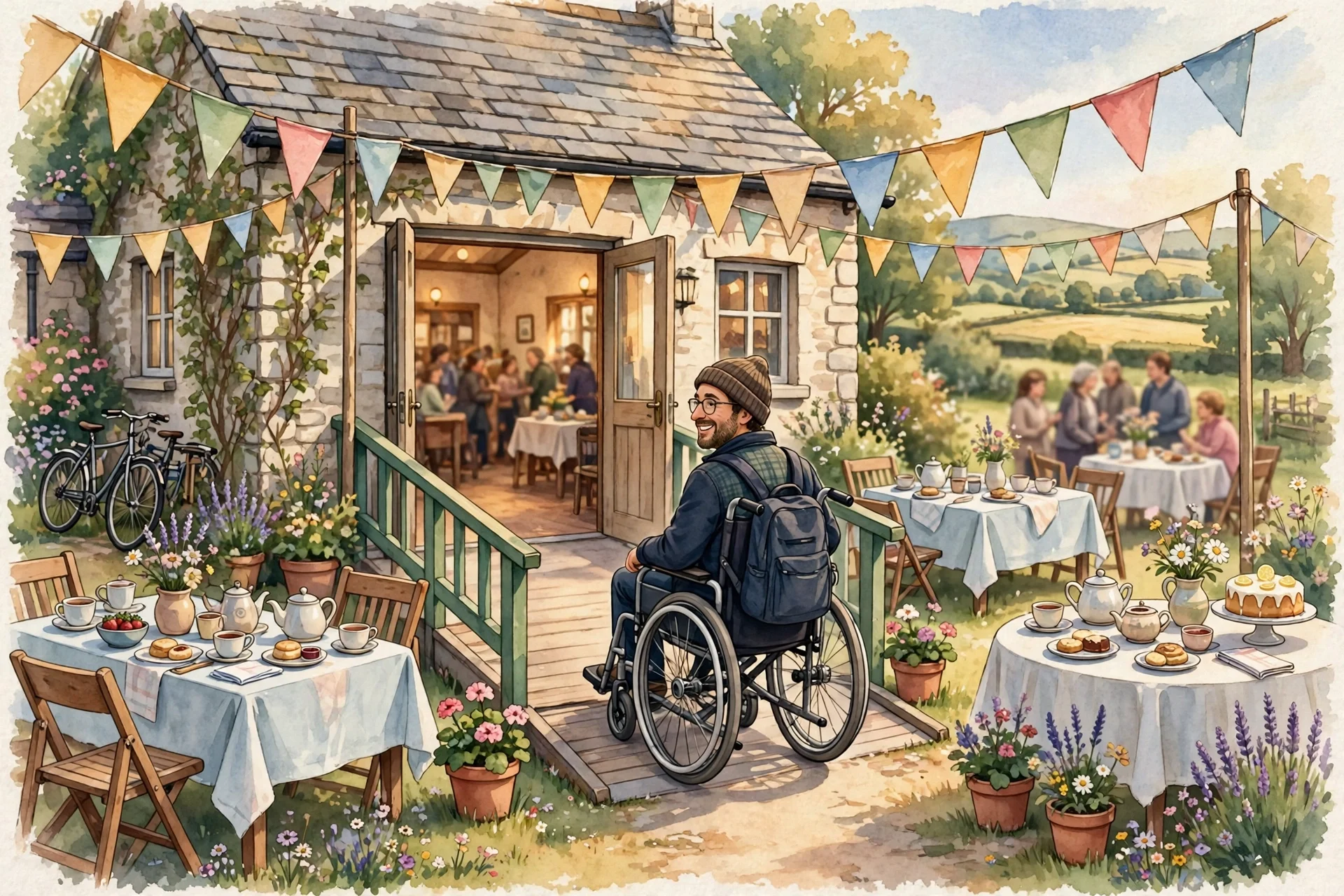
Village hall facilities vary widely and are often unpublished; confirm entrance, toilet and layout details with the booking secretary.
In brief
- Cambridgeshire ACRE: over 40 information sheets for trustees, including accessibility; nearly 40 village hall advisors nationally
- Devon audit: 290 halls audited; 49% seat 51-100 for a sit-down meal; hire £7-£30 per hour
- Ask in order: parking and entrance, hall floor, toilet, kitchen access, hearing and information
Why village halls are hard to judge from the outside
Cambridgeshire ACRE describes community buildings like village halls, pubs and shops as sitting at the heart of rural life, places for social events, learning, local services and support, and it offers trustees practical advice, training and a network of nearly 40 village hall advisors supported by the national ACRE network. Its members can access over 40 information sheets covering health and safety, storage, licensing, accessibility and VAT, and a Hallmark accreditation scheme gives committees a framework for reviewing how their building is run. That support exists because most halls are run by volunteer committees, not by professional venue managers, so access information is often held in one person's head rather than on a website. The Devon audit confirms the scale: 290 halls audited on site, run by committees of local volunteers, offering everything from amateur dramatics and choirs to food hubs, repair cafes and post offices. A hall that hosts a post office one morning and a children's party the next will have different access needs on different days, which is why a phone call to the booking secretary beats a website search.
The questions that matter, in order
Ask in this order, because each answer changes the next question. First, parking and entrance: is there Blue Badge parking, how far is it from the entrance, and is the entrance step-free with a door wide enough for your chair? Second, the main hall: is the floor level throughout, or are there steps to a stage, a kitchen or a meeting room, and is there room to manoeuvre and sit with companions rather than apart from them? Third, the toilet: is there an accessible toilet in the building, is it unlocked during your event, and is it a full accessible toilet or a standard toilet with grab rails? Fourth, the kitchen and serving area, if food is involved: can you reach the serving counter or hatch, and will someone bring food to your table if you cannot? Fifth, hearing and information: is there a hearing loop, is the event information in large print, and who is the contact if something goes wrong on the day? The Devon audit found hall hire ranging from £7 per hour to £30 for non-village residents, with 56 per cent of halls deriving over half their income from bookings, so halls want bookings; a clear access question is usually welcomed, not resented.
If the hall falls short, and how to help it improve
If the hall cannot answer, or the answer is poor, you still have options. Ask whether a different entrance, a portable ramp, or a rearranged layout would solve the problem for your event; volunteer committees can often move furniture or open a side door more easily than they can rebuild a toilet. Ask whether the hall is working towards Hallmark accreditation, which includes reviewing how the building is managed and maintained, and whether it has sought advice from its local ACRE advisor. And if you are a regular user, say so: halls that hear from wheelchair users directly are more likely to prioritise access in their next round of improvements than halls that never hear at all. The Devon audit's own conclusion points the same way: halls would benefit from funding to upgrade facilities and from inclusion and accessibility training. A village hall is a community asset, and the community includes you; the right questions, asked early and kindly, are often enough to make it work.