Disposal rules from UK government waste-battery guidance and council recycling pages (Derby City Council), checked 8 Oct 2026. Fire statistics from CIWM battery report coverage. UK-specific.
Why batteries must never go in the bin
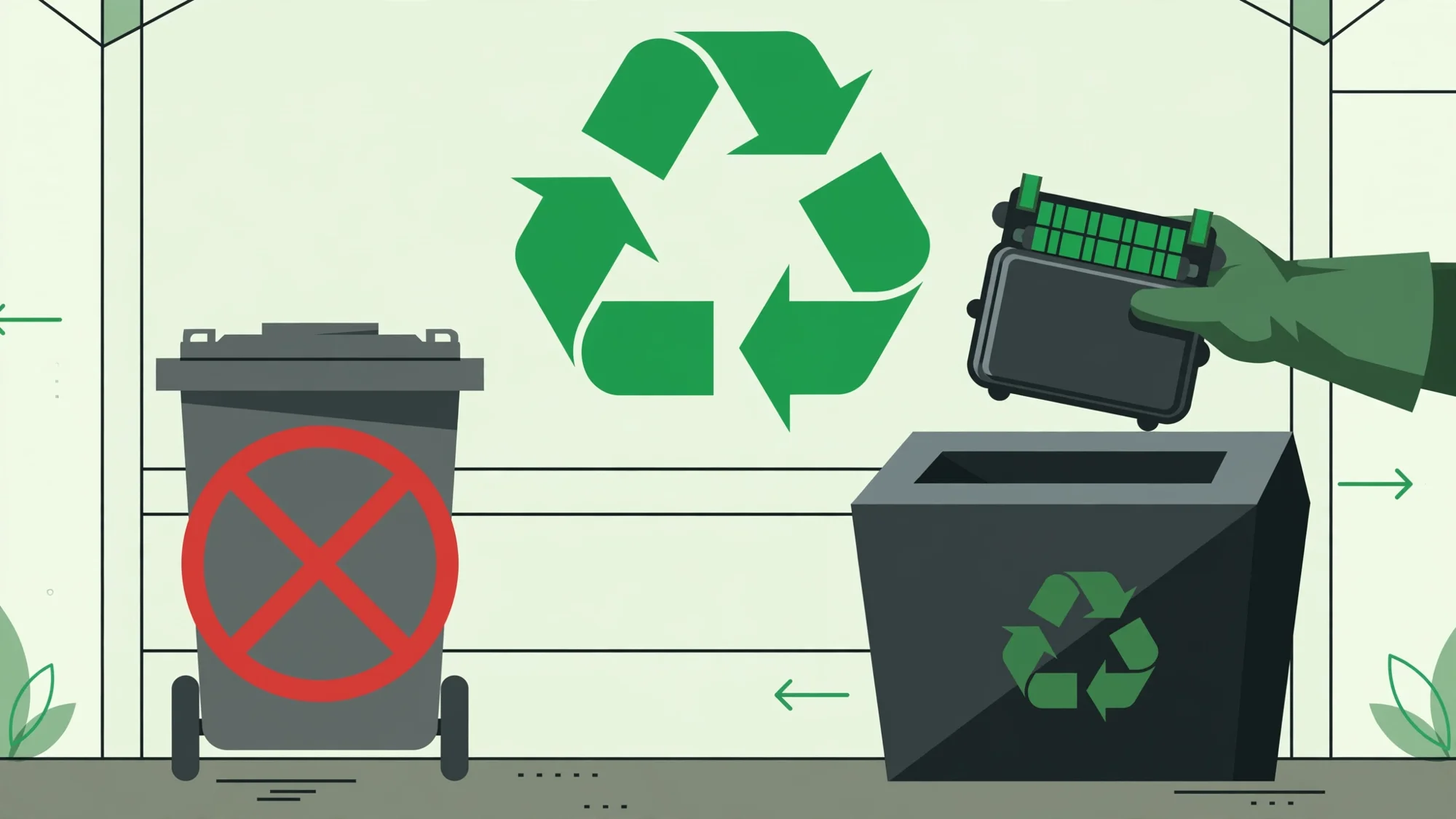
Lithium-ion and lead-acid wheelchair batteries are classed as hazardous waste. When they are crushed in refuse trucks or at waste treatment plants, the chemicals inside can combust and start fires. UK councils are explicit: do not put batteries, or anything containing batteries, in your wheelie bins. Industry analysis has put the toll at nearly one battery-related fire per day in the UK, with hundreds of landfill fires a year costing over £150 million annually. A dead wheelchair battery is not general rubbish; it needs a separate route from the moment it leaves your chair.
Step 1: make the old battery safe
Stop using a battery that shows swelling, unusual heat, odour, discolouration or leakage, and replace it promptly. If the battery is removable, take it out following the manufacturer's instructions. If the battery is built into the device and cannot be easily removed, do not try to prise it out yourself; take the whole product to the recycling point with the battery inside. Tape over exposed terminals to prevent short circuits, store the battery somewhere cool and dry away from flammable materials, and do not leave damaged batteries piled up at home. For a battery that is damaged or leaking, treat it as hazardous and move it to a recycling facility without delay.
Step 2: find the right recycling route
Every local council operates household waste recycling centres that accept batteries, and many supermarkets and electrical retailers run battery collection bins. The Recycle Your Electricals website (recycleyourelectricals.org.uk) lets you search for your nearest point by postcode. In the UK, waste batteries must be handled by approved treatment operators under environmental permits; the government's guidance on treating and recycling waste batteries sets out the rules. Large wheelchair batteries may be too big for shop collection bins, in which case the household waste recycling centre is the right destination. If the chair itself is going too, the whole unit counts as waste electrical and electronic equipment (WEEE) and goes to the same kind of facility.
Step 3: consider reuse before recycling
If the battery or the chair still works, selling or donating it keeps it in use longer and is better than recycling. Charities, second-hand mobility shops and community reuse schemes may take working equipment. Only recycle what is genuinely at end of life. And when you buy the replacement battery, ask the supplier whether they take back the old one; many mobility dealers and battery retailers operate take-back schemes that put the old unit straight into the proper recycling stream.