General guidance on transfer boards; suitability for any individual depends on assessment by an occupational therapist or physiotherapist. Product specifications from Etac (UK market). Transfer technique adapted from WorkSafeNB's Practical Techniques for Client Handling.
Types and Materials: From Rigid Boards to Sliding Systems
Transfer boards come in several families, and the differences matter. The simplest are rigid flat boards, usually moulded from polyethylene or a similar plastic. Etac's Immedia E-Board is a good example of the modern version: only 6 mm thin, light, and slightly flexible, which makes it easier to slide under the thigh and remove afterwards than an old-fashioned thick wooden board. Rigid boards are the everyday workhorse for short, seated transfers between level-ish surfaces.
Curved boards add a gentle banana shape that suits users who transfer with a sweeping motion, while boards with wings or flaps add stability. On the E-Board, the flap version folds along one side, gives extra sturdiness, and carries a wing that stabilises the board and shields the user from the wheelchair's wheel during the slide. That wheel contact is a real-world snag point: a board that shifts against a tyre mid-transfer is how slides stall or tip.
Specialist boards serve particular transfers. Etac's Dolphin, for instance, is shaped for toilet transfers, with cut-outs that let it sit against the wheelchair wheel and non-slip pads underneath so it stays put. Then there are horizontal sliding boards, such as the Etac 2Move, designed for transfers between two flat surfaces at similar heights, like bed to shower trolley; these are always used with a low-friction cover that slides around the board to reduce friction. The 2Move's core is plywood with a nylon cover, and it comes in lengths up to 180 cm for wide gaps.
Materials set the trade-offs. Polyethylene boards are light and easy to carry; fibreglass boards are stiffer; older plywood boards are heavier but durable. Thinner boards slide under the body more easily but need both ends well supported. Whichever family you look at, the intended transfer, the gap width, and the user's strength decide the choice, not the other way round.
Choosing the Right Size and Weight Capacity
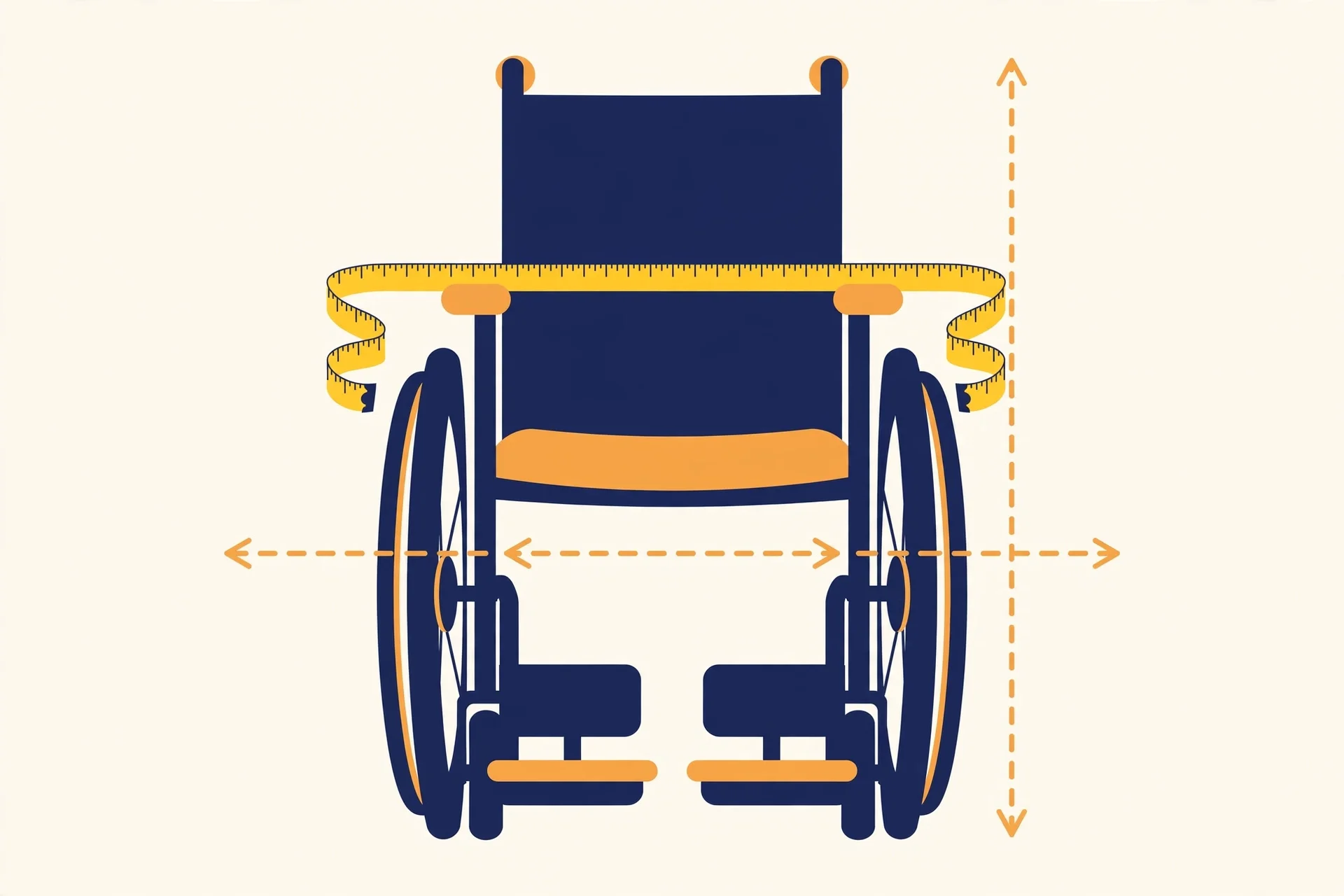
Length is the first sizing decision, and the rule is simple: the board must bridge the gap with both ends resting securely on the two surfaces. Etac's E-Board line shows the typical range, from a 45 cm small board for tight gaps up to a 75 cm extra-long for wider ones, in 20 to 33 cm widths. Measure the actual gap between your wheelchair seat and the bed or toilet you transfer to, then choose a board that covers it with a comfortable margin on each end. A board that is too short perches precariously; one that is far too long becomes awkward to position and store.
Width is about comfort and stability. Wider boards (around 30 cm) give more sliding surface and feel more secure, especially for larger users, while narrow boards are lighter and easier to slip into a bag. The E-Board's handle is worth noting here: a good grip point makes positioning the board much easier, particularly when placing it behind you by feel.
Weight capacity is non-negotiable. The standard E-Board is rated for a maximum user weight of 150 kg; heavier-duty horizontal boards such as the 2Move range from 150 to 300 kg. Check the specification sheet for the exact model, not the product family, and look for recognised markings such as the CE mark. Capacity covers the person only in most specifications, so if in doubt, ask the supplier.
Finally, match the board to the transfer and the person. A toilet transfer may need a shaped board with cut-outs; a car transfer needs something short and portable that lives in the vehicle; a bed transfer may suit a wider board. Portability matters more than people expect: the E-Board is designed to be stored in the back of the wheelchair so it is actually there when needed. Etac's own guidance stresses that board selection should be tested with the individual user for the intended transfer situation, and that selection tools are no substitute for an individual assessment by a competent carer or clinician. If trunk control is limited, a board may not be suitable at all, which is a decision for an occupational therapist, not a catalogue.
Transfer Technique, Step by Step
Technique matters as much as the board. The following sequence is drawn from WorkSafeNB's practical client-handling guidance for assisted transfers, adapted for the common bed-to-wheelchair case; if you transfer independently, your occupational therapist will have taught you a personalised version, and that takes precedence.
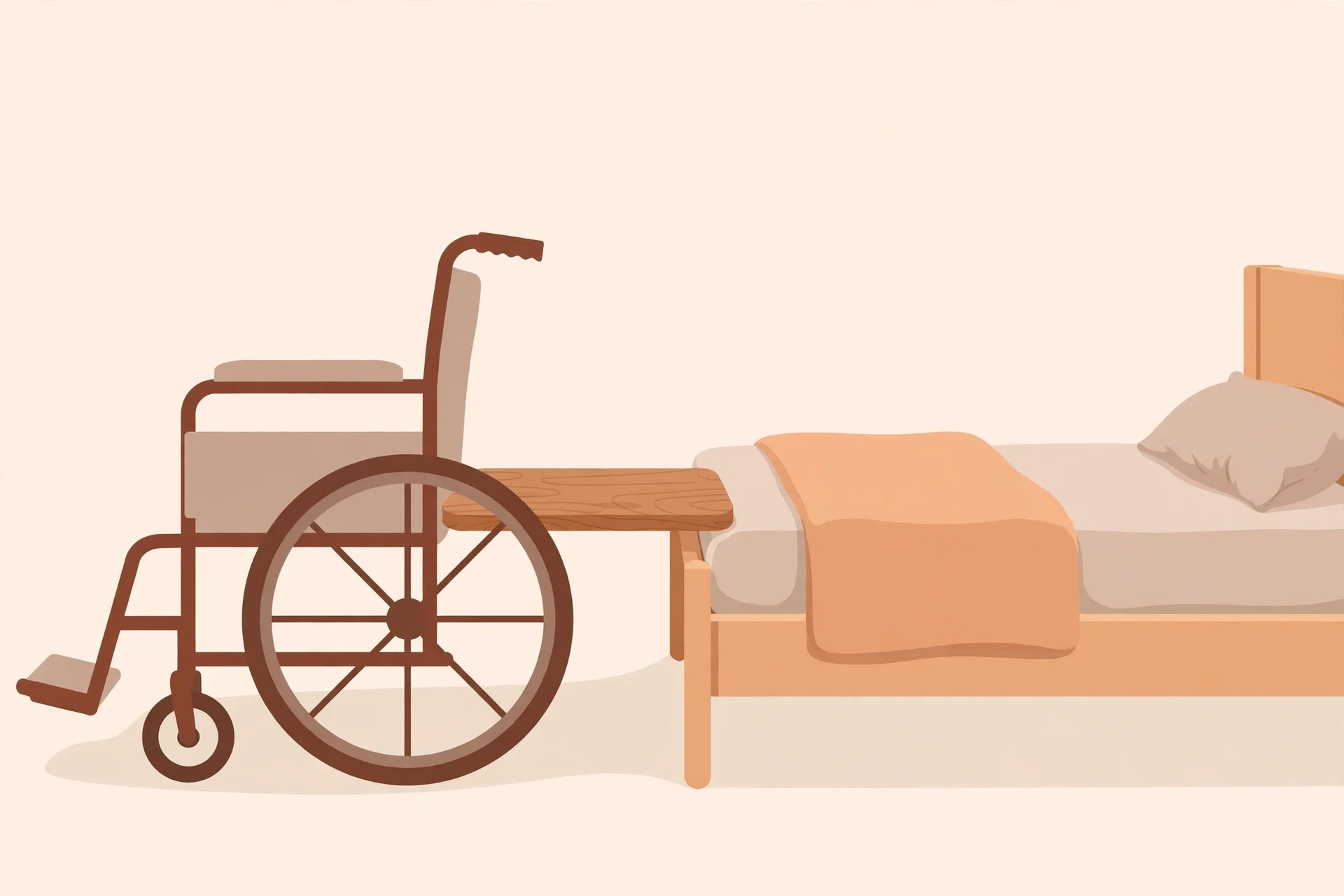
- Lock the brakes on both the wheelchair and the bed. Nothing moves until both are locked. - Position the wheelchair close to the bed at a slight angle, and remove or swing away the armrest and footrest on the transfer side. The board needs a clear path. - Aim for the bed to be slightly higher than the wheelchair seat; gravity then assists the slide rather than fighting it. - The person leans away from the wheelchair, places a hand down on the bed for support, and the board is slid under the thigh and buttock closest to the wheelchair. Apply gentle downward pressure while sliding it under to avoid pinching skin. - Angle the board so its far end rests at the back of the wheelchair seat, forming a smooth bridge. - To move, the person leans the head and shoulders forward and pushes through the arms (and legs, if able), sliding across the board in small shifts rather than one lunge. A helper can steady the knees, offer a transfer belt at the hips for guidance, and support balance, but should guide the movement, not drag the person across. - Never grab the end of the board with the fingers; pinched fingers are a classic board injury. Keep hands flat on the board or on the surfaces. - Once seated in the chair, the person scoots back to the middle of the seat, the board is removed, and the armrest and footrest are replaced.
Two safety notes round this out. WorkSafeNB lists lack of trunk control, lack of cooperation, and aggression as contraindications for board transfers: the technique assumes the person can sit upright and follow the sequence. And for a first-time transfer, or where weight or unpredictability is a concern, a second person should be present. Boards are classed as a complex transfer technique for good reason.
Care, Inspection, and When to Replace
A transfer board is a simple device, but it carries your full weight several times a day, so inspection is a habit worth building. Before each use, give the board a quick once-over: look for cracks, warping, sharp edges, or a surface that has gone rough or worn smooth. Check any handles, wings, or flaps for splits or loose fixings, and check non-slip pads underneath for wear. A cracked board can fail without warning, so any structural damage means immediate replacement, not repair.
Cleaning is straightforward. Etac's guidance for the E-Board is to wipe it down with soapy water or a suitable disinfectant; keep it simple, let it dry fully, and avoid harsh solvents or abrasive pads that could roughen or weaken the surface. Store the board flat or as the maker recommends, in a dry place; the E-Board's slim profile means it can live in the back of the wheelchair, which also means it is less likely to be left behind.
Replace the board when inspection fails it: visible cracks, permanent bending, delamination, damaged handles, or a surface too worn to slide safely. Also revisit the choice itself if circumstances change. A board that was fine when transfers were easy may be wrong after surgery, a change in trunk control, or a new chair with a different seat height. Weight capacity deserves a re-check too if the user's weight has changed significantly. When in doubt, bring the board to your next occupational therapy review and ask for it to be reassessed alongside the transfer technique.