Activity targets follow US guidelines (NCHPAD/CDC); consult your doctor or physiotherapist before starting a new exercise programme.
How much activity to aim for
The US physical activity guidelines apply to adults with disabilities too: at least 150 minutes of moderate-intensity aerobic activity per week, plus muscle-strengthening activities covering the major muscle groups on two or more days. The 150 minutes do not need to come in long sessions — the National Center on Health, Physical Activity and Disability (NCHPAD) notes they can be accumulated in chunks as short as one to two minutes. A CDC infographic for adults with disabilities frames the same target as at least 2.5 hours per week. A practical intensity check: at moderate intensity you can talk but not sing. If you are new to exercise or manage a health condition, talk to your doctor or physiotherapist before ramping up, and build gradually rather than jumping to the full target in week one.
Equipment that works from a wheelchair
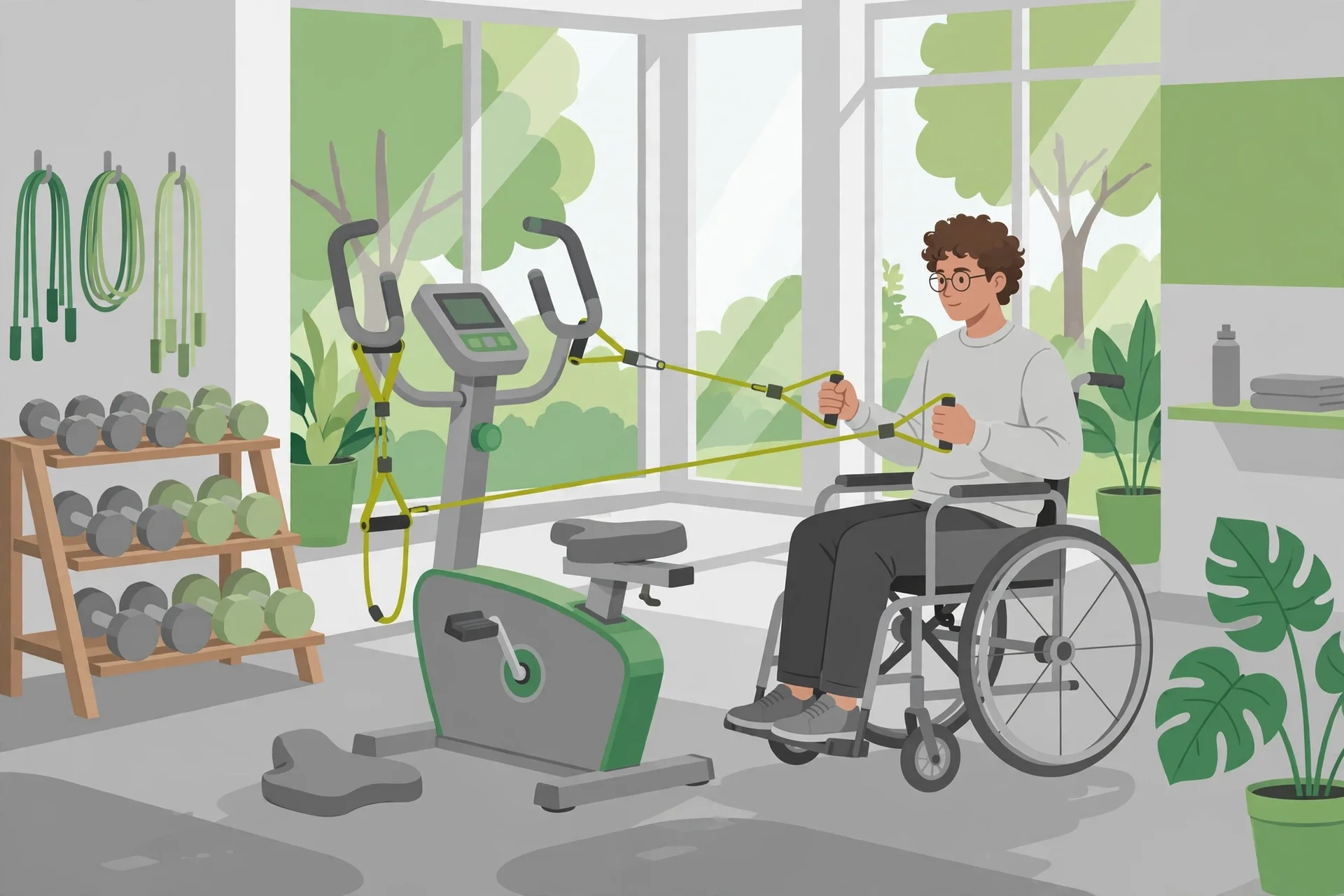
Most gyms already own equipment you can use without transferring out of your chair. The arm ergometer (hand cycle) is the centrepiece — look for one with a removable seat so you can wheel straight up to it. Resistance bands are cheap, portable and adaptable to every major muscle group; dumbbells work for upper-body strength; and many fixed resistance machines can be used from a wheelchair if the seat is removable or the machine is approached from the side. When touring a gym, check the details that make or break access: step-free entry to the gym floor, enough space between machines to manoeuvre a wheelchair, height-adjustable equipment, and staff who know how to adapt exercises. Ask for an induction focused on the machines you can actually use.
Accessible workout options to try
Beyond the gym floor, several sports are built around wheelchair users. The CDC lists wheelchair pushing, swimming, handcycling, and wheelchair basketball or tennis as recommended options matched to ability. Swimming deserves special mention: the water supports body weight, which suits people with limited trunk control, though you will need a venue with a pool hoist and accessible changing rooms. Handcycling clubs often lend adapted bikes for trial sessions. If you prefer group energy, wheelchair basketball and tennis clubs welcome beginners and usually provide sports chairs to try before you commit to buying one.
Matching options to your barriers
NCHPAD recommends starting with an honest look at what holds you back — physical barriers (pain, fatigue, transport) and emotional ones (self-consciousness, not knowing where to start) — then matching the activity to the person, not the other way round. Practical fixes: choose a gym on an accessible bus route or with disabled parking bays; book sessions at off-peak hours when the floor is quieter; bring a friend for the first visits. The CDC also suggests health professionals use the "teach-back" method — asking you to explain the plan in your own words — to confirm you understood the advice. Use the same trick on yourself: if you can explain your weekly plan in one sentence, you are ready to start.