Transfer procedures from WestJet's official mobility assistance page and Southwest Airlines' official help centre (lift/transfer assistance), verified 2026-10-18. Procedures quoted are airline-specific; confirm with your own airline before travel.
What an aisle chair actually is
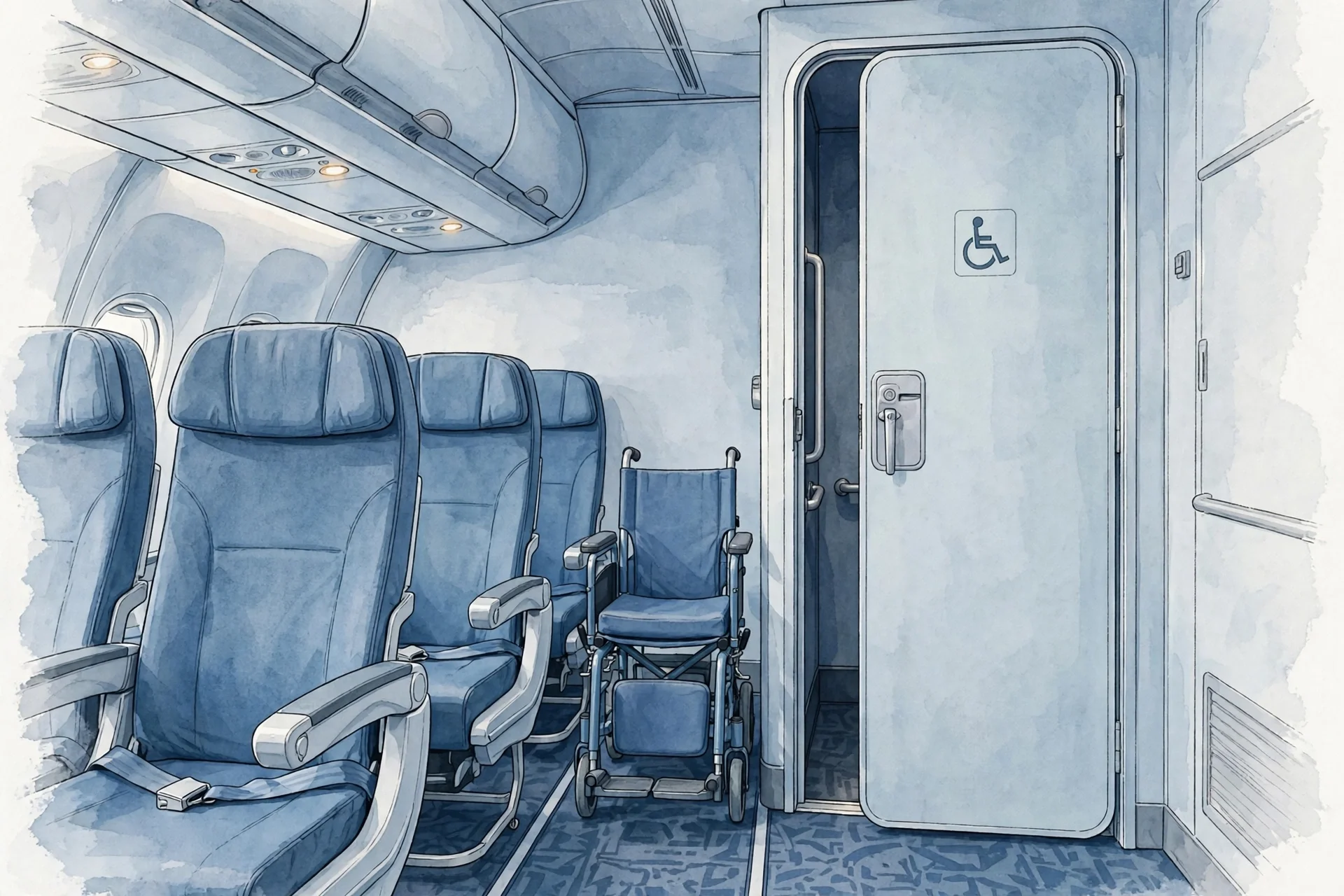
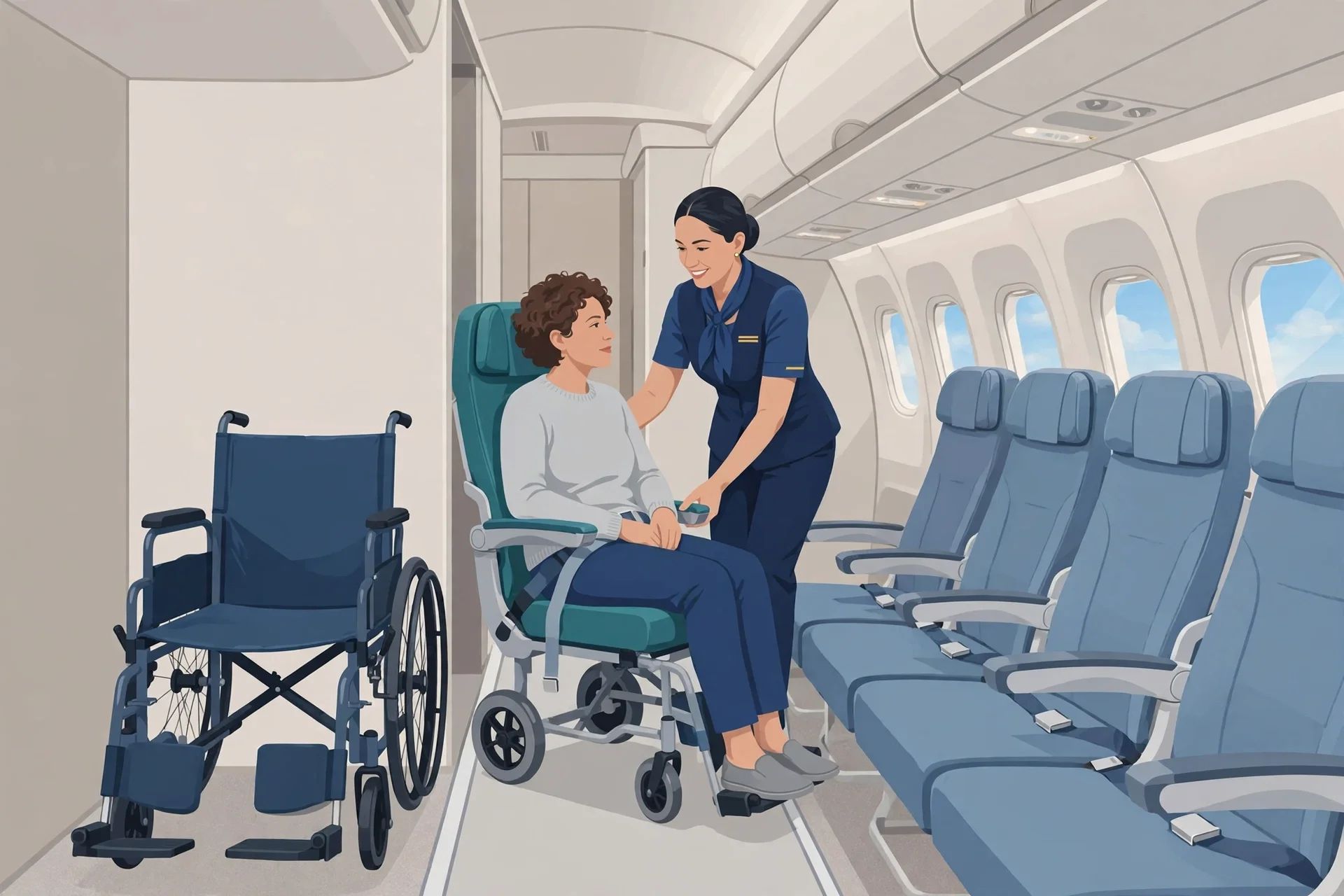
Your own wheelchair is too wide for the aircraft aisle, so airlines keep a slim transfer chair — often called an aisle chair or onboard wheelchair — for the last few metres of the journey. Staff wheel it to the aircraft door, you transfer from your own chair into it, and they push it down the aisle to your seat, where you transfer again. The same chair is used during the flight if you need the lavatory.
WestJet, for example, builds its mobility assistance around three options at booking, and the third covers passengers who need help getting into their seat — either staff-assisted or self-directed with the aisle chair. That option is for guests who use a wheelchair at all times and cannot walk onboard to their seat. Southwest stations a narrow aisle-sized wheelchair at every gate, plus a Passenger Transfer Kit at each gate containing a slide board and a transfer sling for assisted moves.
Booking it right
The single most important step happens before travel day. When you book, add the mobility assistance request to your reservation — on WestJet's booking flow it sits on the Guest details page as the mobility-assistance request, with the transfer option spelled out. If you booked through a contact centre or travel agent, they can add it too, and you can update it later through Manage Trips with your reservation code.
If you need a seat with a movable aisle armrest to make the transfer easier, Southwest points passengers to its seat specifications page to find those seats and to request a specific seat to accommodate the disability. Tell the airline in advance whether you transfer independently, need a slide board, or need staff to lift you — the equipment they bring to the gate depends on what you declared.
On boarding day
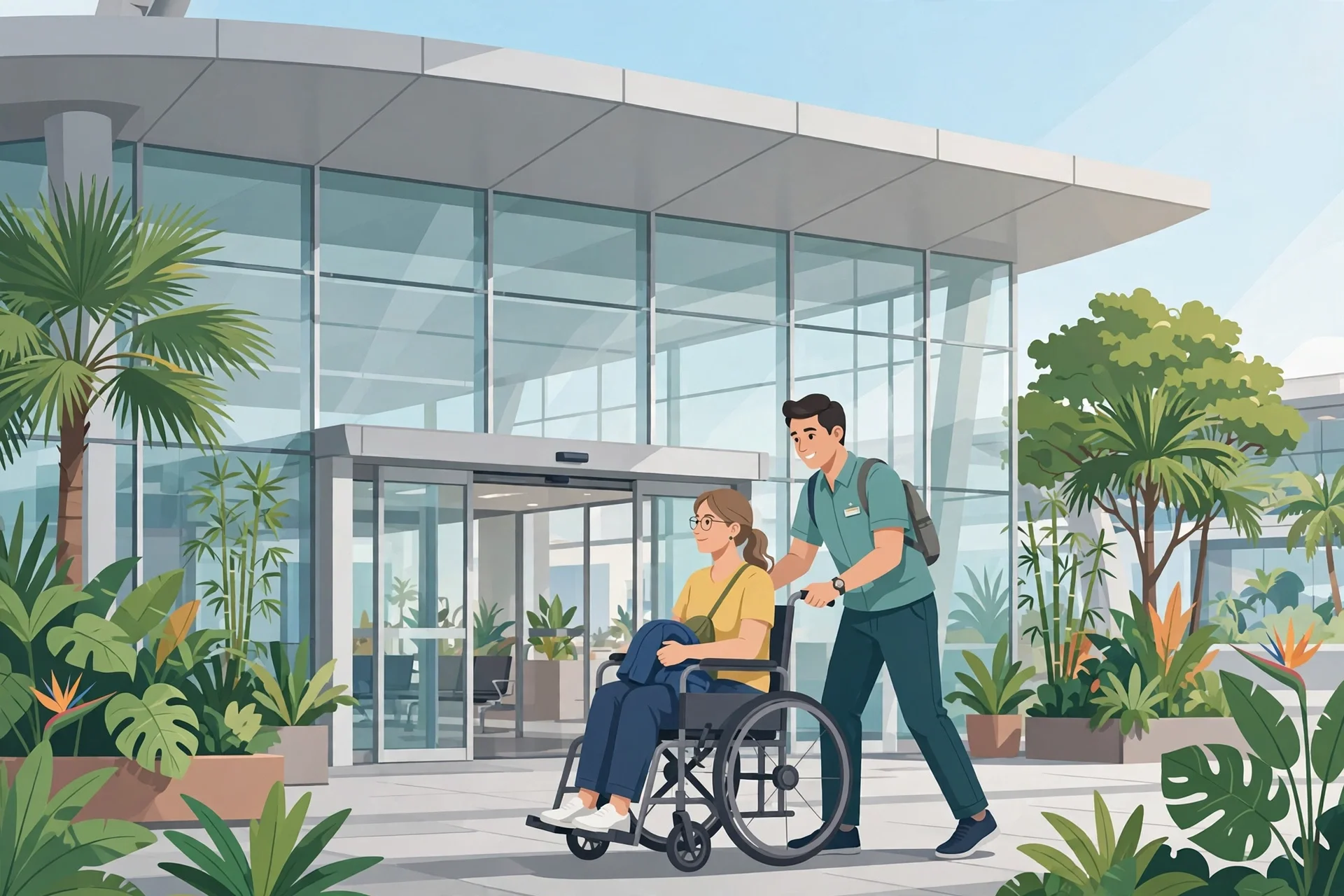
Arrive with margin: WestJet recommends being at the airport at least 30 minutes before the check-in cut-off time so an agent can confirm your assistance request, answer questions and get you through check-in. Then speak with an agent at check-in about your transfer plan so the right equipment and staff are ready.
At the gate, notify a customer service agent of your needs before boarding and wait for preboarding — airlines board passengers who need extra time first. Southwest asks you to do exactly this, then direct whoever is assisting you on how best to help lift and transfer you and your equipment: nobody knows your transfer better than you. Note the limits: WestJet caps staff transfer assistance at 200 kg (440 pounds) for safety, and where a mechanical lift and trained staff exist it may be used instead; where it is not available, a manual transfer is provided. Your own wheelchair is gate-checked and returned to you at the aircraft door on arrival.
During the flight
Once you are in your seat, the aisle chair stays available. If you need the lavatory, tell a flight attendant: crew will bring the onboard wheelchair and assist with transfers between your seat and the washroom, and push you to the lavatory door. Southwest is explicit about the boundary — flight attendants do not provide lift or transfer assistance onboard, but assistance to and from the lavatory (not inside it) using the onboard wheelchair is available.
WestJet's crew likewise assist with transfers between seat and washroom, offer support entering and exiting, and help with onboard tasks like stowing carry-on items. If you did not arrange assistance in advance, tell the cabin crew during the flight that you will need help at your destination — they can note it for the arrival team.