Airline requirements depend on the carrier, aircraft and device. The 2026 IATA guidance and airline information below were checked on 29 September 2026; confirm the rules for your flight.
In brief
- Give the airline the exact chair configuration and battery information before travel.
- Use the manufacturer's instructions for safe isolation and handling; do not borrow steps from another model.
- Agree the handover and return points and document the chair's condition.
Before contacting the airline
Collect the chair model and serial number, dimensions in its travel configuration, total weight, battery type and rating, and the manufacturer's transport instructions. Photograph the chair from several sides, including the control, seating and detachable parts. Note which parts you need to retain with you. This record helps the airline assess the actual device and gives everyone a common reference at handover.
A specification for a similar model is not enough. Batteries, seat options and accessories can change dimensions and handling steps. Ask the manufacturer or supplier for the correct manual if the instructions are missing.
A handover record with a clear purpose
| Record | Purpose |
|---|---|
| Identity and contact | Connect the equipment with its owner. |
| Condition photographs | Show the configuration and visible condition before travel. |
| Approved handling instructions | Reduce guesswork about moving and preparing the chair. |
| Return arrangement | Make the intended collection point explicit. |
Get a flight-specific answer
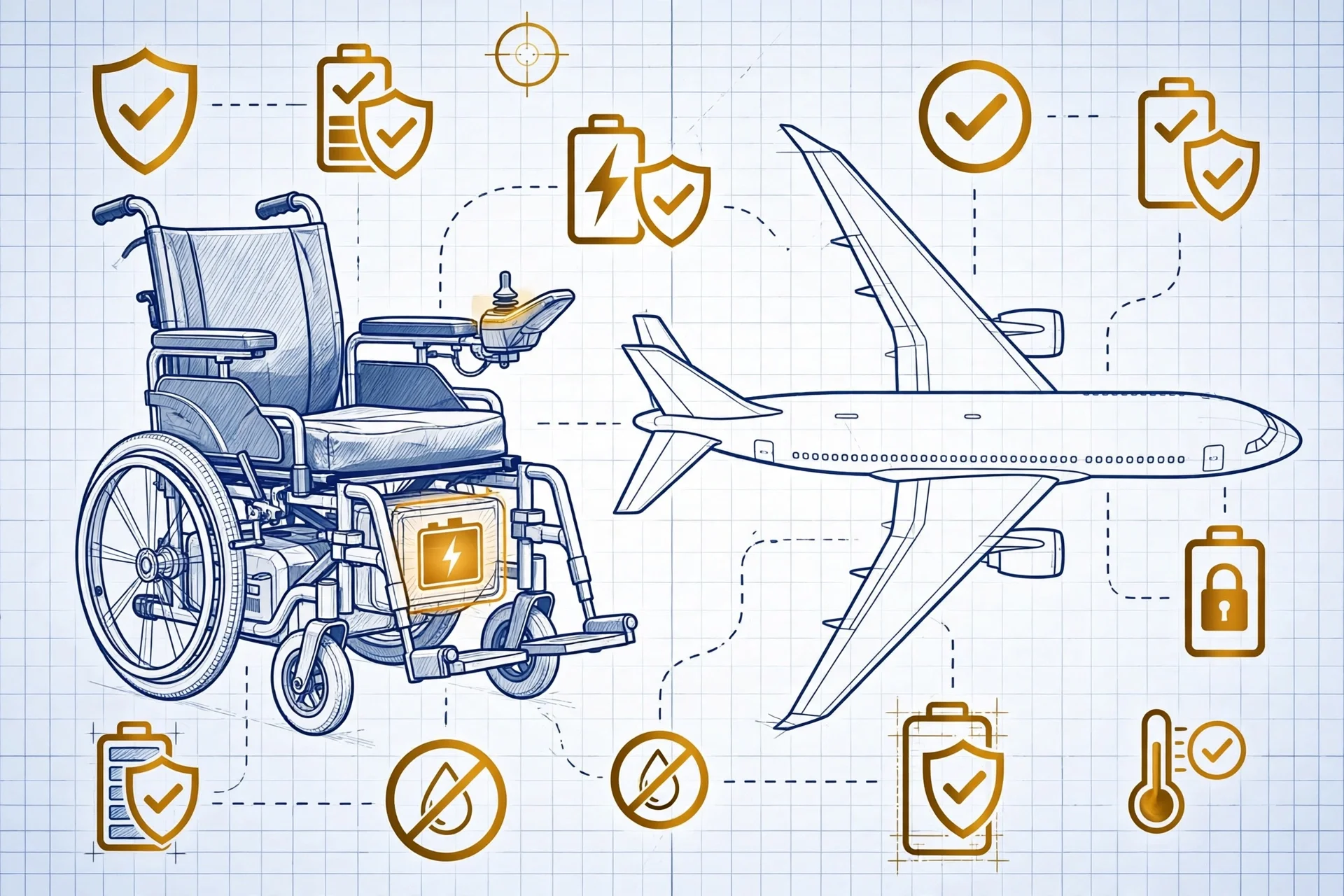
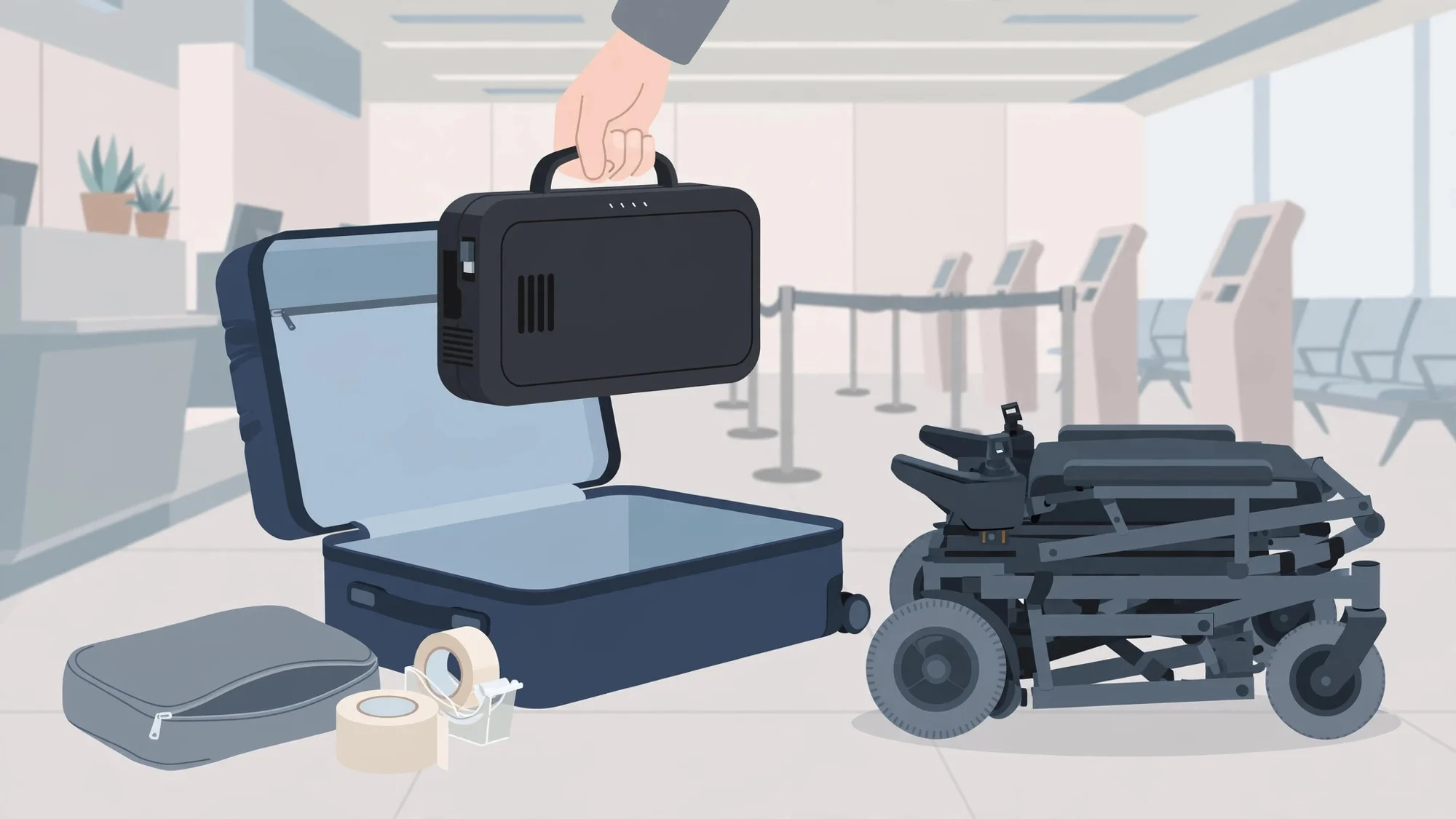
Contact every operating airline early, especially for a powered chair or an itinerary with connections. Ask whether the device can be accepted on each aircraft, what information or approval is needed, and whether the battery stays fitted or must be removed under the airline's current rules. Singapore Airlines, for example, requests contact at least 48 hours before departure and requires approval for battery-powered mobility aids. Its aircraft hold dimensions and battery guidance are specific to that carrier.
The IATA 2026 mobility-aid guidance describes information airlines need to accept and load a device. It is a useful preparation reference, but the airline must confirm the handling plan for your actual chair and flight. Keep that confirmation with the journey documents.
Agree how the chair will be made safe
Show staff the manufacturer-approved power-off or lockout method and any permitted way to secure moving parts. The IATA guidance lists several possible approaches to isolating electrical circuits; which one applies depends on the device design. Never disconnect cables, remove batteries, lift by an unfamiliar point or ask staff to do so because another chair's instructions recommend it.
Make a short handover sheet with the approved method and the location of the longer manual. Confirm which accessories travel attached to the chair and which are carried separately, with labels that connect them to the booking.
Plan the two transfers
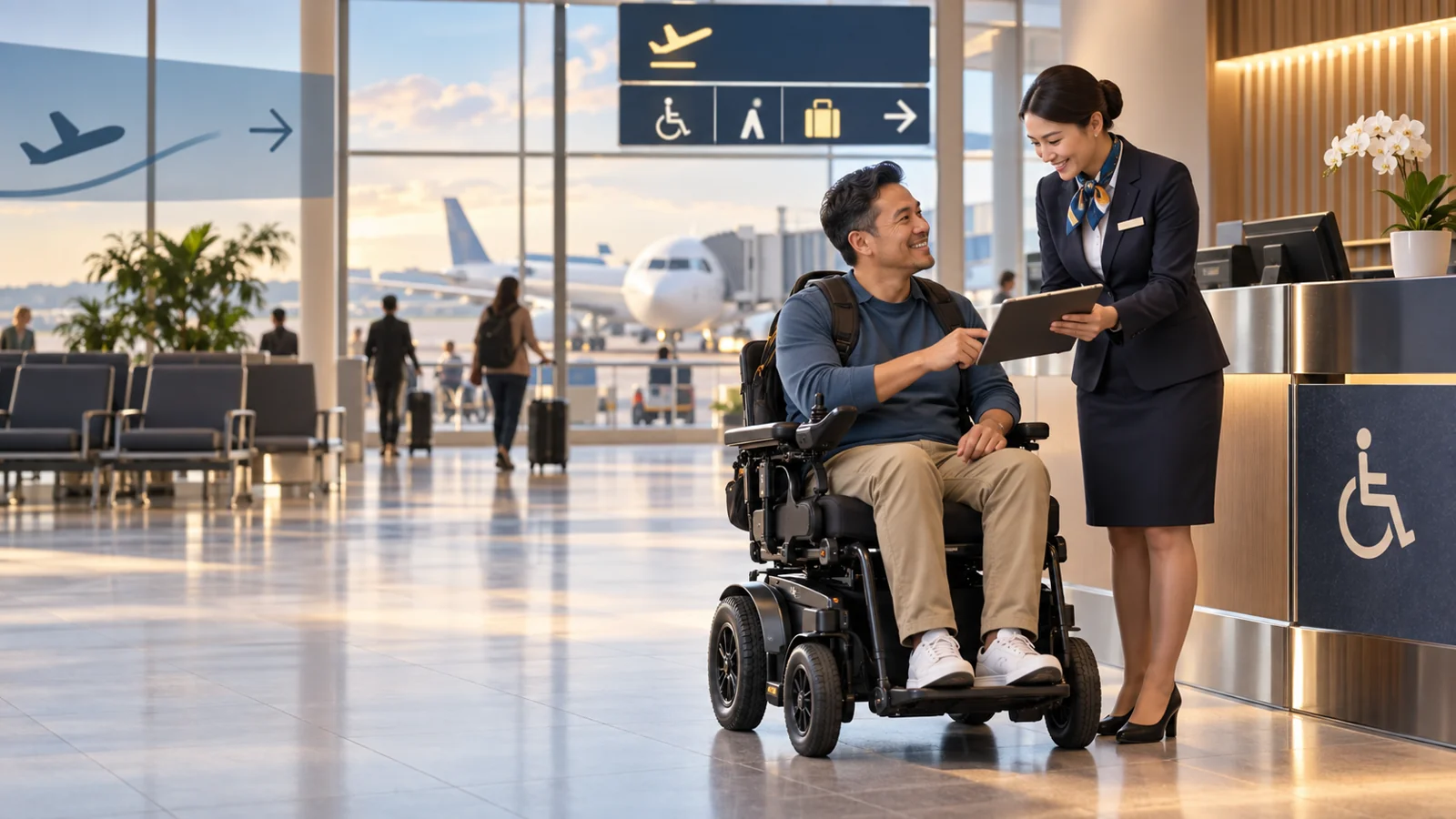
Ask whether you can use your chair to the gate, how you will transfer from it, and where it will be returned at the destination or connection. Describe any help needed to move between the chair, an aisle chair and the aircraft seat. Include the journey from the returned chair to onward transport, not just the flight itself.
At a connection, confirm that both the passenger assistance request and the chair's handling instructions reach the next operating carrier. Keep a copy of the agreement and the chair photographs available without relying on airport Wi-Fi.
Inspect the return and report problems
When the chair returns, compare its condition and parts with your photographs before leaving the collection point. If a component is missing, damaged or behaving unexpectedly, report it through the airline's process and keep the reference number. Do not continue to use equipment whose safe operation is in doubt. Follow the carrier's current reporting instructions and any deadline that applies to your itinerary.