This is an international planning checklist, not a statement of one worldwide rule. Heathrow, the U.S. Department of Transportation and IATA sources were checked on 29 September 2026; confirm the rules for every airline and airport on your itinerary.
In brief
- Describe where you need help, whether you can transfer or walk, and whether you bring your own mobility device.
- Check every operating airline and connection rather than assuming a booking note transfers automatically.
- Carry a short equipment and assistance record that works offline.
At booking: describe the complete journey
Contact the airline as soon as the itinerary is known. Describe the help needed from the terminal entrance or check-in point to the gate, onto the aircraft, during a connection and from the arriving aircraft to your onward transport. Explain whether you can walk any distance, use stairs, transfer between seats or travel without your own chair. Say if a companion is travelling with you and what help that person can realistically provide.
Different airports and airlines arrange these services differently. Heathrow asks travellers to request assistance through their airline at least 48 hours before a flight. The U.S. Department of Transportation advises making the request early and confirming needs with every airline involved. Treat those as examples of why early, specific contact matters, not as one deadline for every route.
Before departure: confirm each handover
Ask the operating airline to repeat the assistance request back to you and confirm the contact point at departure. For a connection, record the arrival gate or assistance meeting point, transfer route and next gate process. Ask what happens when the aircraft or gate changes. Keep the booking reference and confirmation on paper or saved offline.
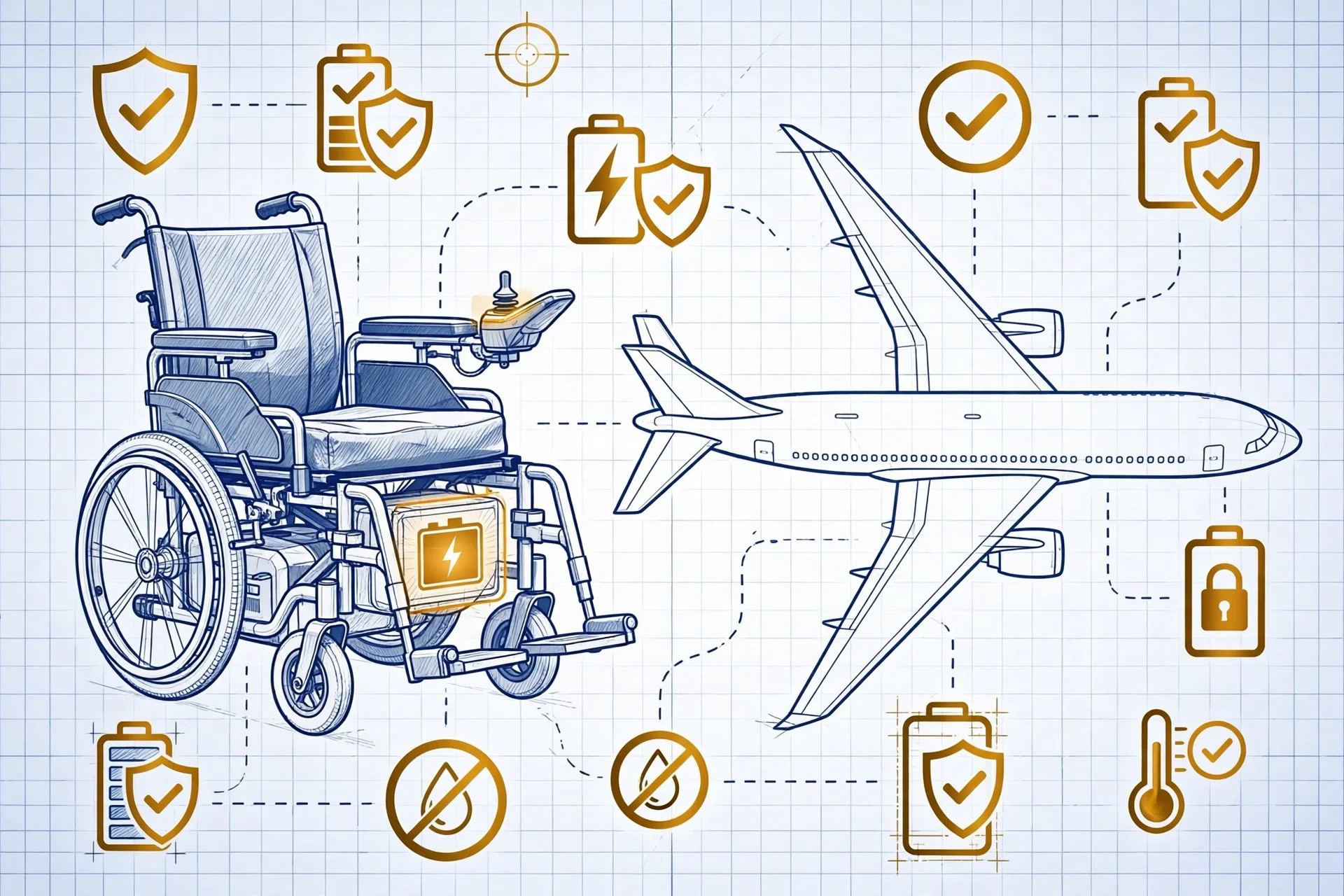
If you bring a personal wheelchair, add a separate equipment record: model, dimensions, travel weight, battery details where relevant, manufacturer handling instructions and photographs. Obtain the airline's acceptance of the actual equipment and agree its handover and return points. The IATA 2026 guidance explains the information airlines need for battery-powered mobility aids; it does not replace the operating carrier's decision for your flight.
The five details to keep together
- AssistanceDescribe every part of the route where you need help.
- TransfersState what you can and cannot do between chairs and seats.
- EquipmentKeep exact device and battery information with the booking.
- HandoverAgree where personal equipment leaves and returns to you.
- ChangesKnow whom to contact if a gate, aircraft or connection changes.
At the airport: make the request visible
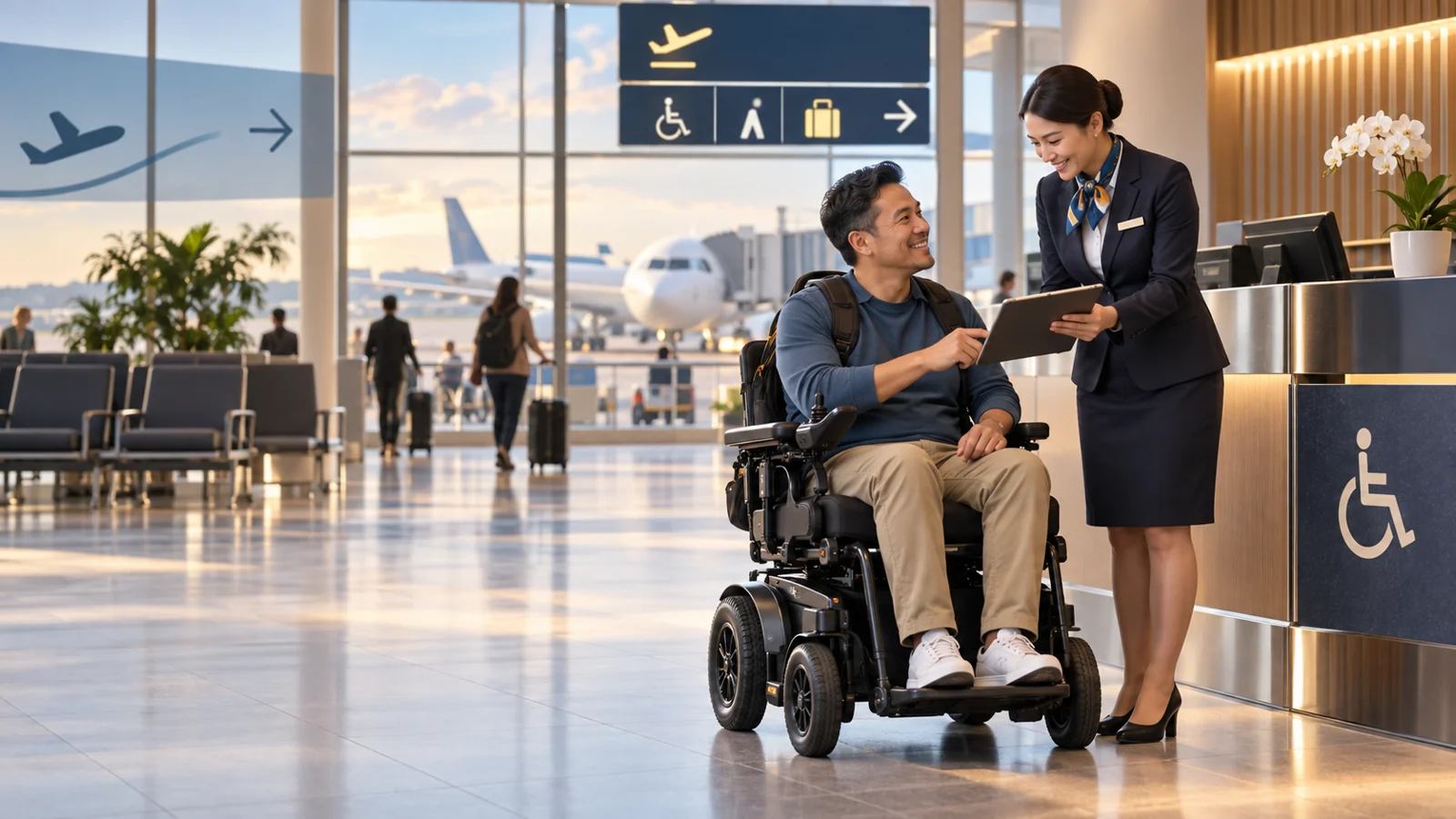
Go to the agreed airline or assistance contact point and identify yourself as the passenger who requested support. Confirm that staff have the correct flight, destination, connection and level of help. Ask when and where the next handover will happen. If the plan changes, tell staff what support you still need rather than assuming the new gate or aircraft inherits the original arrangement.
The U.S. Department of Transportation says passengers using U.S.-regulated airline services should identify themselves to airline staff on arrival even when the booking carries an assistance note. Rights and procedures differ by jurisdiction, so use the local airline and airport instructions elsewhere.
Boarding and the flight
Before your chair is taken, confirm how you will reach the aircraft seat, where detachable parts will travel, and who has the approved handling instructions. Discuss any onboard wheelchair or transfer assistance with the airline in advance. A ground wheelchair, an aisle chair and an onboard wheelchair serve different parts of the route; do not assume one device covers all of them.
Tell the gate team if you need extra time. For U.S.-regulated flights, the Department of Transportation describes preboarding and assistance rights for passengers with disabilities. Elsewhere, check the airline's current process and request the support your journey needs.
Arrival: close the loop
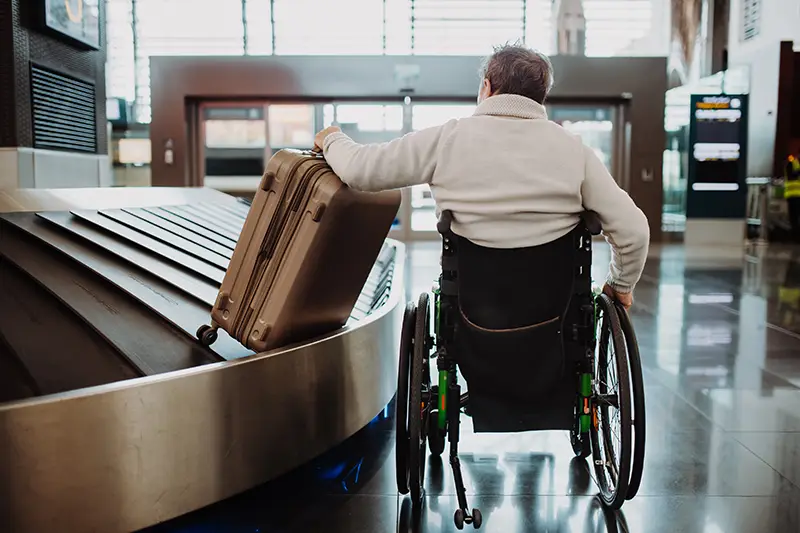
Ask where the personal chair, if any, will be returned and who assists you until then. Check the chair and detachable parts before leaving the return point. Report missing parts, visible damage or unsafe operation promptly through the airline's process, keeping photographs and a reference number. If an onward ride or train needs an accessible pickup point, include it in the plan before travel.
The best checklist is short enough to use in a busy terminal: booking reference, assistance needs, equipment details, handover points and a contact route for changes. Confirm those items for each new itinerary rather than relying on a previous flight's arrangement.