The obstacle was pushing effort
Maggie had used several mobility aids as MS changed what she could manage. When her hands made powerchair control difficult, a manual wheelchair meant relying on others. Carpets and slopes then became a problem for the people helping her.
TGA’s August account describes a Powerpack Duo fitted to the manual chair after a home demonstration. The attachment assists the attendant; Maggie still travels with someone pushing and steering. Its purpose in this story is to make supported outings more practical.
The two roles in this setup
| Person | What the equipment changes |
|---|---|
| Wheelchair user | Receives powered assistance while remaining in a manual wheelchair. |
| Attendant | Operates the power attachment and continues to guide the chair. |
From corridors to a riverside visit
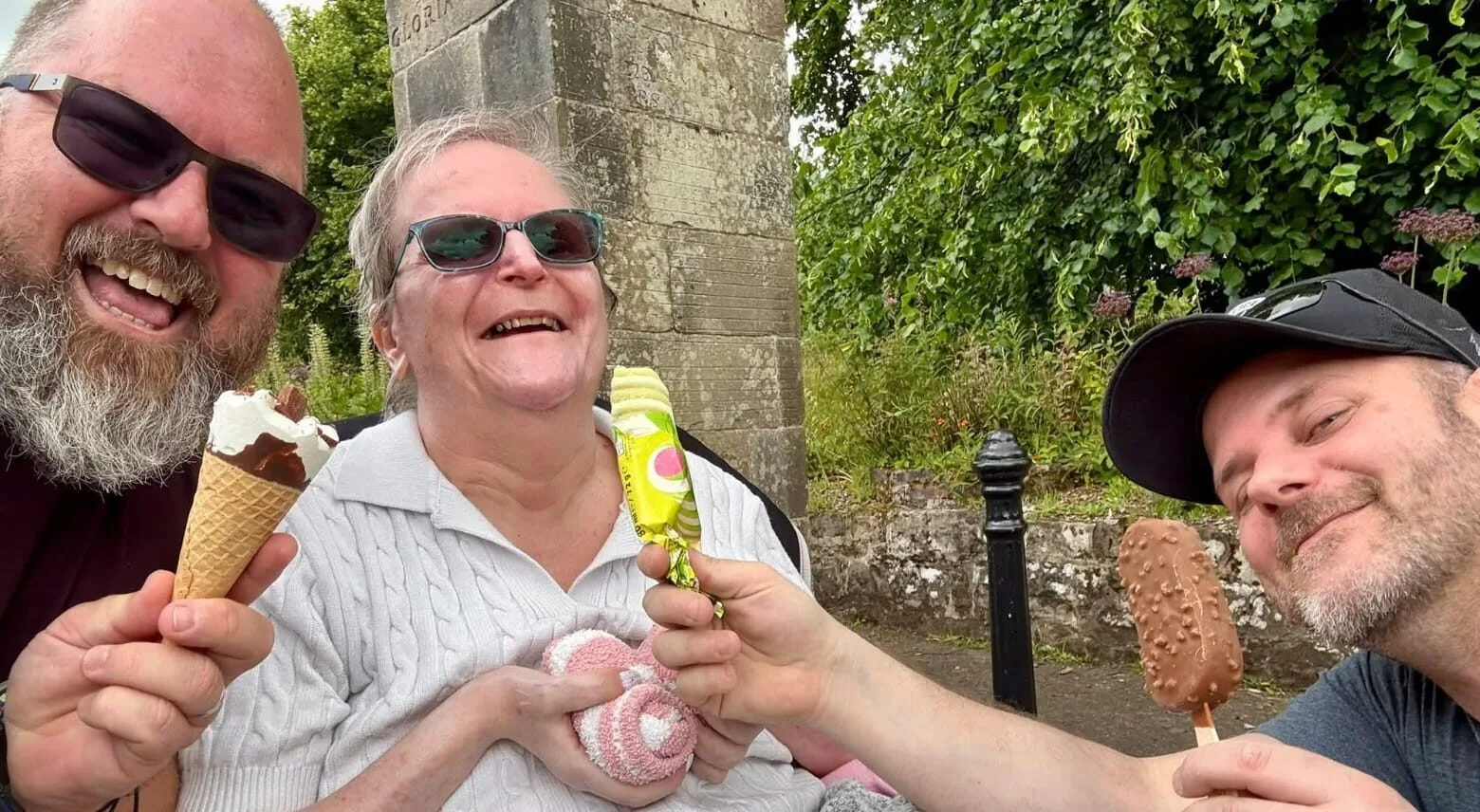
Carers noticed a difference on the nursing home’s carpeted corridors. Maggie’s account then moves outdoors, to a nearby country park and a garden visit with family. She emphasises worrying less about the physical effort required of other people.
This is a different mobility outcome from independent joystick driving. The useful comparison is between the complete supported journey before and after the change: the same seated person, the same helpers and the same types of route.
Why the helper belongs in the trial
An attachment changes the handling of an existing chair. The regular attendant needs to experience stopping, turning and the effort still required. In a care setting, an assessment should also identify who checks the setup and how new staff learn the routine. The personal account does not establish compatibility with another wheelchair.