Covers Singapore Changi Airport (terminals 1–4 and transit areas). All facility claims checked against the official Changi Airport page on 2026-10-04; autonomous wheelchair facts checked against WHILL/SATS rollout reporting the same day. Processes and availability vary by airline — confirm with your carrier before travelling.
The three ways to get a wheelchair at Changi
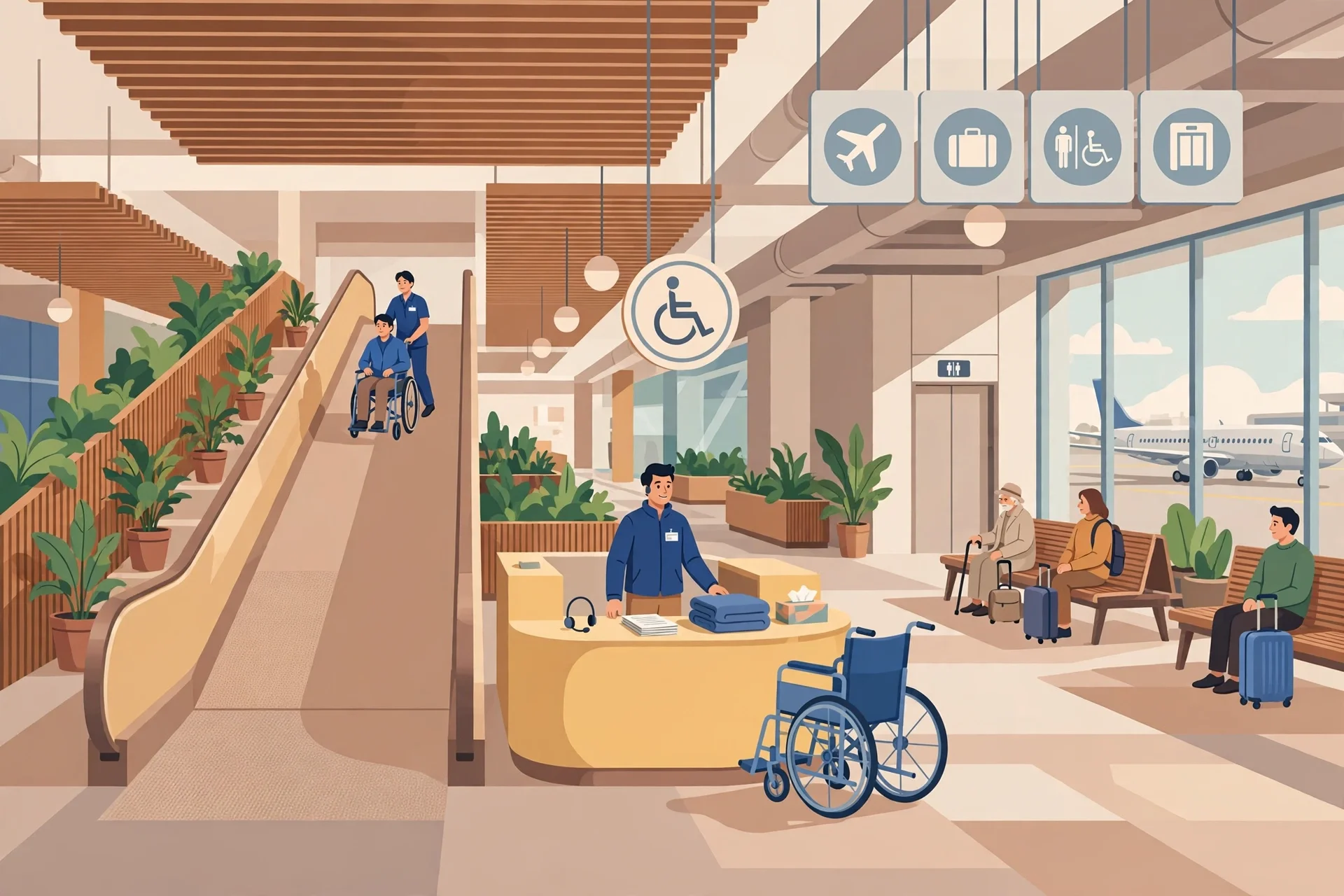
Start with the big picture, because Changi actually offers three separate wheelchair services and travellers mix them up. First, the airport itself lends out complimentary self-assist wheelchairs across all four terminals. You pick one up from the information counters in the departure hall, transit area, or arrival hall of each terminal, and they are also available at Jewel's concierge counters. These are airport-use only, first come first served, and if the counter is temporarily out of stock you can ask the staff or the virtual agent at the counter to arrange one for you. The official facilities page also says you can book a complimentary wheelchair ahead of your arrival, which is worth doing if you know your flight details early.
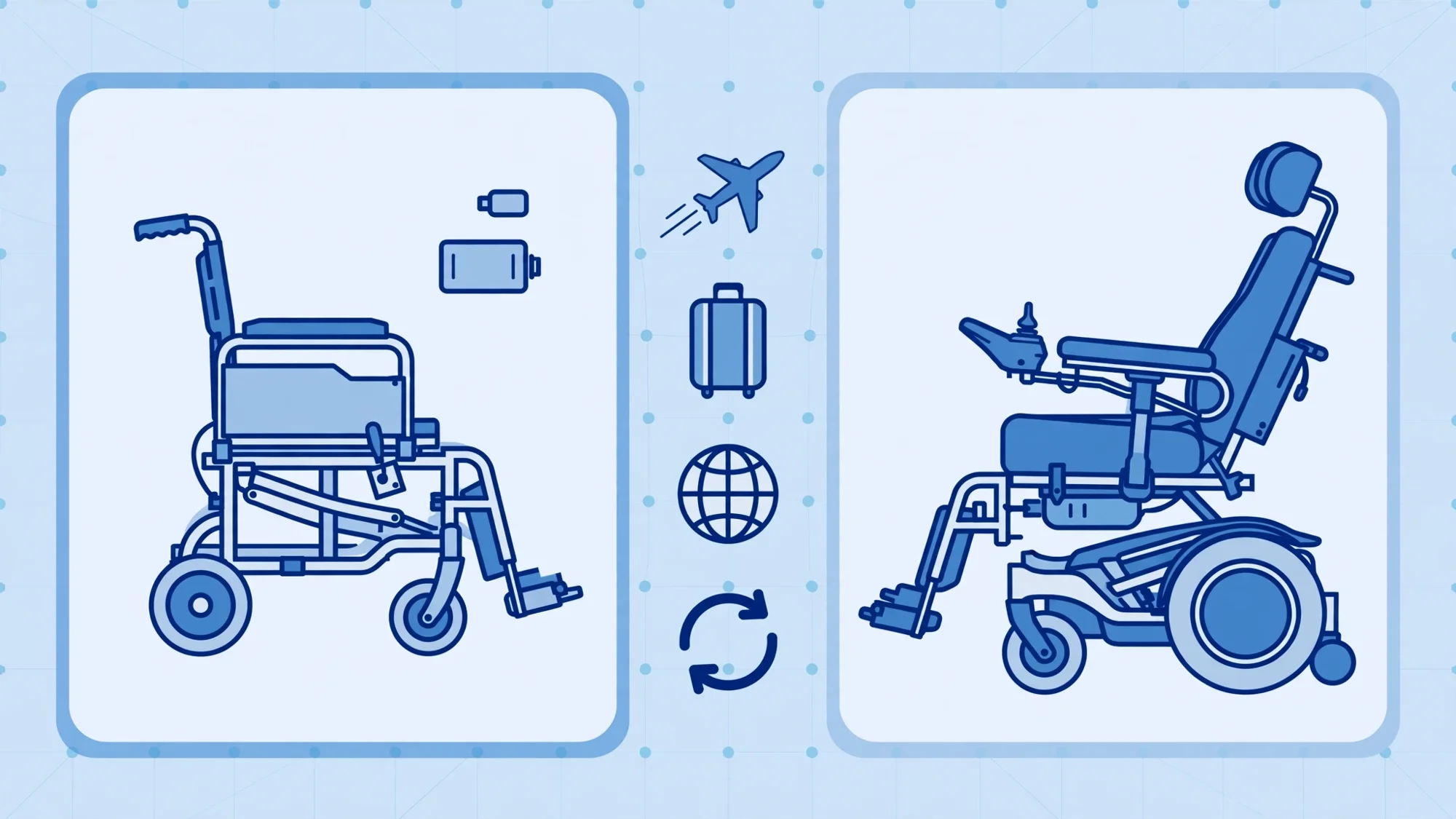
Second, your airline can provide wheelchair service as part of its special assistance offering. All airlines operating at Changi do this, but the key detail from the official page is timing: you should arrange it through your airline or travel agent when you book your flight, at least 48 hours before departure. For requests made less than 48 hours out, contact your airline directly and be ready for the possibility of a wait — the airport's own page warns that during periods of high demand, some waiting time is expected for airline wheelchair service. Airlines may also ask whether you can walk short distances, not to deny service but to match the level of assistance to your needs. Be aware that additional charges may apply depending on the airline, so check the airline's special assistance page rather than assuming it is free.
Third, Changi lists a concierge wheelchair service provided by an airport partner. The official facilities page confirms this exists as a distinct option alongside the other two, so if you want a named, bookable service with a human attendant rather than a borrowed self-assist chair, this is the channel to ask about — confirm availability and any fees with the airport partner before you travel.
Facilities in each terminal: what is actually there
Knowing what exists in the terminal matters as much as knowing who to ask. Changi's official page covers four terminals plus Jewel, and the practical takeaways are the same across all of them: step-free access throughout the terminals, priority immigration facilities, dedicated assistance counters, and accessible washrooms are part of the airport's accessibility baseline, and third-party accessibility rankings in 2026 continue to place Changi near the top of the world for airport accessibility.
The wheelchair-specific infrastructure breaks down like this. For departing passengers: self-assist wheelchairs at information counters in the departure hall, plus airline wheelchair assistance from the check-in area onward if you pre-booked it. For transiting passengers: self-assist wheelchairs at information counters in the transit area, and since 2025, the autonomous wheelchair service in Terminals 2 and 3 transit areas (described in the next section). For arriving passengers: self-assist wheelchairs at information counters in the arrival hall, with airline staff typically meeting pre-booked passengers at the gate.
A practical tip for your planning: keep a mental checklist of the three pickup points — departure hall, transit area, arrival hall — because they are separate counter locations, and a chair borrowed in one area is not meant to travel between them. If you are transiting through Changi with a tight connection, the arrival-hall counter matters less than the transit-area counter, and you should confirm with your airline where their staff will meet you versus where the airport's own chairs are available.
The autonomous wheelchair option: how it actually works
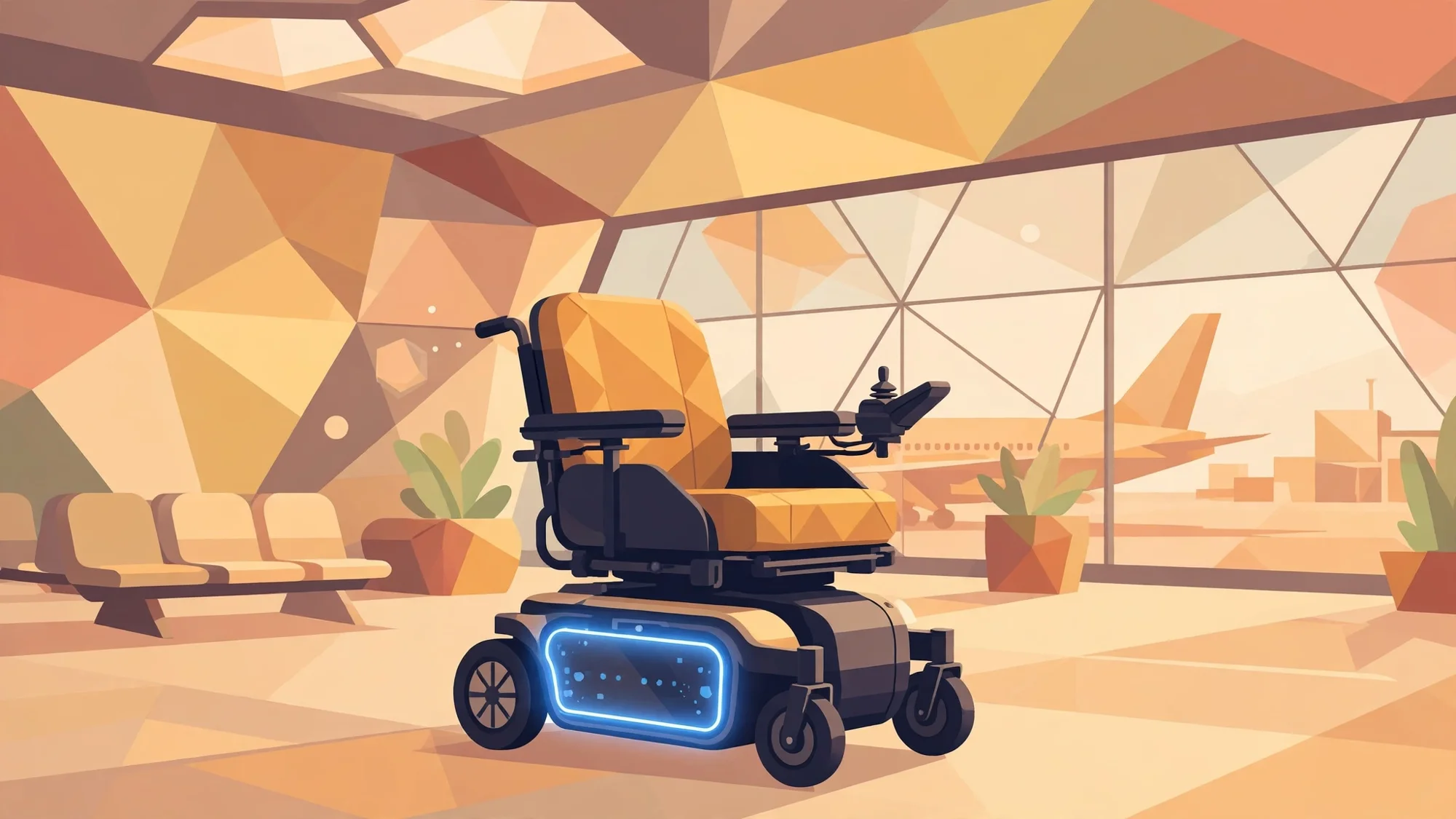
The newest part of the map is also the most interesting. In 2025 Changi Airport Group and ground handler SATS began deploying WHILL autonomous wheelchairs in the departure transit areas, starting with Terminal 3 in March 2025 and expanding to Terminal 2 later in the year. This followed passenger trials during which more than 13,000 passengers used the chairs. According to WHILL, up to 18 units will be progressively deployed across the transit areas of Terminals 2 and 3, making this the company's largest airport deployment to date.
The service exists because demand is rising fast: wheelchair assistance requests at Changi grew 20 percent between 2023 and 2025, and the autonomous fleet is expected to handle around 10 percent of the airport's daily mobility assistance demand. The point, as both CAG and SATS describe it, is not to replace staff but to give eligible passengers more independence while freeing frontline staff to focus on people who need higher levels of care.
Here is the actual journey, based on WHILL's description: airport staff remotely dispatch a chair to the arrival gate based on incoming flight schedules. The chair greets disembarking passengers at the gate and autonomously takes them to the special service lounge for passengers with reduced mobility. For connecting passengers, the chair is then redeployed to carry them onward to their next boarding gate. Each trip runs along predefined routes and is monitored by a SATS ground handling supervisor at a control centre.
On the device itself: the chairs use sensors to detect obstacles and pedestrian traffic, omni-directional wheels for manoeuvring in tight spaces, seatbelt monitoring that only allows movement when the belt is fastened, an emergency stop button, an assistance call function, and a rear basket sized for cabin luggage. A few honest limits to keep in mind: it is a first-phase rollout limited to Terminals 2 and 3 departure transit areas, availability is not guaranteed for every flight, and you still need to request mobility assistance through your airline rather than hopping into a chair unannounced.
Before you fly: a practical checklist
Turn this into action before your travel date. First, if you fly with your own wheelchair, talk to your airline — request wheelchair assistance at booking time or at least 48 hours before departure, tell them whether you can walk short distances, and ask whether autonomous chairs might be part of their service at Changi. Second, if you travel without your own chair or just need one inside the airport, bookmark the airport's own free options: the self-assist chairs at information counters in the departure hall, transit area, and arrival hall, which you can also pre-book ahead of arrival. Third, for connections through Terminals 2 or 3, ask your airline where their staff hand over to airport services, so you know whether an autonomous chair or an attendant-assisted chair will be the one carrying you to your next gate.
Set expectations about waiting. Changi's official page is explicit that during high-demand periods you may wait for airline wheelchair service, and the autonomous fleet is currently handling only a fraction of total demand. Build buffer time into connections, especially if you are travelling at peak hours. Finally, remember that everything on this page reflects what the airport and its operators state on their official pages as of the check date below; charges, counter locations, and service hours can change, so do a final confirmation with your airline in the days before you fly.