UK coverage. Facilities are venue-managed — opening hours, access arrangements and hoist sling compatibility vary by venue; always confirm with the venue before travelling. Figures (99 new, 2,644 registered) are from the consortium's own Year in Review 2025.
99 new registrations in 2025 — and where they landed
The Changing Places Toilet Consortium closed 2025 with a milestone worth knowing before you plan anything: 99 new Changing Places toilets (CPTs) were installed during the year, taking the total number of registered facilities to 2,644. That matters because the register is a live map — every registration is a venue you can actually look up and travel to, not a target figure. The new additions were spread across the country rather than clustered in one region. Marks & Spencer in Aberdeen, the Green Welly Stop in Tyndrum and Madame Tussauds in London all registered. Lloyds Banking Group registered five — in London, Bristol, Leeds, Halifax and Edinburgh — with one more in the pipeline. The National Trust added three more (Sutton Hoo, Alice Holt Forest and Lyme Park), bringing its England total to sixteen. Hospitals also saw a much-needed increase in provision during 2025, which matters for families who combine appointments with the rest of their day. The biggest completed project was on the roads: every CPT funded by the Department for Transport, delivered with Muscular Dystrophy UK, is now finished, registered and open across England's motorway network — the direct result of campaigner Zack Kerr's 2017 campaign, which secured government funding for 54 new CPTs at motorway service areas. If you travel long distances by car, that network is the reason you can now plan a route with confidence rather than hope.
2026 openings: Blenheim Palace and Glasgow Fort
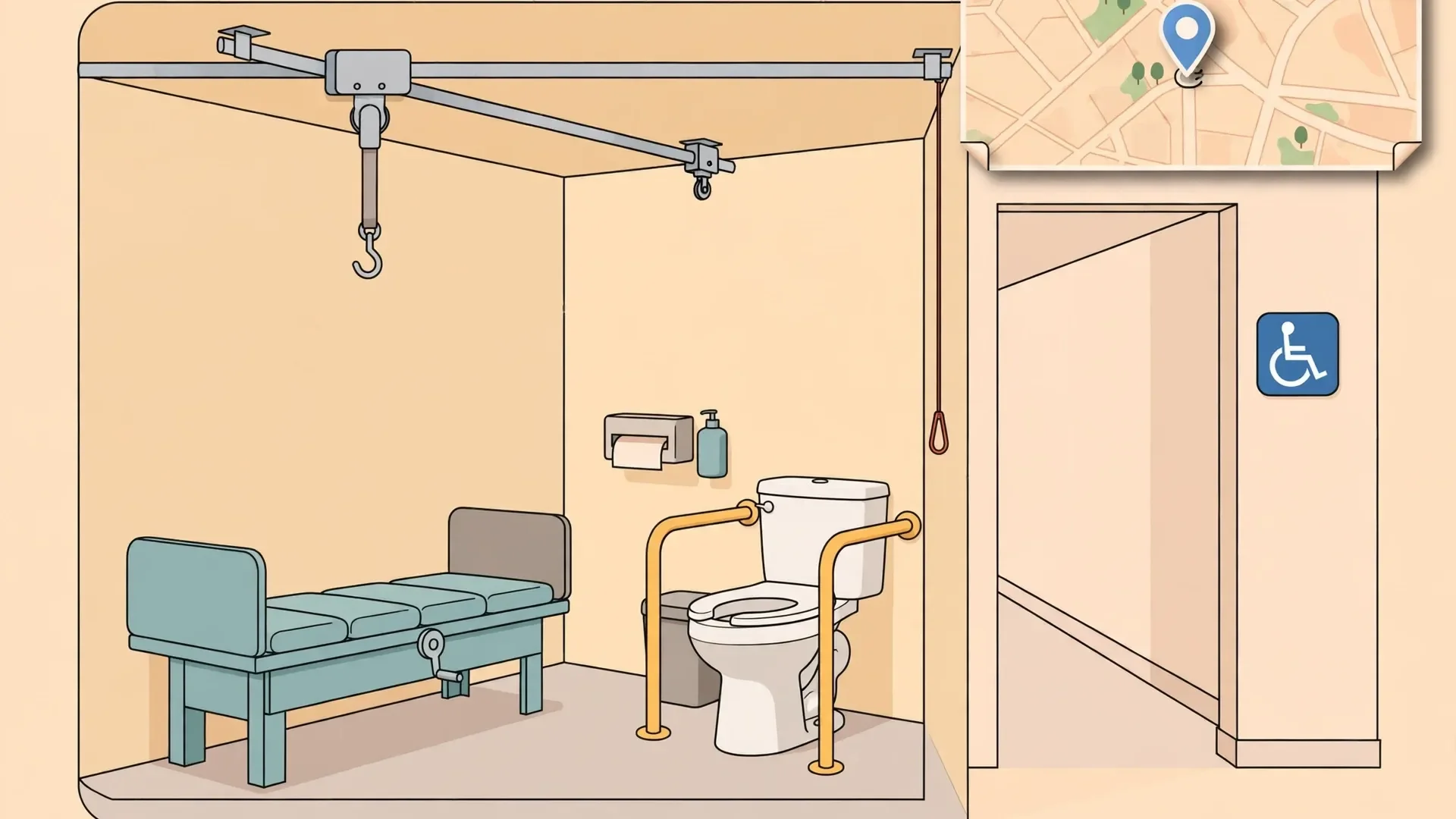
New facilities kept opening into 2026, and two are worth knowing as trip-planning examples. In May 2026, Blenheim Palace — a UNESCO World Heritage Site in Oxfordshire — opened a new Changing Places toilet in its Walled Garden. The facility has a height-adjustable changing bench, hoist system, privacy screen, peninsular toilet and wash facilities, with room for the disabled person, their wheelchair and two carers. The privacy screen carries a collage of artwork by students from local special educational needs schools, and a memorial plaque honours Tamsin England, whose voice helped create the facility. For visitors it sits within an already accessible offer: level access to key areas, free companion tickets for blue badge holders and mobility aids for hire. In Scotland, Glasgow Fort shopping centre opened a new Changing Places facility on 16 October 2026 inside its Customer Services area. It includes an adult-sized height-adjustable changing bench, a ceiling track hoist designed for loop-attachment slings, a peninsular toilet with carer space on both sides, a height-adjustable sink and a shower. Access is through the customer service desk — or an intercom if the desk is unstaffed — and opening hours match the centre's own hours. Both openings share the same practical lesson: new CPTs increasingly appear in leisure and retail destinations, not just hospitals, which is exactly why checking the register before each trip matters more than it used to.
The Scottish fund: 2026's biggest pipeline
The largest wave of new facilities is still being built. The Scottish Government's CPT Scotland Fund, managed by Inspiring Scotland and supported by PAMIS — co-founders and chairs of the UK CPT Consortium — is funding a new generation of facilities across Scotland. PAMIS has supported more than 80 grassroots initiatives, charities and local groups to apply, and the first successful applicants are now developing their new CPTs through 2026. A dedicated Scotland Support Hub launched in 2025 with resources for venues building new facilities, and the consortium's key publication — 'Changing Places Toilets: A Practical Guide' — is being revised with new features and tools launching in 2026. The consortium says it has already reviewed proposals for new CPTs at key venues and expects them to become reality during 2026. For travellers in Scotland, the practical meaning is simple: the map will keep growing, and venues that have no facility today may have one within the year. For campaigners elsewhere, the Scottish fund is the model to point local authorities at when asking for investment.
How to use the official register and journey planner
With the register growing this fast, the official tools are worth using properly. Start at the Changing Places website and its official register map, which lists every registered facility across the UK. The Department for Transport has also funded a Journey Planner feature inside the map (changing-places.org/route/plan) with increased functionality for planning, saving and downloading your travel routes — built for exactly the motorway-network trips described above. Before you set off, run this five-minute checklist: (1) confirm the venue's facility is actually on the official register, not just advertised on the venue's own site; (2) check the venue's opening hours, because facilities are managed by their host venues and open when the venue opens; (3) confirm how you get in — some units are staffed, some use an intercom or access key, and asking ahead beats guessing; (4) if you use a hoist, bring your own sling and check compatibility — the Glasgow Fort unit, for example, is designed for loop-attachment slings; (5) read recent reviews in the Changing Places app, where users rate facilities and report problems, which helps keep the map accurate. Venues are encouraged to register new facilities as they open, so a place you checked six months ago is worth checking again. The register is the five-minute check that decides whether a destination is actually accessible — and in 2026, that check covers more places than ever.