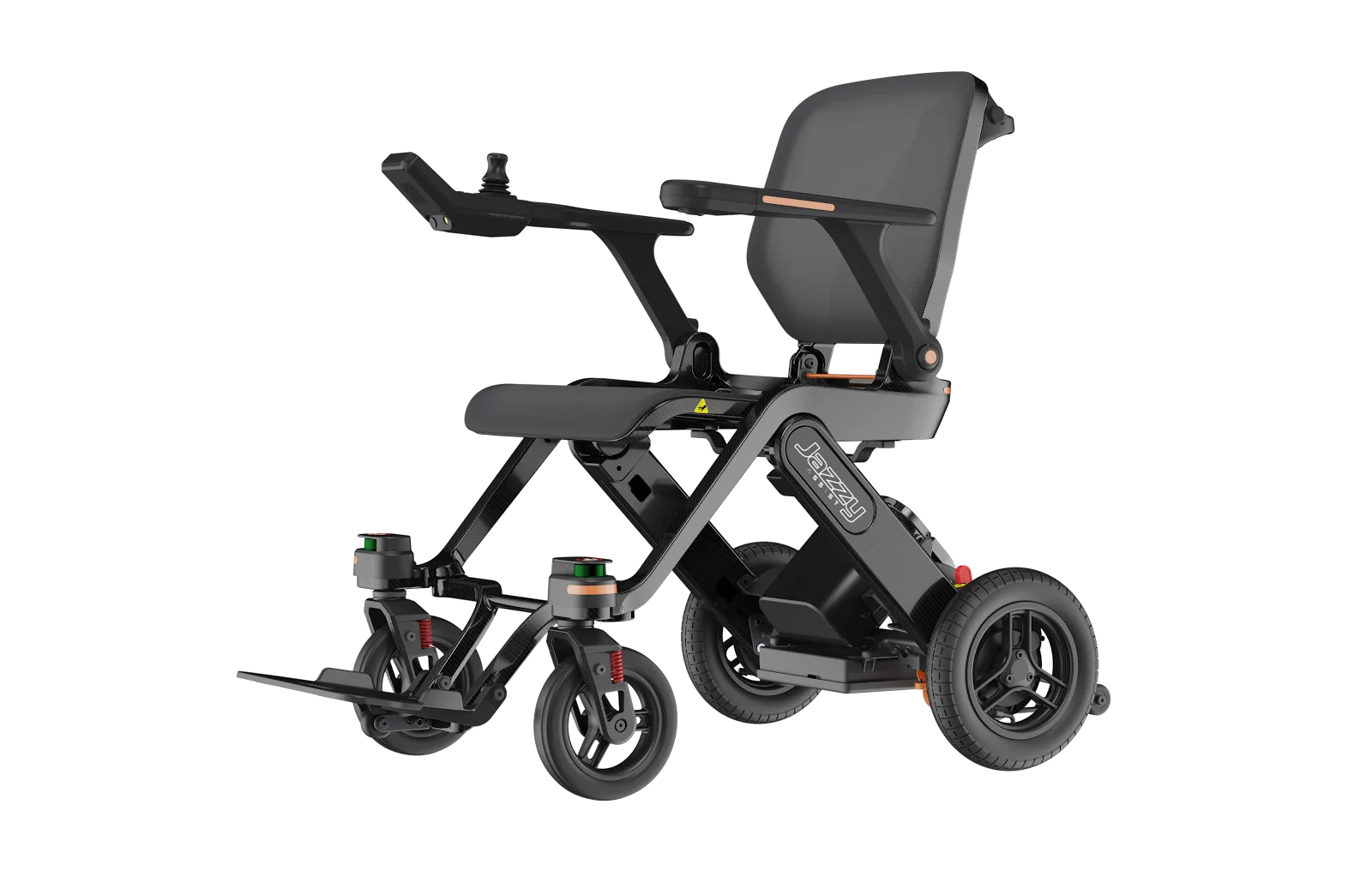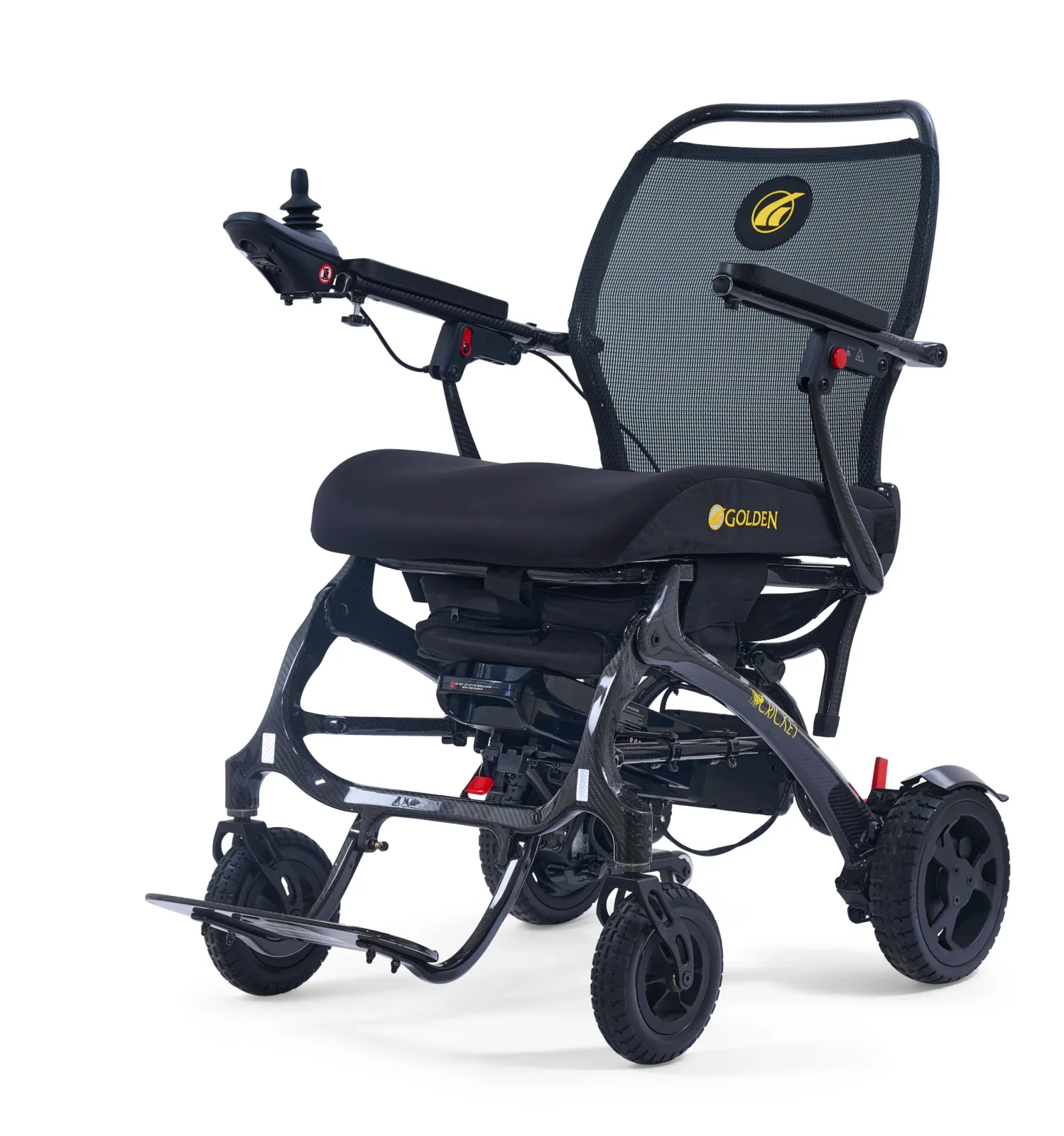
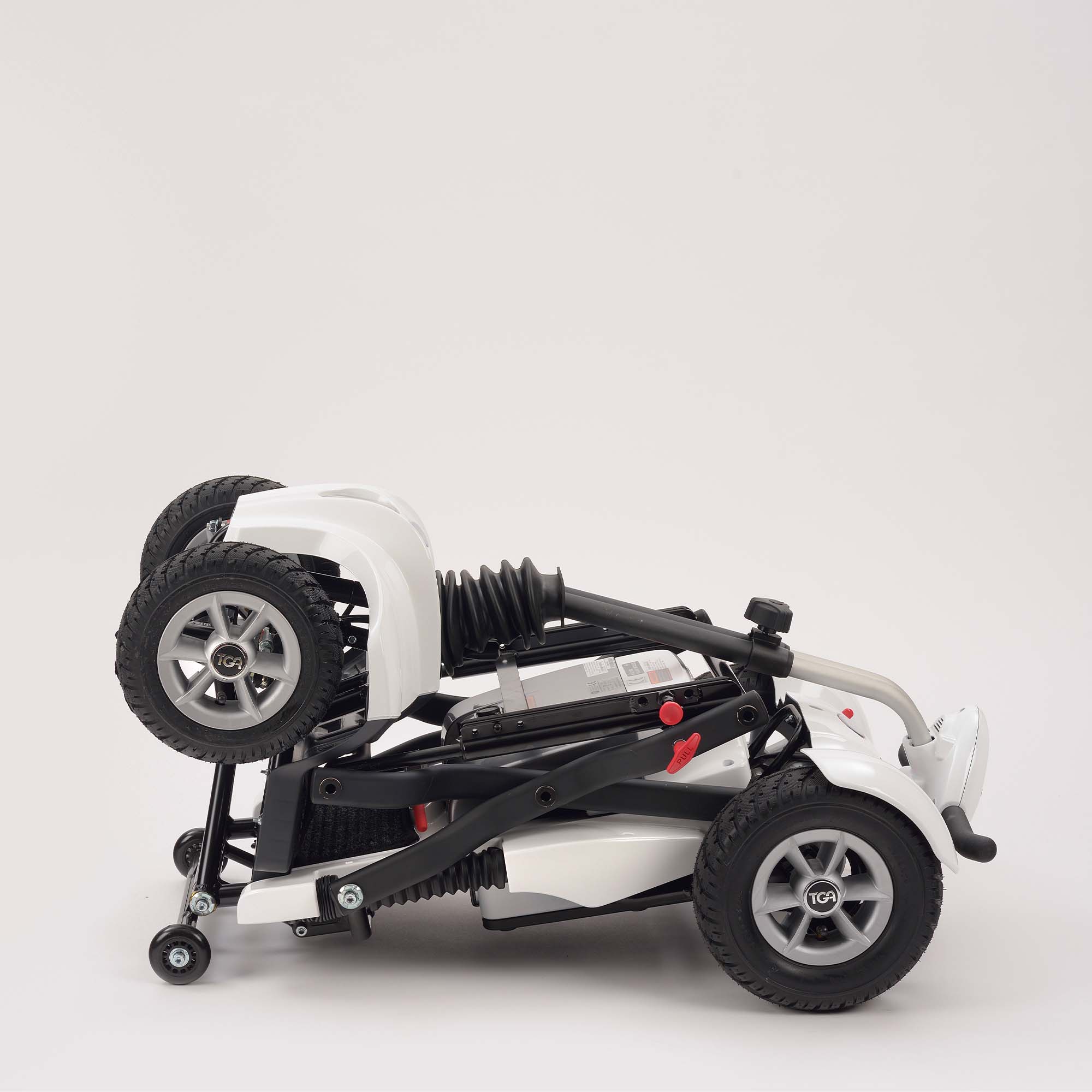
Storage size includes the space needed to unfold
A folded footprint is useful only if you can move the chair into storage and open it again. Think through the route from the car or front door to the storage position. A narrow cupboard might hold the folded chair but leave nowhere to complete the unfolding movement.
Count the separate handling tasks
Folding does not automatically mean one easy lift. A battery, cushion or other component may need to be removed under the manufacturer’s instructions. Each removed part creates another item to carry, store and refit. A fixed-frame model may instead rely on a ramp or hoist. Compare the complete loading process rather than the folded photograph.
During a demonstration, ask for the sequence from ready-to-drive to stored, then perform the return sequence with appropriate supervision. Pay attention to latches and connections: the final check that the chair is ready to use should be clear and repeatable.
Demonstrate both directions
- PrepareIdentify the parts removed and the approved handling points.
- StoreShow where the chair and loose parts go in the actual space.
- ReassembleRefit components and demonstrate the locking checks.
- Resume useConfirm that controls and seating are back in the intended position.
Choose around the journey you repeat most
For frequent car use, a repeatable loading method may carry more weight in the decision than a smaller storage footprint. For daily indoor use, seat access and manoeuvring may matter more. Neither frame type establishes comfort or suitability by itself.
Balance transport with time in the seat
Write down the tasks your home and transport impose, then compare models against those tasks. This keeps a convenient folding feature from overshadowing the hours spent sitting in and driving the chair.