
Start with constraints that can rule a chair out
A portable chair must still fit the user, the route and the loading method. Make a short list of requirements that cannot be traded away: an assessed seating need, a doorway, a vehicle opening or a handling limit established for your situation. Features such as colour or an app belong in a separate preference list.
Two lists prevent a misleading shortlist
| Must work | Preference to compare afterwards |
|---|---|
| Required seating and control arrangement | Colour and finish. |
| Home and vehicle access | Optional connectivity. |
| A suitable loading method | Extra convenience accessories. |
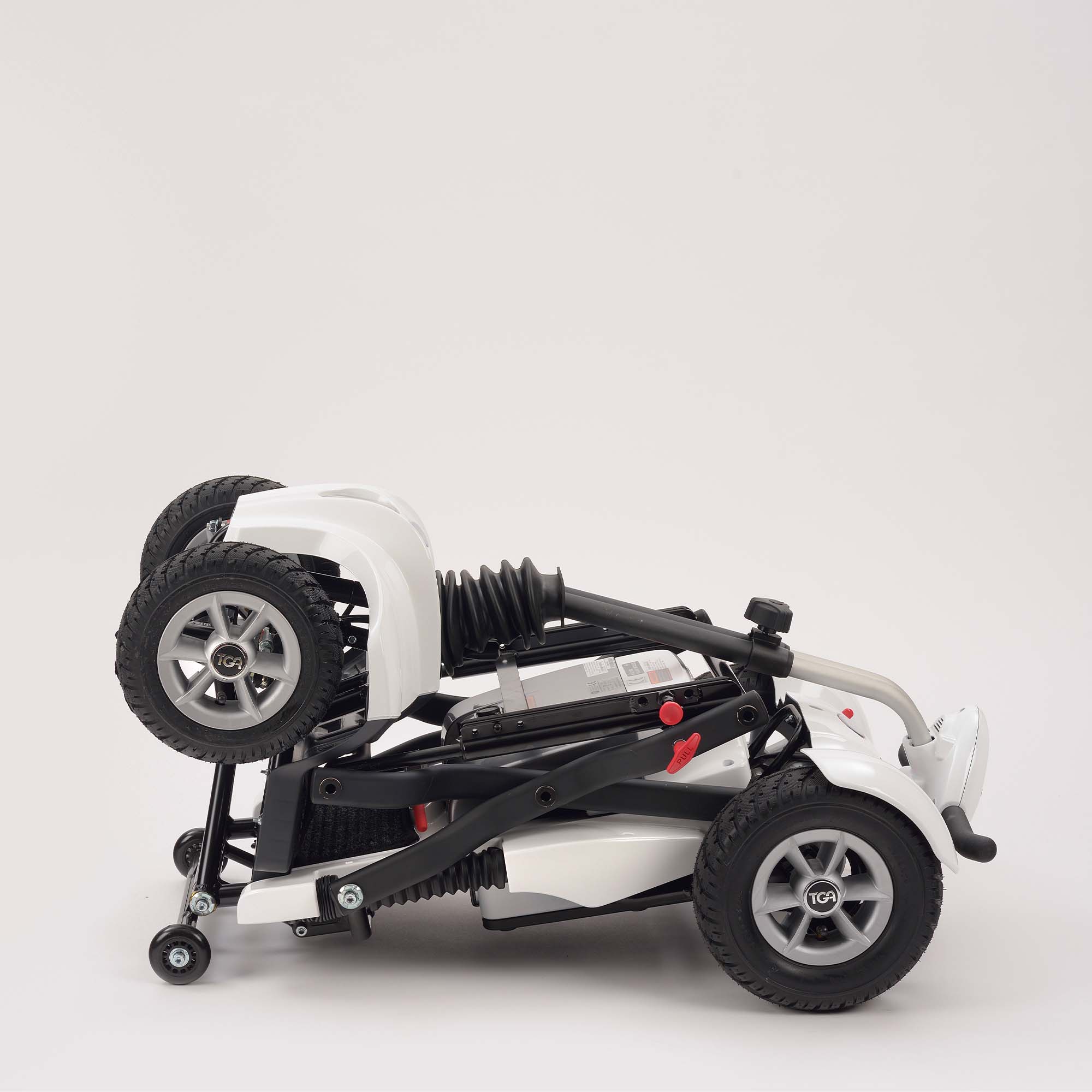
| Support and compatible parts | Styling and folded appearance. |
Compare weights on the same basis
A specification may describe a frame without its battery, a complete chair or the heaviest component after dismantling. Those figures answer different questions. Ask what remains attached during the lift you intend to perform.
An illustrative chair with an 18 kg frame and a 2 kg removable battery totals 20 kg before any additional accessories. Removing the battery changes the main lift to 18 kg, but creates a second item to carry. This example explains the arithmetic; it is not a product specification or a recommendation about what anyone should lift.
Try the shortlisted models in your sequence
Test the journey from driving position to packed vehicle and back. Include the cushion, bag and other items you normally use. Record where each part travels and whether the driver can complete the sequence without an improvised grip.
Once the hard constraints are satisfied, compare comfort, controls, support and ownership arrangements. A light model that cannot be handled or used comfortably in your real routine has not solved the portability problem.