Manufacturer and charity educational material, checked 19 October 2026. Frame choice should be made with a qualified prescriber.
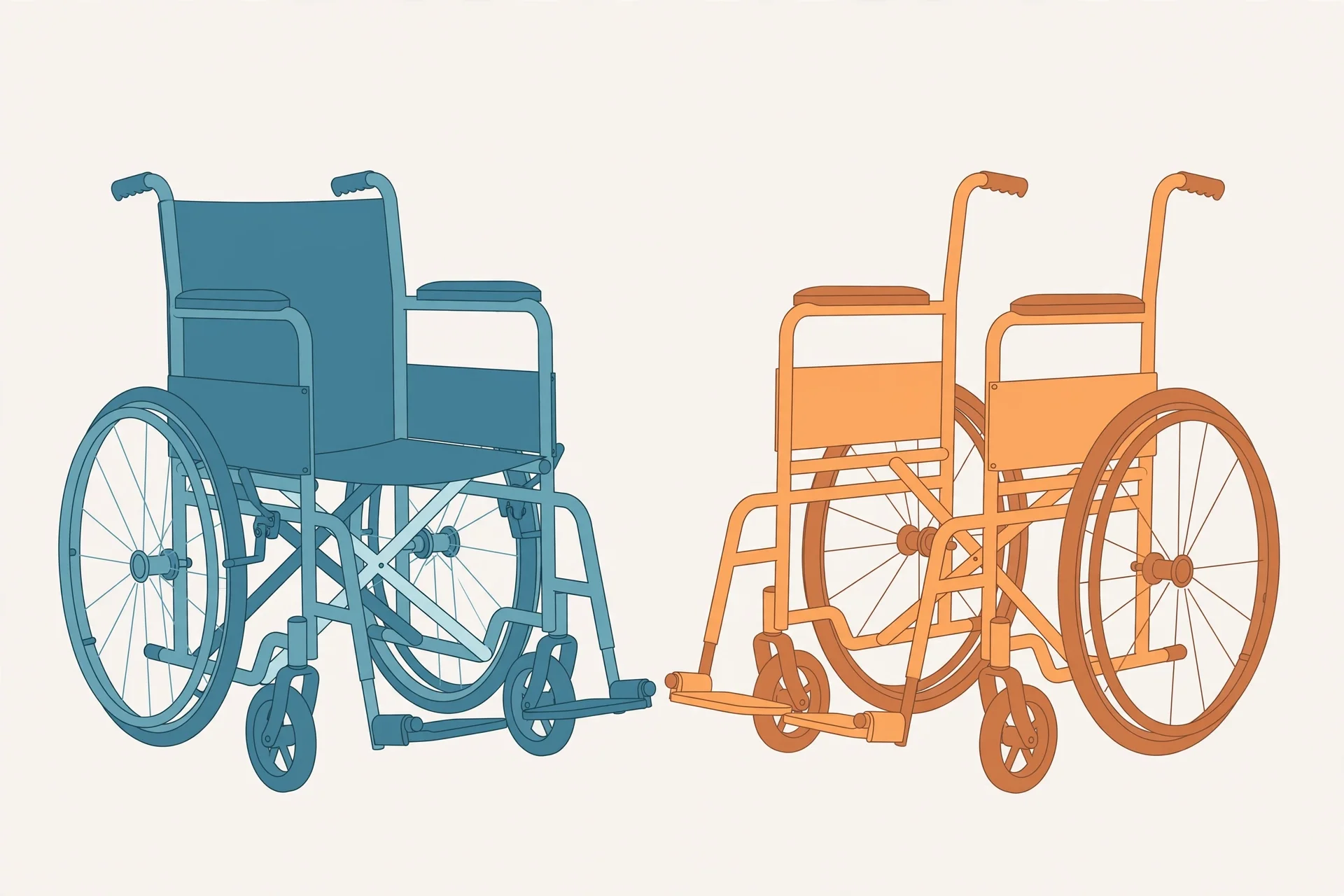
How the two frames differ
A folding frame uses a cross-brace — the familiar X under the seat — that lets the chair collapse into a narrow shape for car boots and storage. The trade-off is mechanical: every folding joint is a moving part that adds weight, needs maintenance, and absorbs a small amount of each push.
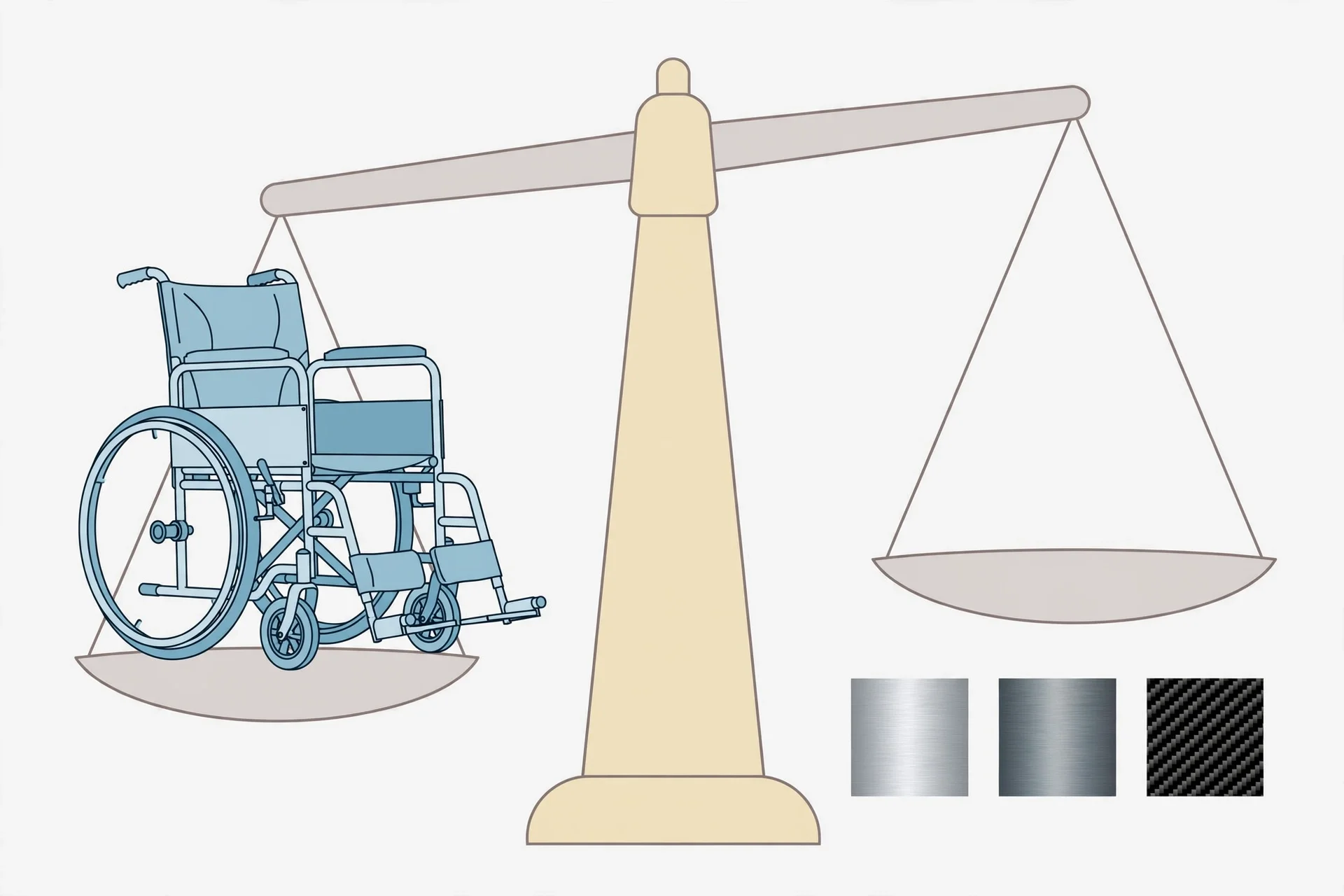
A rigid frame has no cross-brace. The main structure is fixed (some models let the backrest fold down), so there are fewer parts to loosen or wear, the chair is lighter for the same specification, and pushing energy goes more directly into motion. The price is bulk: the frame does not fold sideways, so it takes up more space in a car.
The gap has narrowed in recent years. 'Open-frame' folding designs use rigid-style seat rails that stiffen the chair considerably, offering much of a rigid chair's efficiency with a folding chair's transportability — worth asking about if you assumed the choice was binary.
| | Folding frame | Rigid frame | | --- | --- | --- | | Folds for transport | Yes — narrow sideways fold | No (backrest may fold down) | | Typical weight | Heavier (mechanism adds weight) | Lighter (fewer parts) | | Propulsion efficiency | Slightly reduced by joints | Most direct energy transfer | | Maintenance | More — moving parts loosen | Less — fewer moving parts | | Best for | Travel, shared use, part-time users | Active full-time pushers |
Folding frames: strengths and trade-offs
The core strength is transportability: a folding chair collapses to a slim package that fits car boots, hallways and cupboards, and the same chair can be shared between users or folded away when not needed. Many folding frames also offer swing-away front ends, which make standing transfers easier, and broad configuration choices — wheel, tyre, handrim, caster and centre-of-gravity adjustments are widely available.
The costs: the folding mechanism adds weight compared with an equivalent rigid frame, and it introduces a small but real reduction in pushing efficiency. Moving parts need periodic attention as they loosen with use. And while modern folding frames adjust well, they generally offer less scope for truly custom body-contouring than a built-to-measure rigid chair.
Rigid frames: strengths and trade-offs
The core strength is performance per push. With no cross-brace flexing under load, the frame returns more of your effort as forward motion — a difference you feel most on long days and uphill. Rigid chairs are lighter, simpler to keep tight, and their frames can be tapered and shaped to the body (wider at the hips, narrower at the knees), which holds posture better than a boxy folding frame.
The costs are practical: the chair does not fold sideways, so loading it into a car takes more space and technique — quick-release wheels help, but the frame itself stays full-size. Fixed front ends can complicate standing transfers, though some models offer flip-back foot supports. And a welded rigid frame generally cannot be resized later, so it suits people whose size and needs are stable. As the Rick Hansen Foundation puts it, people with permanent disabilities often choose rigid chairs for reliability and performance, while part-time users may reasonably prefer a simpler folding chair.
Choosing: five questions to ask
Take these to your prescriber — frame choice interacts with axle position, seat dimensions and cushion, so it is never decided in isolation:
1. **Will your body or condition change?** If growth or changing function is likely, a folding or modular frame adapts better than a welded rigid one. 2. **How often do you load the chair into a car alone?** Daily solo car transfers favour folding; a chair that lives in one adapted vehicle may not need to fold at all. 3. **How do you transfer?** Standing transfers favour swing-away front ends (usually folding); sliding-board transfers work well with rigid frames. 4. **How many hours a day do you self-propel?** The more hours, the more propulsion efficiency and weight matter — which points towards rigid. 5. **What postural support do you need?** Complex positioning needs often point to a custom rigid frame built around your measurements.
Whichever frame you choose, insist on a proper setup: axle position, seat height and cushion matter at least as much as the frame style.