Manufacturer clinical-education and charity material, checked 19 October 2026. No specific product weights stated — compare configured weights with your supplier.
Why weight comes up — and its limits
Two moments make weight real. The first is propulsion: a heavier chair demands more from your shoulders on every one of the thousand-plus pushes a typical day involves. The second is transport: the chair's weight is what you or your carer lift into a car boot, often several times a day.
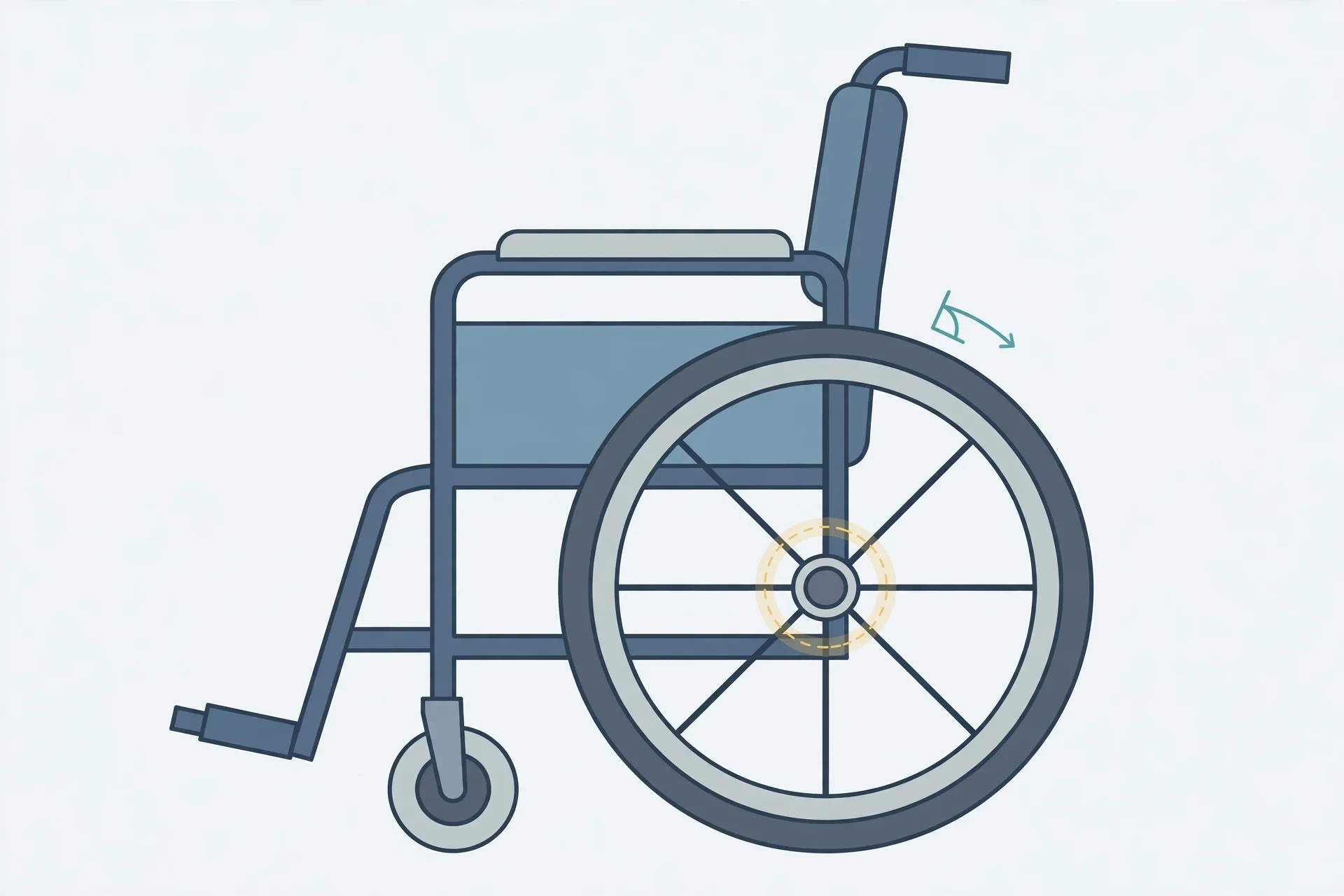
But chasing the lowest number has limits. The RESNA position on wheelchair provision, cited in Sunrise Medical's clinical education, states that optimal wheelchair configuration is essential to maximizing functional potential, propulsion efficiency and performance — in other words, a well-set-up chair of average weight will outperform a poorly set-up ultralight one. Research on propulsion (Brubaker, cited by Sunrise) found that moving the rear axle forward — putting more of the user's mass over the drive wheels — decreased rolling resistance regardless of the chair's weight. Fit first, grams second.
What makes a chair light — or heavy
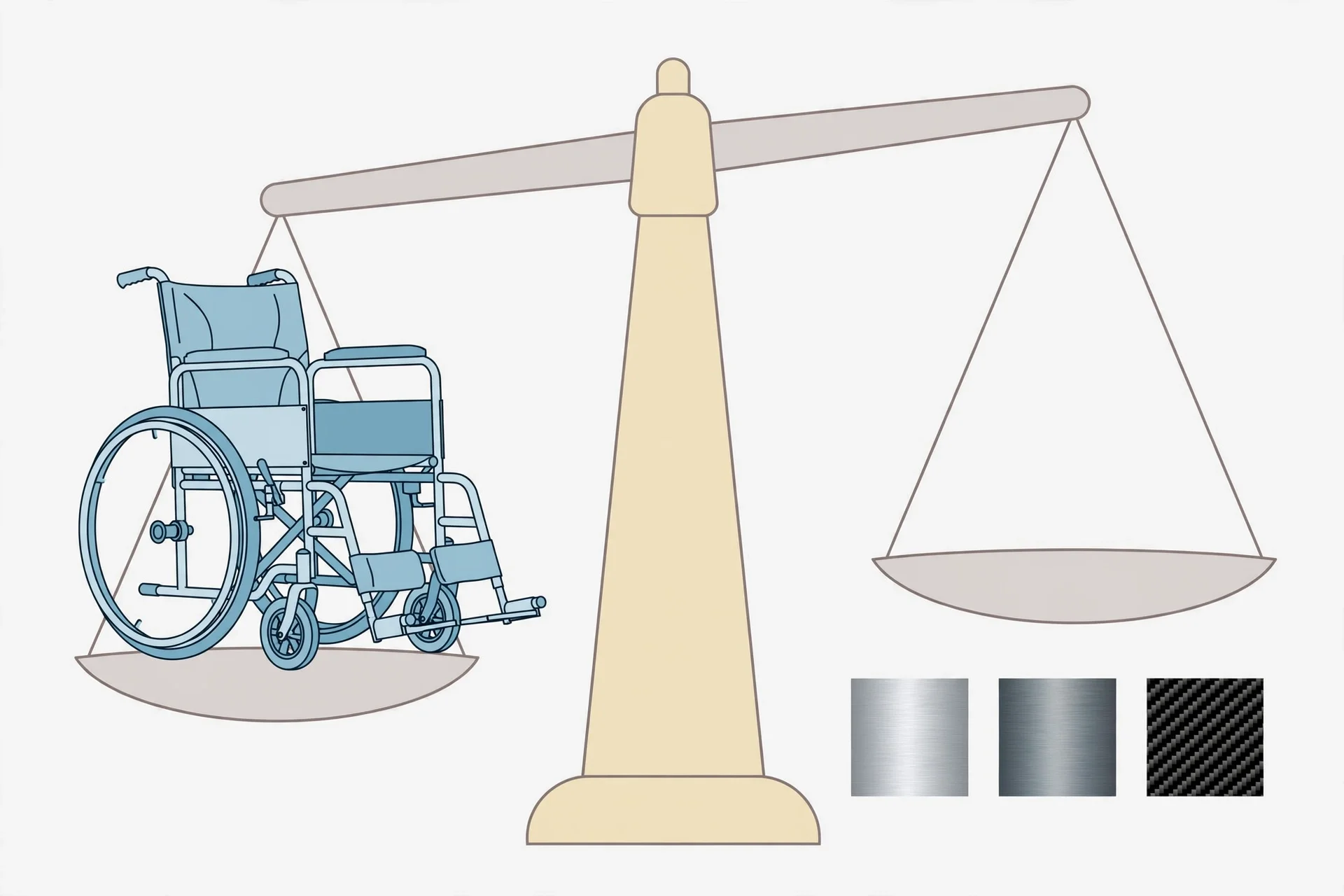
**Frame material.** Most chairs use aluminium: affordable, corrosion-resistant, easy to work. Titanium is technically slightly heavier than aluminium as a metal, but it is much stronger, so far less of it is needed — the result is a lighter chair. The catch is cost: titanium is difficult to weld and shape, so titanium chairs are significantly more expensive. Carbon fibre is the lightest and strongest option, and the newest — but also the priciest, and customisation is harder because clamps and mounts often need special ordering.
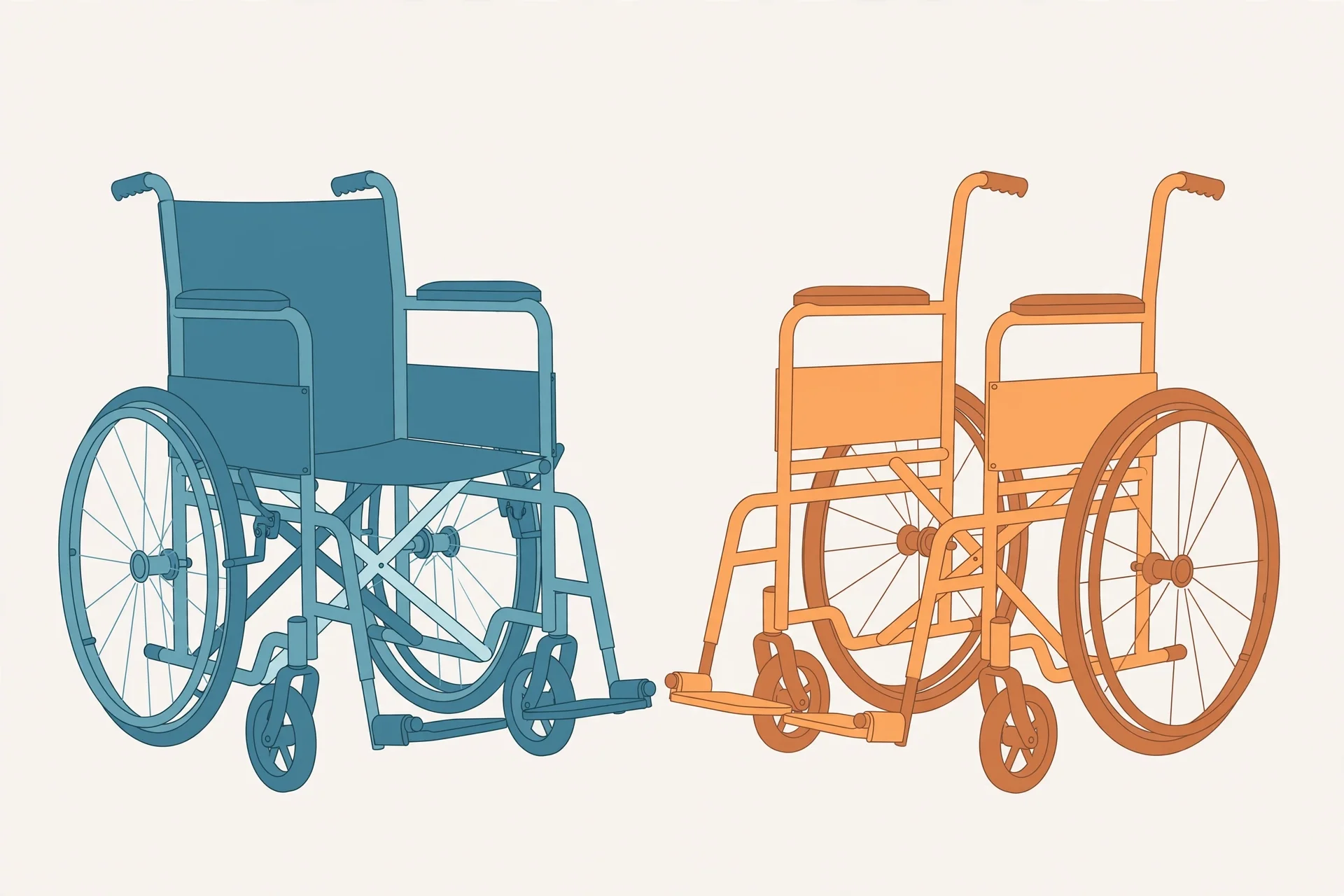
**Frame design.** A rigid frame is lighter than an equivalent folding frame because it has no cross-brace mechanism and fewer parts. The folding mechanism adds weight and a small efficiency cost — the price of transportability.
**Everything bolted on.** Wheels, casters, handrims, wheel locks, armrests, seating and cushions all add up. A 'lightweight' bare frame can become a heavy chair once configured for real life — which is why the configured weight matters more than the brochure figure.
How to think about weight when choosing
Use these rules of thumb with your prescriber or dealer:
- **Compare configured weights, not bare frames.** Ask for the weight of the chair as you would actually use it — with the cushion, wheels and options you chose. - **Test the lift, not just the push.** If you load the chair into a car daily, the lifting weight matters more than the rolling weight. Can you manage it at the end of a tiring day? - **Do not buy grams instead of fit.** An ultralight frame set up badly will hurt your shoulders more than a heavier chair with the axle, seat height and cushion dialled in. Sort configuration first. - **Match the material to your reality.** Titanium and carbon fibre make sense for full-time active users who will feel the difference thousands of times a day; occasional users may never recoup the premium. - **Remember the whole system.** Power add-ons, cushions and accessories change the equation — a 6kg drive unit on a light chair can be a better investment than a lighter frame alone.
Weight is one variable in a system. Treat it as important, but never as the whole decision.