Applies to London Gatwick Airport (LGW), United Kingdom. Wheelchair assistance is a legal right, free of charge, for passengers with disabilities or reduced mobility on qualifying flights; it must be booked through your airline, not the airport. Guidance verified against Gatwick Airport's Assisted Travel page and the UK CAA's accessibility-rights page on 2026-10-12 — confirm current arrangements with your airline before you travel.
It Is Your Legal Right — and It Is Free
If you have a disability or reduced mobility, you are legally entitled to assistance, free of charge, when flying from a UK airport on any airline, or flying to a UK airport on a UK or EU airline. That is the UK Civil Aviation Authority (CAA)'s official guidance, and it covers wheelchair users and people with physical disabilities as well as passengers with hidden disabilities such as autism or dementia. The right spans the whole journey: help getting through the departure airport, boarding and support during the flight, disembarking and flight transfers, and navigating the destination airport. Outside the UK the picture is less certain — similar rights exist in the EU and the US, but some countries charge a fee and others provide no support at all, so check before you book connecting itineraries. If something goes wrong, the CAA's advice is clear: raise it with the airline or airport first and follow their complaint procedure; you can escalate if it stays unresolved.
Step One: Tell Your Airline as Early as Possible
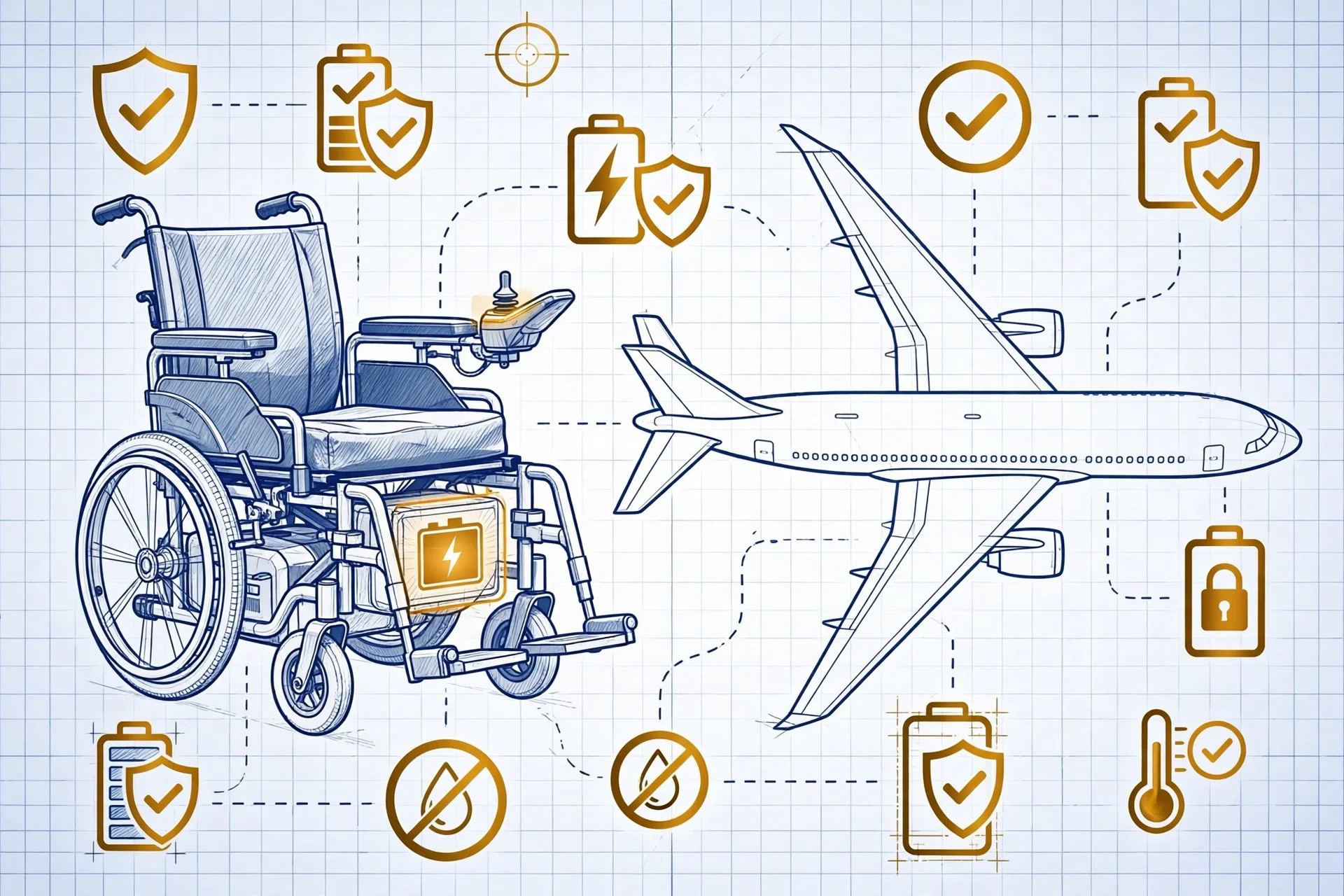
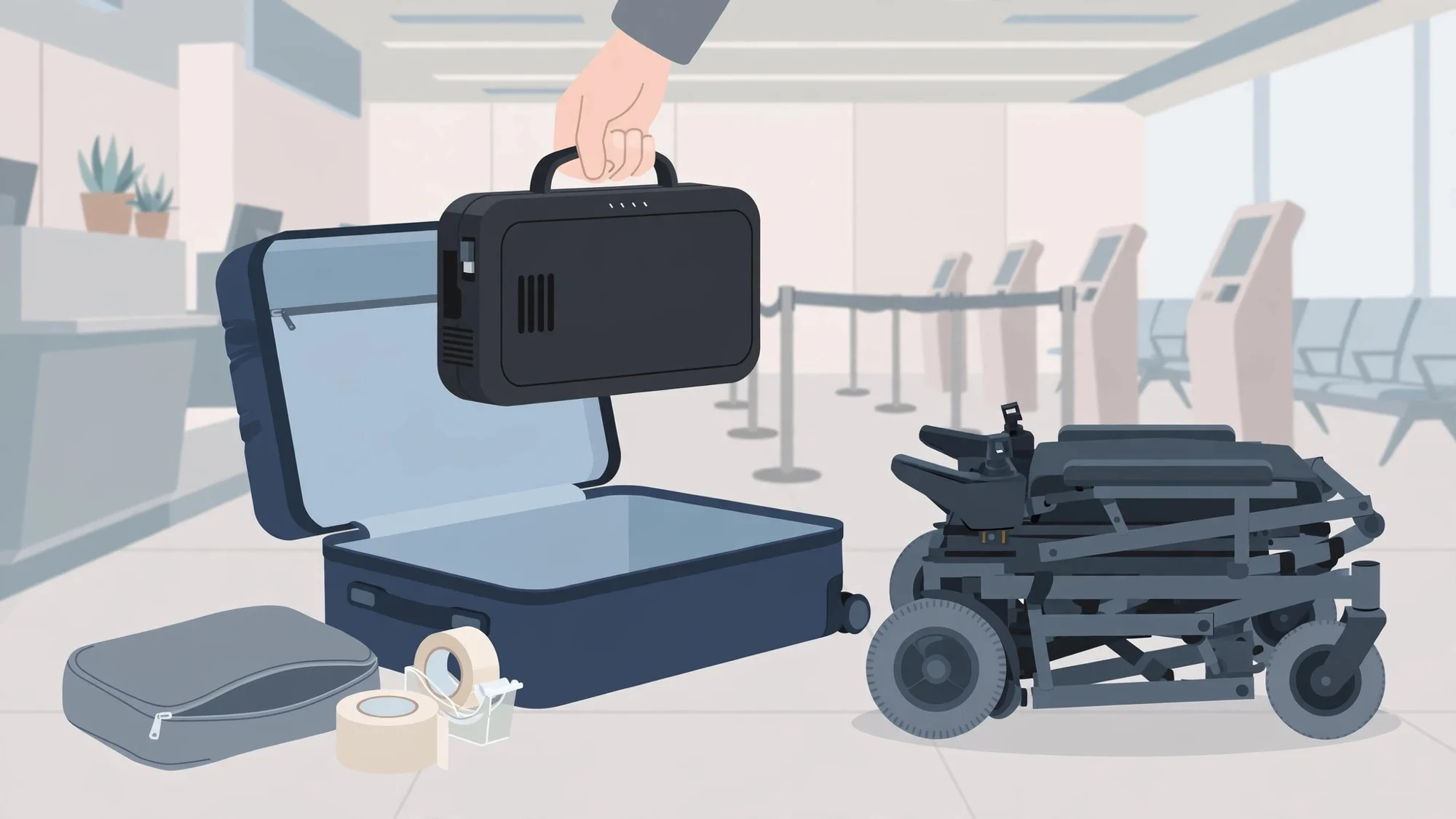
At Gatwick, assistance is always arranged through your airline — the airport does not take direct bookings from passengers. Tell your airline about your needs as early as possible, ideally when you book your ticket. If you travel with your own mobility equipment, Gatwick's guidance says to make sure the airline knows in advance, especially for wheelchairs and electric mobility aids: the airline will have questions to ask to ensure safe carriage, including about batteries and equipment dimensions. The one hard deadline published on Gatwick's assisted-travel page concerns assistance dogs — the only dogs allowed in the terminal buildings — which must be notified to the airline at least 48 hours before travel so arrangements can be made, including an animal reception process on arrival into the UK. For general wheelchair assistance the page publishes no fixed cutoff, so earlier is better: airlines need time to brief the airport team, and pre-booked passengers get the smoothest experience.
Your Journey, Step by Step
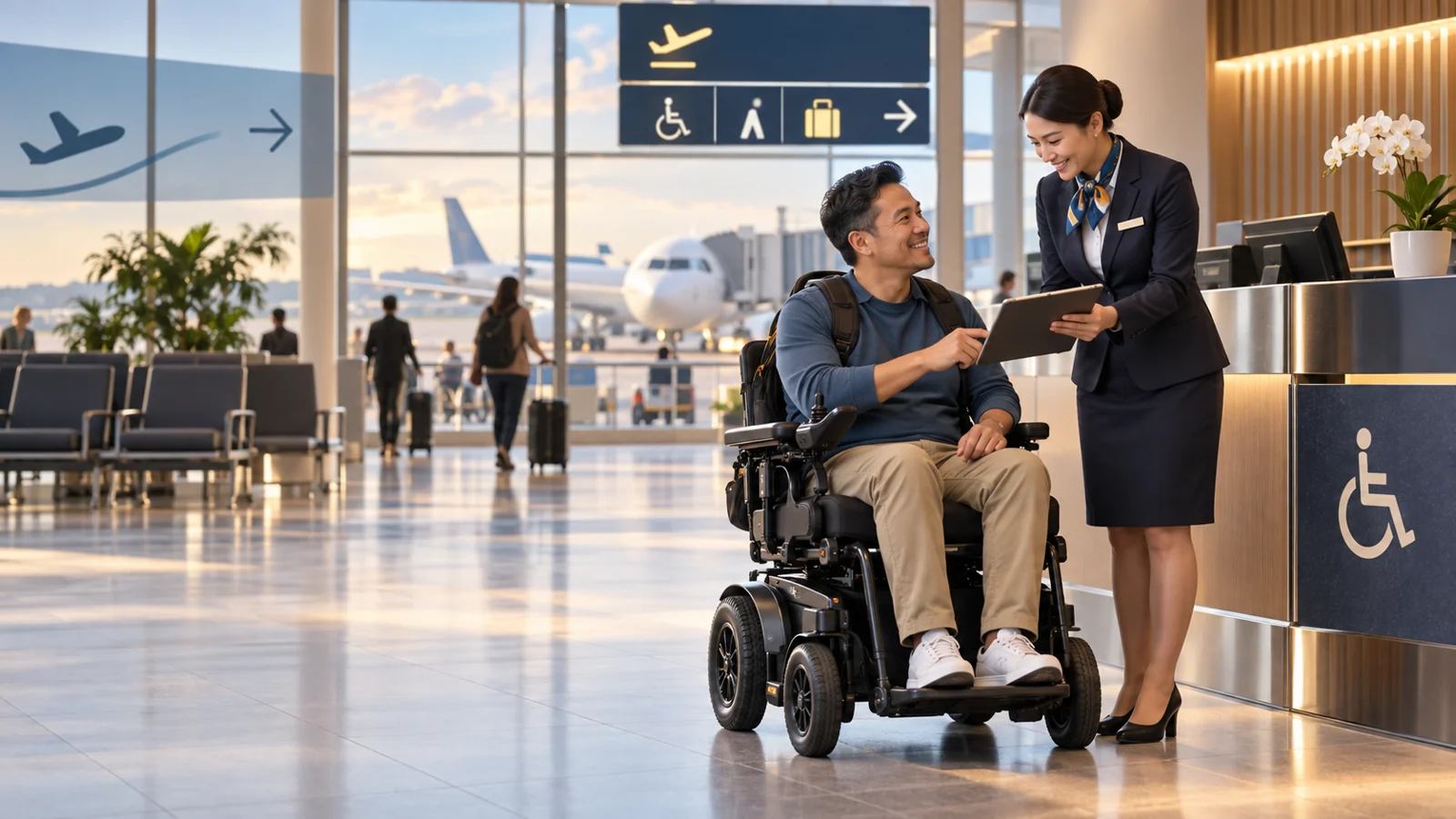
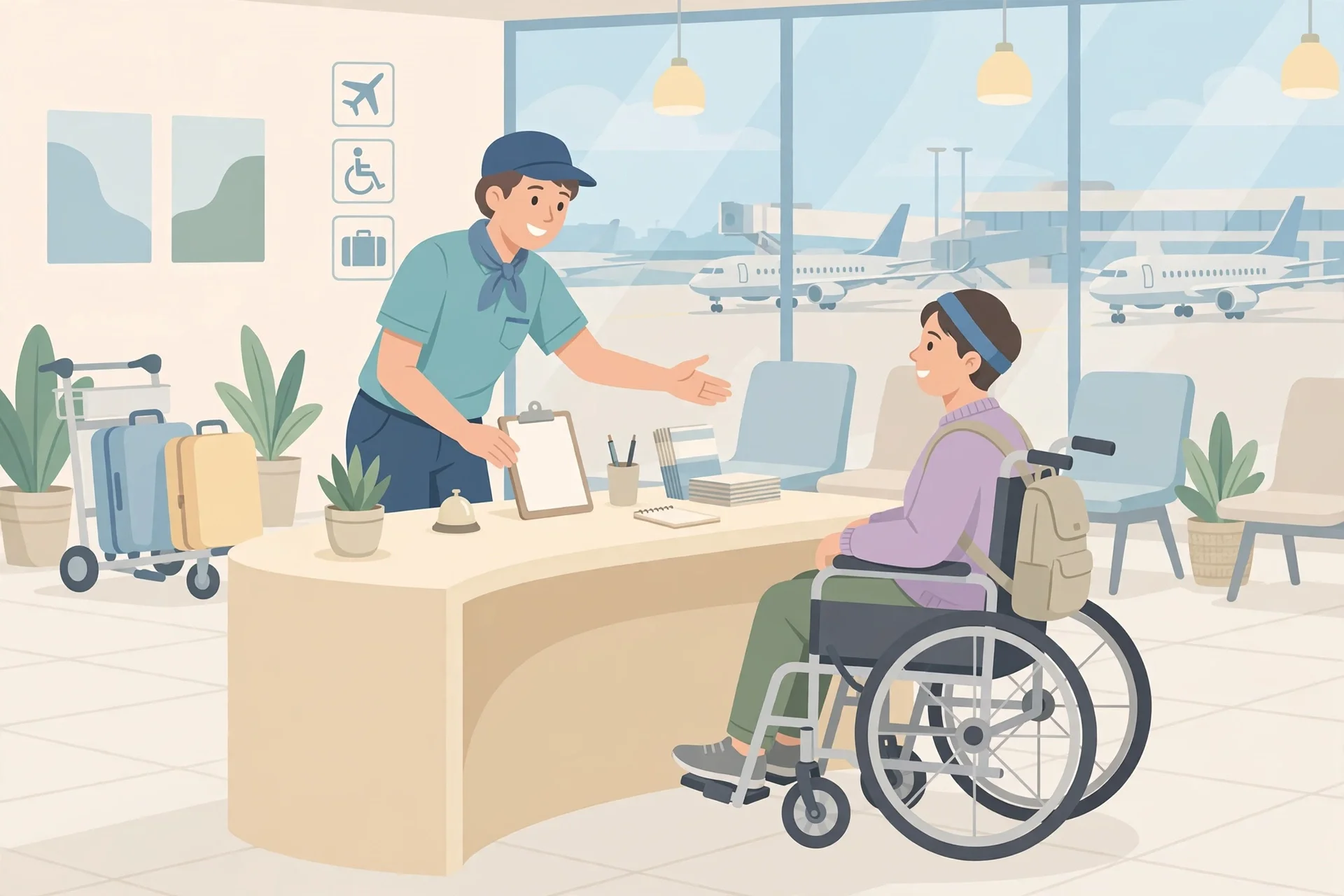
Here is how a typical assisted journey through Gatwick unfolds. 1) Arrive and make yourself known at a special-assistance point before security — the airport has dedicated help points and assistance desks in the terminals. 2) Keep your own equipment: you can take your wheelchair or mobility aid right up to the departure gate, rather than surrendering it at check-in. 3) Staff escort you through check-in, security and to the gate area, and stay available if you need help reaching boarding. 4) On arrival, your mobility aid or wheelchair is brought to the aircraft door as you disembark. In some cases you are assisted to Baggage Reclaim to collect your equipment — Gatwick states explicitly that it is never placed on the luggage belt. 5) On the arrivals route in both terminals you will find adult Changing Places facilities — large accessible washrooms with a hoist, adjustable bed and shower — free to use with no pre-booking needed. If you are departing and need one, ask the Assisted Travel team for an escort and allow plenty of time before your flight.
North vs South Terminal: What Actually Differs
Gatwick's official assisted-travel guidance applies equally to the North and South terminals, and both have adult Changing Places facilities on their arrivals routes. Unisex accessible toilets sit at or near most toilet blocks across both terminals, with a mix of right- and left-hand transfer layouts; if you need a peninsular pan, the Changing Places rooms are the recommended option. The one consistent rule across both terminals is the booking channel: it always runs through your airline, never the airport directly, so your terminal matters less than your airline's check-in location. Allow generous time regardless of terminal — and if you need a Changing Places room before a departing flight, contact the Assisted Travel team rather than trying to find it on your own. If you fly with a non-UK airline into Gatwick from outside the EU, double-check your assistance entitlement with the carrier before you travel, since UK rules do not cover every inbound flight. And if your connection passes through both terminals, confirm with your airline which terminal your check-in and assistance handover use — the inter-terminal shuttle adds time that a tight connection may not allow.
Traveling with Hidden Disabilities or Extra Medical Needs
Gatwick's assisted-travel page also points to resources for less visible needs. For autistic spectrum travelers it links to the National Autistic Society's travel advice; for passengers with ADHD it recommends extra preparation time and notes dedicated play areas for young children in both terminals. Frontline colleagues are being trained through the Dementia Friends programme to recognize and support passengers with dementia and their travel companions. Travelers with Crohn's disease or ulcerative colitis are pointed to a travel factsheet from Crohn's & Colitis UK, and those with a stoma to Colostomy UK's resources — including a 24-hour helpline (0800 328 4257) and a free travel certificate explaining the condition to aviation staff. The practical takeaway is the same across all of these: bring double your usual supplies, carry a copy of your prescription and product codes, and tell your airline what you need before you fly.