IONIQ 6 battery, power, range and charging from Motorvogue; Highway Driving Assist 2, lane systems and 5-star Euro NCAP from Smiths Motor Group; updated model price, grant and 422-mile range from WhichEV; Motability listing status from Charles Hurst. All checked 3 November 2026.
Why a saloon, and why assistance matters
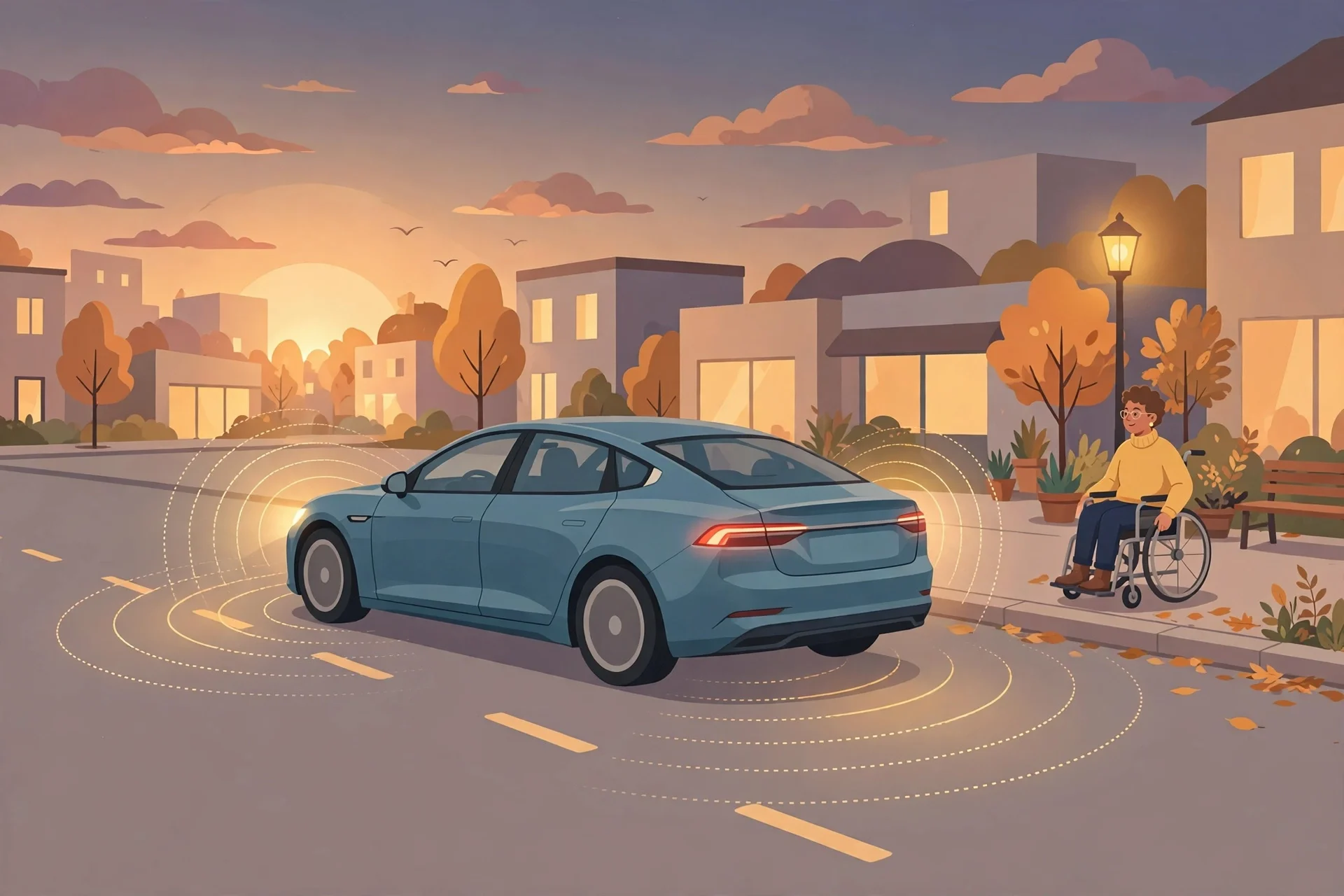
A saloon's low floor and long wheelbase give a smooth ride and a large boot, but the low seating position can make transfers harder than in an SUV, so the case for a saloon rests on range, comfort and assistance rather than access. Driver assistance changes that balance for drivers who tire on long journeys: lane-keep assist steers gently to hold the lane, lane-follow assist centres the car even on curves, and highway driving assist combines lane centring with distance control on motorways. For a driver with reduced mobility, these systems reduce the constant small corrections that add up to fatigue, though they never replace attention: every system in this guide requires hands on the wheel and eyes on the road.
The worked example: Hyundai IONIQ 6
The Hyundai IONIQ 6 is a streamlined electric saloon with Hyundai's SmartSense suite. The long-range version uses a 77.4 kilowatt-hour battery, with rear-wheel drive at 228PS or all-wheel drive at 325PS, and a claimed range of up to 338 miles, plus 800-volt charging that supports very fast top-ups. Its assistance specification includes Highway Driving Assist 2, which maintains distance and speed on highways and helps centre the vehicle in its lane even on curves, Smart Cruise Control, Forward Collision-Avoidance Assist, Blind Spot Collision-Avoidance Assist, Lane Keep Assist and Lane Follow Assist, and the car holds a 5-star Euro NCAP rating. The updated IONIQ 6, announced in October 2026, starts at £33,240 including the £3,750 Electric Car Grant, with a larger 84 kilowatt-hour battery offering up to 422 miles, and first deliveries scheduled for early 2027. Note carefully that scheme availability changes: a dealer Motability listing for the IONIQ 6 Premium 77kWh is currently marked as no longer available, so treat any specific model as a specification example, not a current offer.
What to check before you order
Check four things against the current Motability price list, which changes quarterly. First, is the exact model and trim currently listed, and what is its advance payment: a model that was available last quarter may not be this quarter. Second, which assistance features are standard on that trim and which cost extra: on the IONIQ 6, much of the assistance kit is standard on Premium, but that is not true of every brand. Third, does the car suit your transfer and stowage needs: a saloon boot is long but shallow, and a folding wheelchair may fit where a rigid chair will not, so try it with your own chair. Fourth, what charging looks like in your life: a 77.4 kilowatt-hour battery is a big battery to fill, and home charging matters more than headline range. Book a test drive with a Motability specialist, try the assistance systems on a real road, and confirm the price list position in writing before you commit.