Skip to content
Guides / Guides

Electric Wheelchairs on the Motability Scheme: The Q4 2026 Lineup by Type

The Motability Scheme's Q4 2026 list groups its powered wheelchairs into three broad types - portable folding, standard, and configurable - and the differences between them matter more than any single model name. Here is what each type is built for, with examples from the current list, so you know which category to start your search in.

Electric Wheelchairs on the Motability Scheme: The Q4 2026 Lineup by Type

Categories and example models reflect the Motability Scheme Q4 2026 powered wheelchair and scooter price list (published 2026-10-01), checked 2026-10-03. The list changes quarterly; confirm current availability with Motability or a scheme dealer. No prices are quoted here - see the official list for current figures.

How the scheme organises powered wheelchairs

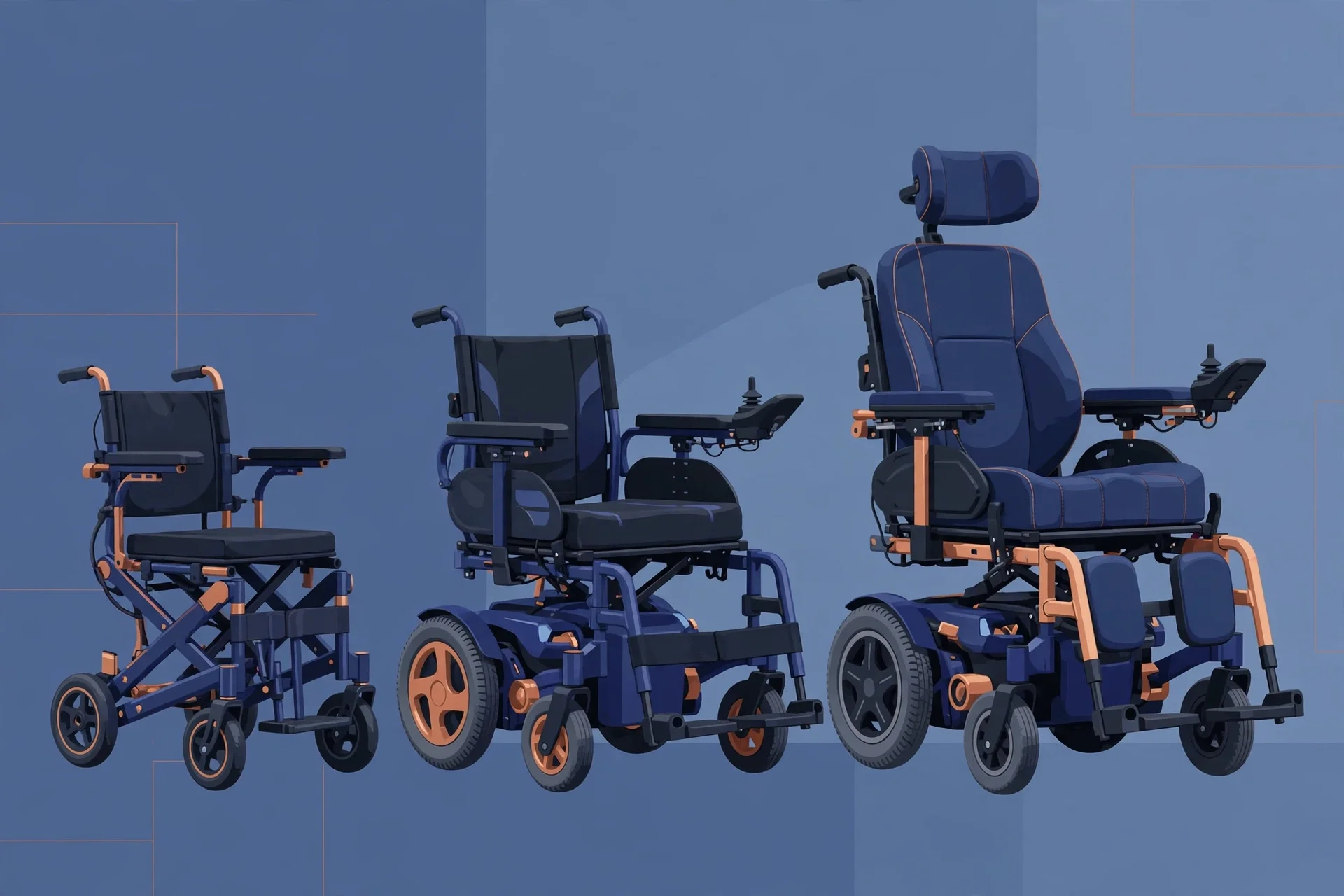
Motability's quarterly price list does not just throw dozens of powered wheelchairs at you: the models sit in broad categories that reflect what they are designed to do. On the Q4 2026 list the powered wheelchair range runs from lightweight folding chairs you can lift into a car boot, through mid-size all-rounders, up to configurable chairs with powered seating functions for more complex postural needs. Knowing which category fits your daily life narrows the field faster than scrolling model names.

Portable folding: built for transport

Portable models are the lightest of the three types, designed to fold down so they fit in a car boot or a hallway cupboard. They suit people who travel often - by car, taxi, or plane - and who can manage with basic seating and controls. The trade-off is comfort and range: smaller batteries and simpler seating mean they are happiest on short, smooth trips. The Drive Medical AeroCarbon, a folding model on the Q4 2026 list, is a typical example of the category.

Standard: the everyday all-rounders

Standard powered wheelchairs are the middle ground - bigger and more comfortable than folding models, with better range and outdoor capability, but too bulky to lift into a car without a hoist or ramp. They suit people who mainly need a reliable chair for daily indoor and outdoor use and have transport that can carry it. If your routine is home, shops, and appointments rather than frequent flights, this is usually the category dealers point you to first.

Configurable: seating that adapts to you

Configurable models are the most adaptable: adjustable seating with powered functions such as tilt, recline, elevating leg rests, and seat lift, aimed at people with changing postural or pressure-care needs. They are assessed more carefully, usually with a dealer or occupational therapist, because the setup has to match the user's body and daily routine. The Permobil M4 Nexa and the Rascal Alltrack N21, both on the Q4 2026 list, are typical examples - the former known for its powered seating range, the latter for its more rugged, all-terrain character.

How to pick your starting category

A practical way to choose: if the chair must go in a car boot regularly, start with portable folding. If it mostly stays assembled and you want comfort and range, look at standard. If you need powered seating functions, pressure management, or your posture needs change through the day, ask about configurable - and expect a proper assessment rather than a quick handover. Model availability and the list itself change every quarter, so always check the current scheme list and talk to a Motability dealer before deciding.


Sources & further reading

Current prices for powered wheelchairs and scooters on the Motability Scheme (official, Q4 2026)Motability Scheme price list 2026 overview (Vertu Motors)

Our editorial approach

CONTINUE EXPLORING

A little more useful reading.

Cold Weather Battery Care: Keep Your Power Wheelchair Charged All WinterGUIDES

Cold Weather Battery Care: Keep Your Power Wheelchair Charged All Winter

Cold weather reduces a power wheelchair battery's capacity and stretches out charging time, which means noticeably shorter range on winter days. Manufacturer guidance converges on a simple routine: charge and store the chair at normal room temperature — around 20°C — plug in every night, and keep the battery topped up rather than running it flat. In practice, that means a full charge before heading out, shorter planned trips on freezing days, carrying the charger, and never leaving the chair out in the cold overnight.

Read the guide
Over 300Wh? Airline Approval Rules for Your Power Wheelchair BatteryGUIDES

Over 300Wh? Airline Approval Rules for Your Power Wheelchair Battery

If your power wheelchair's lithium-ion battery is rated over 300 watt-hours (Wh), flying takes more than just checking the chair into the hold: IATA's rules classify the wheelchair as a UN 3556 lithium-ion-powered vehicle (Class 9), require your airline's approval before the flight, and - from the 2027 edition of the Dangerous Goods Regulations - add new operator obligations specifically for mobility-aid batteries above 300Wh. Start by reading the Wh rating on your battery label: that number decides which approval lane you are in, what paperwork to prepare, and whether a spare battery can come along.

Read the guide
Folding vs. Full-Size Power Wheelchair: Which Should Frequent Flyers Choose?GUIDES

Folding vs. Full-Size Power Wheelchair: Which Should Frequent Flyers Choose?

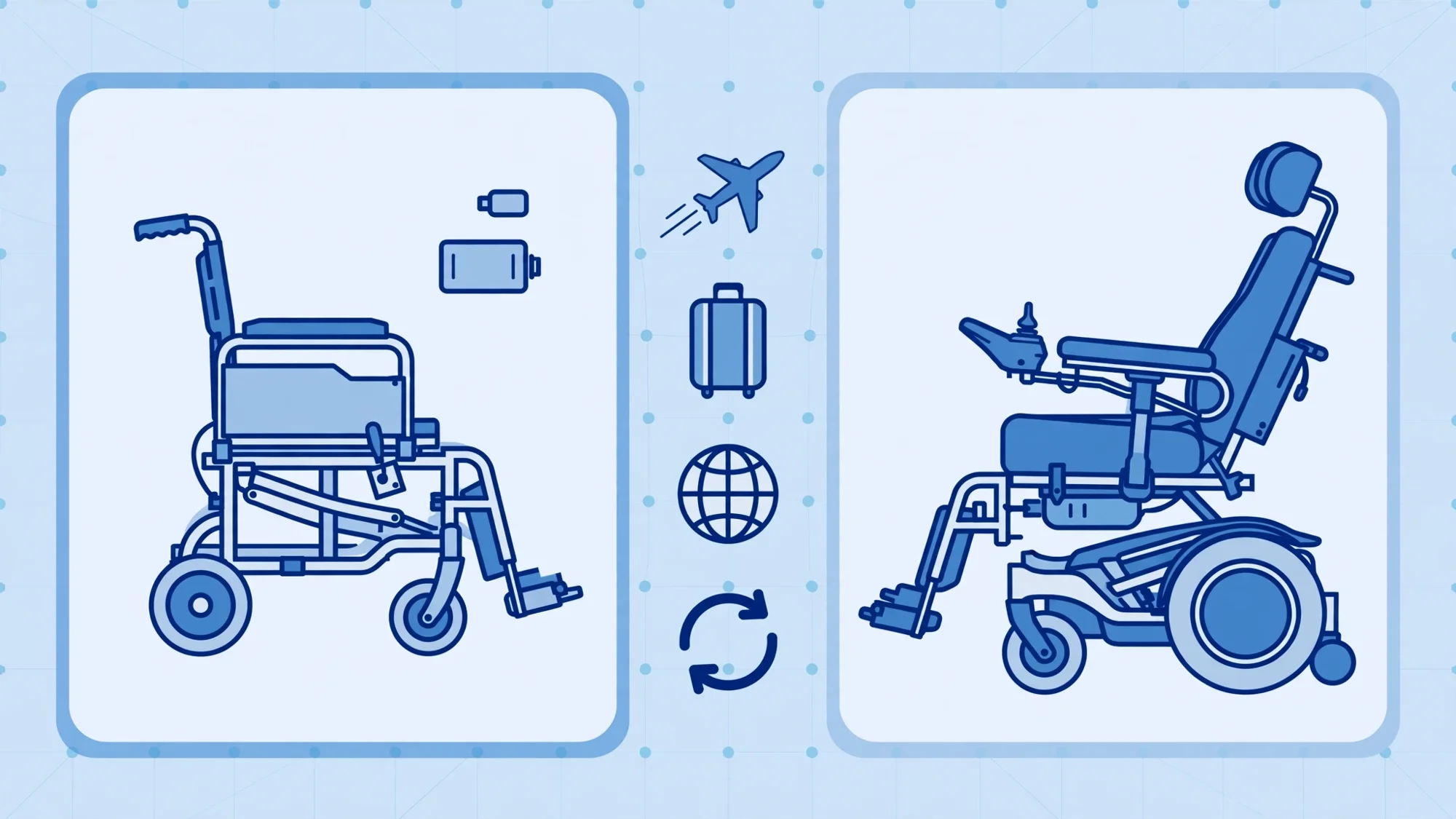
If you fly often, the choice between a folding power wheelchair and a full-size model comes down to one trade-off: portability versus comfort and seating support. Folding chairs collapse into a compact package that is easier to protect from damage, though they usually offer less range and fewer seating features — but watch the battery, because IATA's 2026 passenger guidance draws the line at 100Wh (generally no airline approval needed) and 100–160Wh (operator approval required), with at most two spare batteries. Full-size chairs give you tilt, recline and seat elevation, but they must travel in the aircraft hold, where rough handling can damage them. No rule guarantees your chair can fly — airline policies differ, so verify with your carrier before every trip.

Read the guide