
Rental prices, signed-contract terms, courtesy wheelchair locations, queue accessibility (including the Pteranodon Flyers exception), ECV queue limits, transfer rules, IBCCES Accessibility Card registration and Attraction Assistance Pass process from Universal Orlando Resort's official Accessibility Information page; wheelchair and ECV rental availability, Disability Access Service and other queue-access programs, designated disability parking rules, and resort hotel accessibility from Walt Disney World Resort's official Accessibility Services for Guests with Disabilities page. Both pages opened and verified on 10 October 2026.
In brief
- Pre-trip checklist: register for the free IBCCES Accessibility Card at least 48 hours before a Universal visit so the team can set up your Attraction Assistance Pass.
- Decide rental vs. your own device: Universal publishes wheelchair rental at $15/day and ECVs at $75–$95/day with a signed contract; Disney rents wheelchairs and ECVs across its parks, water parks, and Disney Springs.
- Read each resort's official accessibility guide before you go and check queue and transfer rules per attraction — never assume a specific ride is guaranteed accessible.
- Bring a valid disability parking permit and photo ID, keep your rental receipt, and allow extra time for transfers and rest breaks through the day.
Renting a wheelchair or ECV: what the two resorts offer
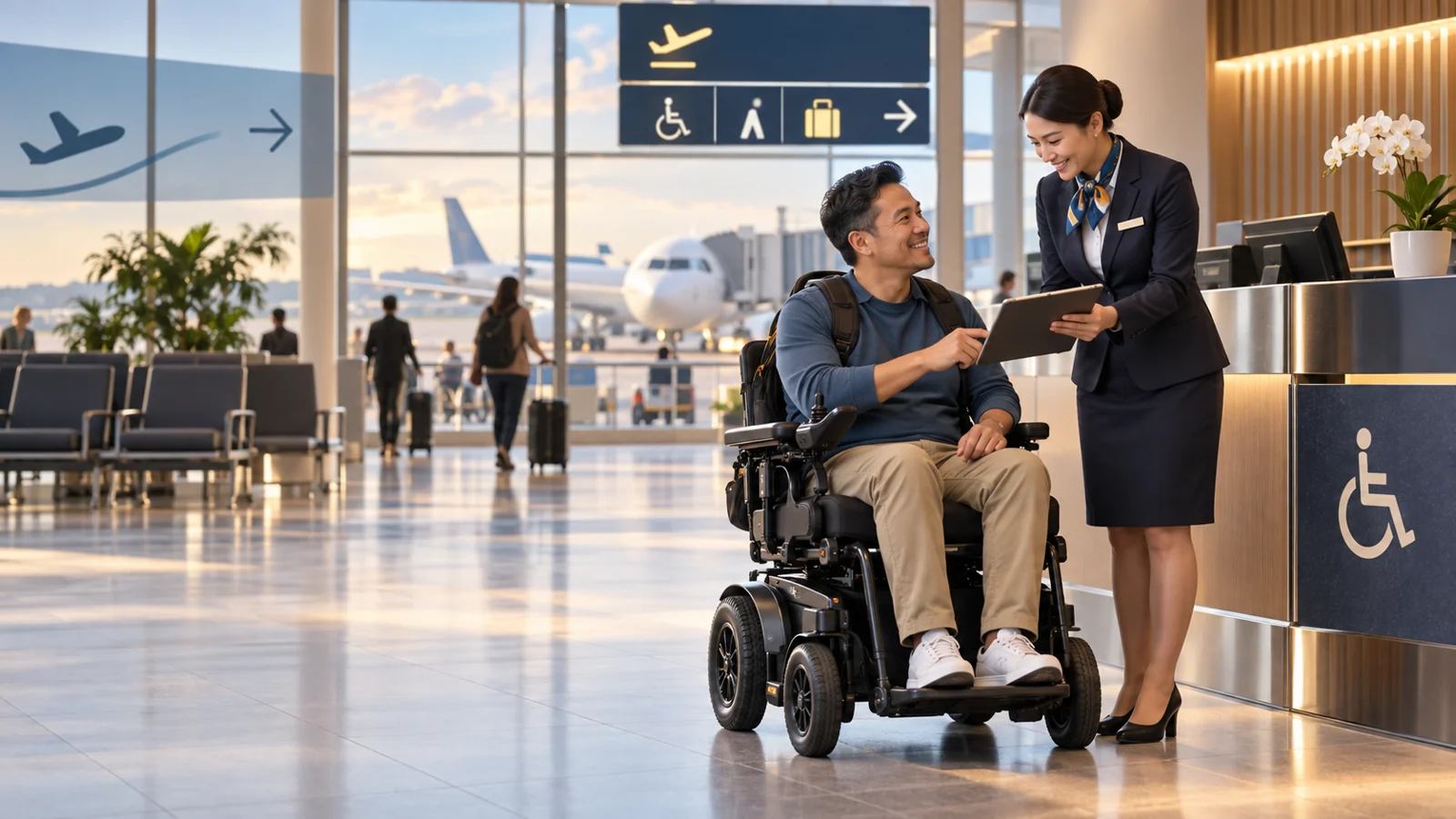
You do not have to bring your own device to Orlando's parks — both major resorts rent mobility equipment on site. Universal Orlando publishes its current rental terms: manual wheelchairs are available for 15 dollars per day with a signed rental contract, regular ECVs for 75 dollars per day, and Canopy ECVs for 95 dollars per day, the ECVs also requiring a signed rental contract. Courtesy wheelchairs are available for guests who need help getting from the parking areas to the rental locations at the front of the parks; at Universal Epic Universe they are found near accessible parking, and at Universal CityWalk near the first elevator bank on the third floor. Walt Disney World rents wheelchairs and ECVs across the resort, including the water parks and Disney Springs, according to its official accessibility services page. A few planning notes follow from the official pages. Rental locations sit at the front of the parks, so the courtesy chairs cover the gap between your car and the counter. If you bring your own device, Universal notes that wheelchairs, ECVs, and other mobility devices must fit without being forced onto lifts, ramps, and into designated wheelchair spaces — and on resort shuttles, guests may remain in securely fastened wheelchairs, while ECV riders must transfer to shuttle seating. Prices and rental hours can change, so confirm the current terms on each resort's official accessibility page before your visit rather than relying on a blog post from last year.
Queues and ride access: how transfers and accessibility work
How you actually get onto the rides differs between the resorts, and the official pages are the authority. At Universal Orlando, all attraction queues are accessible to guests using wheelchairs — with one published exception, Pteranodon Flyers at Islands of Adventure, where you should see an Attractions Attendant for assistance. ECVs, however, generally cannot go through the queues: with the exception of Hogwarts Express, Universal's attraction queues cannot accommodate electric convenience vehicles. At most attractions, if you can transfer to the ride vehicle seat by yourself or with help from someone in your party, you may transfer; some attractions can accommodate guests who remain in their standard wheelchair. For the full per-attraction list of requirements and boarding accommodations, Universal points guests to its Guide for Rider Safety and Accessibility and to the attendants at each attraction. Disney takes a programs-based approach: its accessibility services page lists Rider Switch, Single Rider, Attraction Queue Re-Entry, and the Disability Access Service (DAS) among the ways guests with disabilities access attraction queues. Disney encourages guests to learn about these programs in advance of a visit to work out which suits their party, and to talk to Cast Members or Guest Relations for personalised guidance. Two things neither resort does: promise that a specific ride will work for a specific guest, or skip the per-attraction safety rules. Build the day around the official accessibility information for the rides on your must-do list, ask at each attraction entrance about the transfer process, and allow more time between rides than a non-disabled group would.
Access services worth arranging before you arrive
The single most useful pre-trip step for Universal Orlando is the free IBCCES Accessibility Card (IAC). You register online at AccessibilityCard.org or through its free mobile app — Universal recommends registering within 30 days of your visit and at least 48 hours beforehand. Once your requirements are met, a member of Universal's Guest Accessibility team contacts you to discuss your request for an attraction queue accommodation and, where applicable, sets up your Attraction Assistance Pass in the Universal Orlando Resort app. Note Universal's own caveat: the card does not guarantee you will receive a specific queue accommodation. If you cannot register in advance, you can call Universal's Guest Accessibility team on (407) 817-8349 or visit any Guest Services location in the parks. For Disney, the equivalent pre-trip work is reading up on the queue-access programs — DAS, Rider Switch, Single Rider, and Attraction Queue Re-Entry — on the official accessibility pages, so you arrive knowing which options exist and can discuss your needs with Guest Relations on the day. Do not leave parking logistics to chance either: Disney designates parking areas for guests with disabilities throughout the resort and requires a valid disability parking permit, while Universal's courtesy wheelchairs bridge the parking lots to the rental counters. If you are staying overnight, both resorts describe accessible accommodation: Disney lists accessible rooms and service-animal arrangements at its resort hotels, and Universal states that its hotels comply with accessibility requirements, with specially equipped guest rooms and room numbers in Braille on accessible room entrances.
Shows, dining, and making the day work
The rides are only part of the day. Universal's shopping and dining venues are wheelchair accessible, and its stage shows and parades have reserved Accessible Viewing areas marked with the International Symbol of Accessibility — see an attendant for assistance finding them. Disney's accessibility pages point to similar services at the resort hotels and across the parks, with Guest Relations as the in-park help desk for anything the website did not answer. A few practical habits make the day smoother. Florida heat and afternoon storms are real: schedule the headline attractions earlier, keep water and sun protection with you, and treat shows as natural rest breaks in air conditioning rather than filler. Because ECVs generally cannot go through most attraction queues at Universal, and Disney's queue programs each have their own process, brief your whole party in advance so nobody is learning the system at the entrance of the first ride. Keep your rental receipt and photo ID on you through the day, keep phones charged for the resort apps (wait times, show schedules, and Universal's AAP all live there), and remember that attendants and Cast Members are the final word on any access question — the website gets you 90 percent of the way, and a 30-second conversation at the attraction entrance closes the rest.