Begin with the bus you will actually board
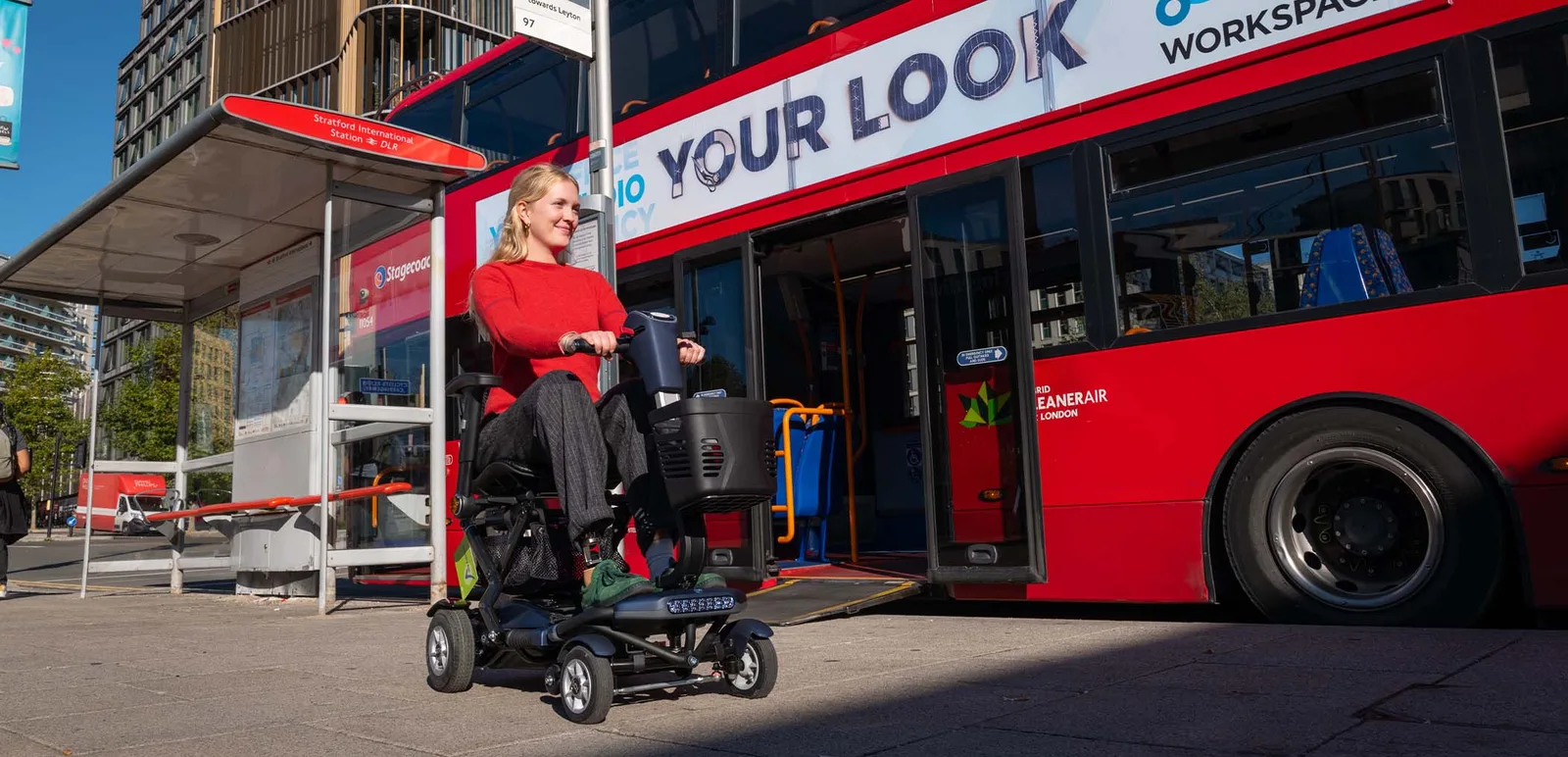
A scooter journey depends on the operator, the vehicle and the equipment being carried. A statement that a town has accessible buses does not settle whether a particular scooter can board a particular service. Start with the route number and operator, then give the scooter’s exact model and occupied dimensions. If the operator uses a scooter assessment or permit scheme, complete that process before relying on the journey.
Information to send with a route enquiry
| Journey detail | Why it belongs in the enquiry |
|---|---|
| Route, direction and boarding stops | Vehicles and stop layouts may differ within one network. |
| Scooter model and occupied size | The operator needs the equipment configuration you will use. |
| Date and approximate time | This makes the enquiry about a real service. |
| Assistance or permit already held | The team can identify any additional assessment required. |
Practise the complete boarding sequence
Boarding is more than fitting through the entrance. The route continues past the driver, around any internal turn and into the designated space. Follow the operator’s instructions for positioning and securing the equipment; do not invent a restraint arrangement from what happens on another service.
A quiet practice journey makes it easier to discover where the manoeuvre becomes difficult. Include getting off at the destination: a workable departure stop does not establish that the return stop has the same kerb, pavement space or ramp approach.
Plan for a missed service
Keep the operator’s answer with the itinerary, including any permit conditions. Leave enough time to use a later service, and identify a workable return option. A vehicle substitution or occupied space can change an otherwise well-prepared trip. The aim is to prevent one interrupted connection from leaving you without a way home.