Scope: TSA Cares screening support and US DOT airline wheelchair-assistance rules for US airports; busy-period buffer advice varies by airport.
In brief
- Book TSA Cares at least 72 hours before departure — it arranges a trained Passenger Support Specialist for screening, not expedited screening.
- Wheelchairs come from your airline, not TSA: request wheelchair assistance when you book and self-identify at the airport.
- Airlines must assist promptly from curb to seat and never leave you unattended more than 30 minutes; ask for the airline's Complaints Resolution Official if help is denied.
What TSA Cares Is and How to Book It
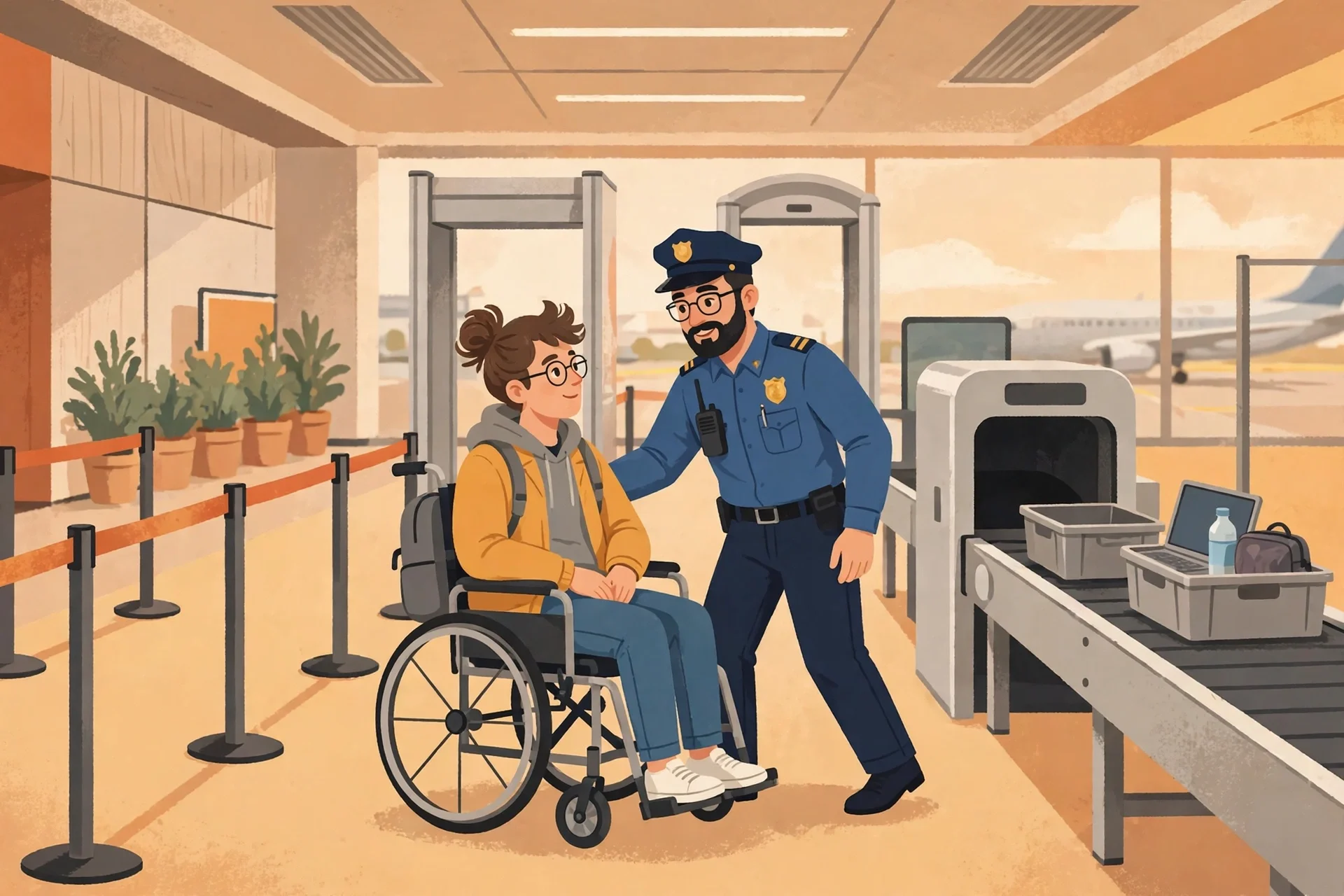
TSA Cares is a helpline run by the Transportation Security Administration for travellers with disabilities or medical conditions, and it is the single best step you can take before flying with a wheelchair in the United States. You can reach it by calling (855) 787-2227 or by submitting the online form on the TSA website — and you must do so at least 72 hours before your departure. When you contact TSA Cares, you can request a Passenger Support Specialist (PSS): a TSA officer with specialized training for assisting people with disabilities through the screening process. The specialist helps by explaining the screening options available to you, answering questions about what to expect, and coordinating the screening so it goes as smoothly as possible given your needs. This is especially useful if you travel with unusual mobility equipment, medical devices, or conditions that make standard screening procedures difficult. What TSA Cares does not do matters just as much as what it does. Requesting a Passenger Support Specialist does not exempt you from security screening — you will still be screened, and the officer will explain how that screening works for someone who remains seated in a wheelchair. It also does not provide expedited screening; it is not a fast lane. Its purpose is support and communication, not speed. The 72-hour booking window is the critical detail. If you leave it to the morning of your flight, TSA Cares cannot arrange a specialist in time, and you will go through the standard checkpoint like any other passenger. During busy travel periods, when checkpoints are crowded and staffing is stretched — airports sometimes advise travellers to allow 2.5 to 3 hours, for example around major events at Austin airport in October 2026 — having the specialist booked in advance makes a noticeable difference. Book TSA Cares as early as your travel plans allow, and treat the 72-hour mark as the latest acceptable moment, not a suggestion. When you contact TSA Cares, have your travel details ready: flight numbers, dates, airports, and a clear description of what you need — for example, that you travel with an electric wheelchair, that you cannot stand, or that you have a medical device that affects how screening should be handled. You do not need to give a medical diagnosis; a practical description of the assistance you need is what the specialist uses to plan. Travelling companions can be included in the conversation so everyone knows the plan. If you have a medical condition that affects screening beyond mobility — insulin pumps, prosthetics, medical liquids — mention it in the same request, since the specialist can brief you on what the screening officers will do and what your options are. One limitation to remember: a Passenger Support Specialist is arranged for specific airports and times, so if your plans change, contact TSA Cares again rather than assuming the arrangement follows you. And during busy travel periods — holidays, major events — TSA Cares requests can compete with high demand, which is another reason to book as early as possible rather than at the 72-hour minimum. A booked specialist plus a generous arrival buffer is the combination that absorbs most day-of surprises.
Wheelchairs Are the Airline's Job, Not TSA's
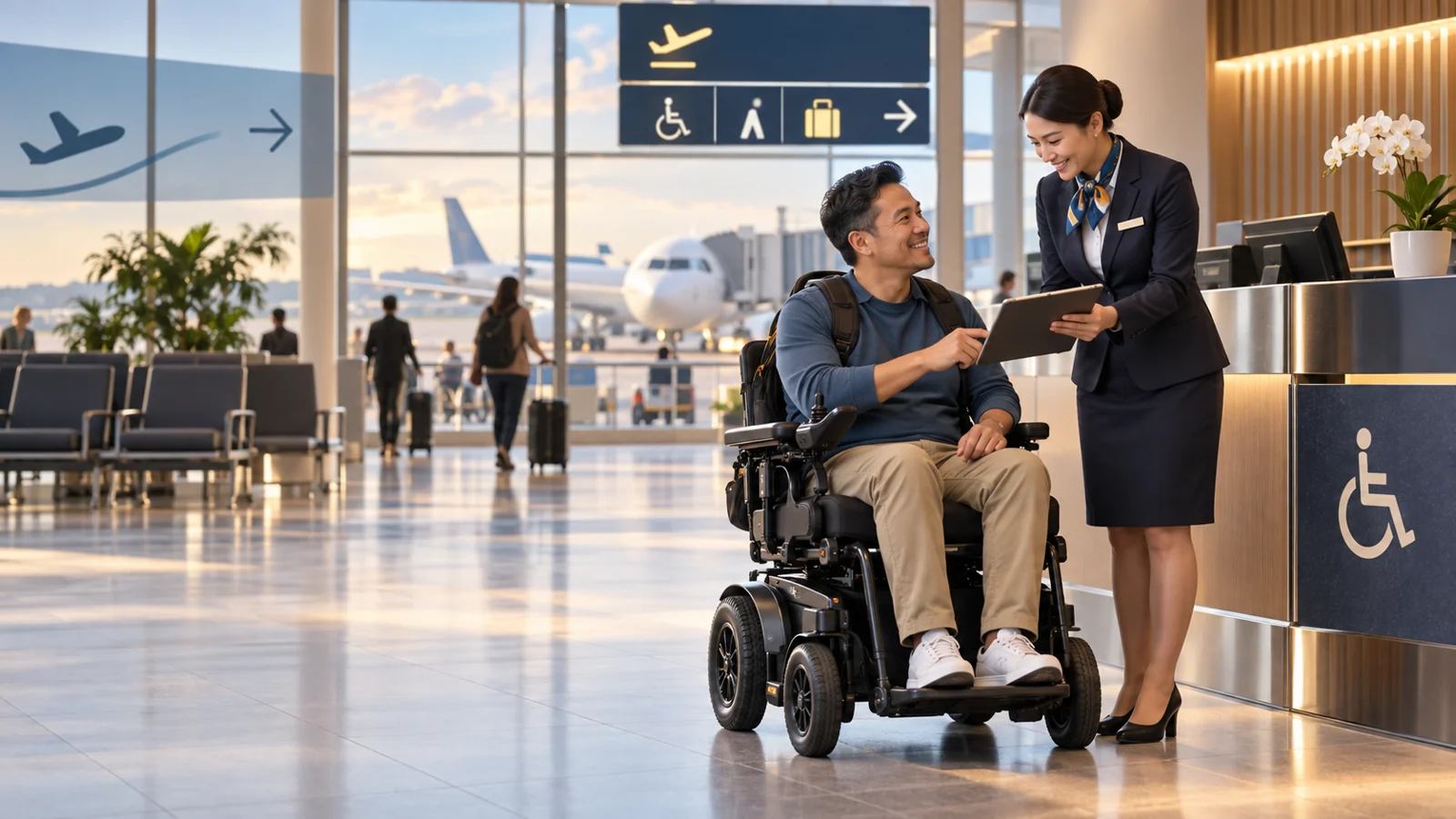
Here is the distinction that causes the most confusion: TSA does not provide airport wheelchair service. TSA handles security screening; the wheelchair you need to get from the terminal entrance to the gate, and from the gate to your aircraft seat, comes from your airline. You must request wheelchair assistance from the airline when you book — not from TSA, and not only on the day of travel. Once you have asked, US Department of Transportation rules give your request real teeth. Airlines must promptly assist passengers with disabilities from the terminal entrance (or the vehicle drop-off point) to the gate, including through security, and onto the aircraft to your seat. On arrival, the obligation runs in reverse: from your seat to a connecting gate, baggage claim, the terminal entrance, or a vehicle pickup point, whichever you need. "Promptly" is not vague goodwill; it is a regulatory expectation. The DOT rules also contain a hard limit: the airline must not leave a passenger who cannot move independently unattended for more than 30 minutes — even if a travelling companion is present, unless the passenger says it is acceptable. That 30-minute rule is worth knowing by name, because it gives you a concrete standard to point to if assistance staff disappear mid-journey. Self-identification is the practical habit that makes the system work. When you reach the airport, self-identify as a passenger who needs assistance — at the check-in desk, the designated assistance area, or wherever the airline directs. Airline staff are expected to provide wheelchairs and to guide passengers who need it, but they can only help the travellers they know about. If your flight connects, the assistance obligation continues: staff should take you from one gate to the next, and on arrival to baggage claim or to your ride. Another DOT provision worth remembering on the day: you may ask to stop at the bathroom while being moved through the airport, and staff must stop if it is on the way and doing so causes no unreasonable delay. It is a small detail that makes a long journey noticeably more humane, and it is a right, not a favour. The DOT's prompt-assistance requirement applies at every stage, and it helps to walk through them. From the terminal entrance or the vehicle drop-off point, staff must bring you to check-in, through the security checkpoint, and to the gate — and then onto the aircraft and to your seat. On arrival, they must take you from your seat to your connecting gate, or to baggage claim, the terminal entrance, or a vehicle pickup point, whichever matches your journey. Connecting flights deserve attention because a tight connection is the most common failure point: if assistance staff leave you at the arrival gate, ask immediately for help to the connecting gate rather than waiting, and if your flight has been rebooked mid-journey, remind staff that the assistance obligation travels with your new itinerary. The 30-minute rule is the backstop: the airline must not leave a passenger who cannot move independently unattended for more than 30 minutes, even when a companion is present, unless the passenger says it is acceptable. If you are left waiting, note the time — it is the simplest fact in any later complaint. Staffing problems do not suspend the rule. Self-identification is the habit that prevents most failures. When you reach the airport, self-identify as needing assistance at the first airline contact — check-in desk or assistance point — and again if you are moved between staff members, because handoffs are where requests get lost. At the aircraft door, you transfer from your own wheelchair to an aisle chair to reach your seat; you may stay in your own wheelchair until the gate, so insist on it if anyone tries to take it earlier. And remember the bathroom-stop provision: if the stop is on the way and causes no unreasonable delay, staff must stop. Asking for it is a right, not an imposition.
Your Step-by-Step Timeline
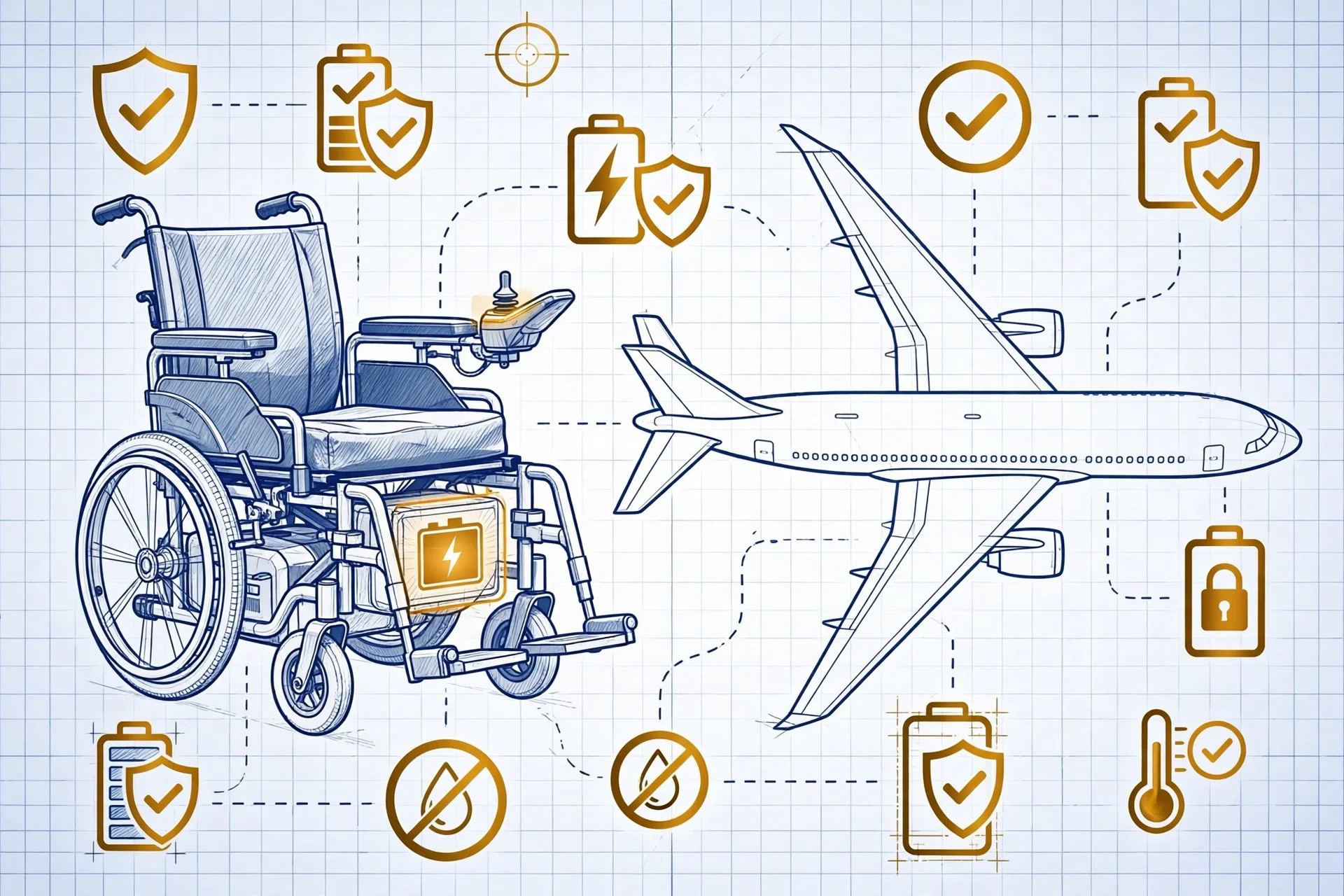
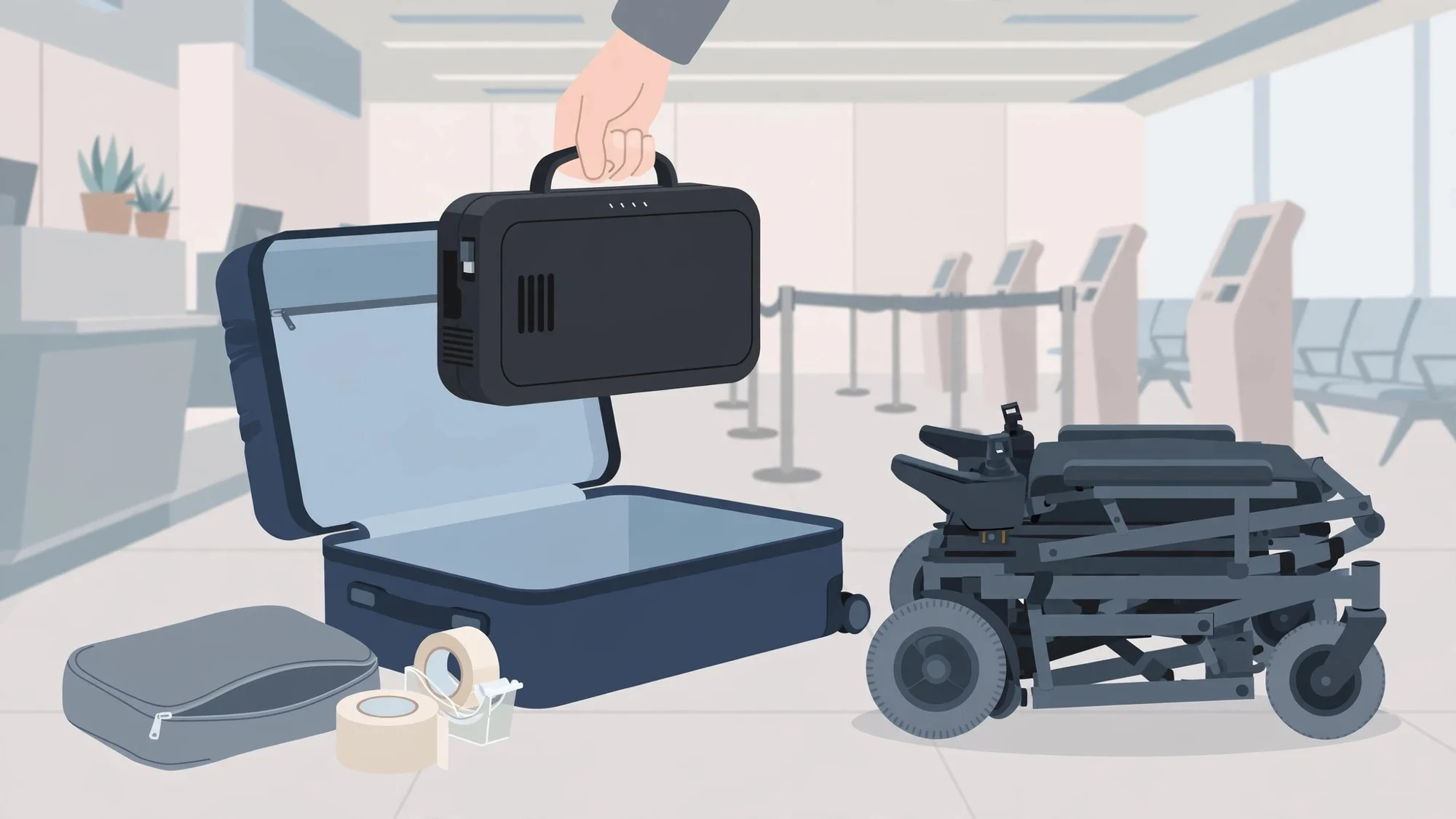
Put the two systems together and the sequence is simple. At least 72 hours before departure, contact TSA Cares — call (855) 787-2227 or use the online form — and request a Passenger Support Specialist for your screening. At the same time, or earlier, confirm that your airline booking includes wheelchair assistance; do not assume a standard booking includes it. If you use a battery-powered wheelchair, the airline may ask you to arrive one hour before the normal check-in time so the equipment can be handled correctly, so plan for that earlier arrival. On travel day, arrive early — airports routinely advise 2.5 to 3 hours during busy periods — and self-identify at the airport as needing assistance as soon as you reach the check-in desk or the airline's assistance point. At the checkpoint, your Passenger Support Specialist will explain how screening works for you and coordinate with the screening officers. If you need to stop at the bathroom en route, ask; staff must stop if it is on the way and causes no unreasonable delay. When you reach the gate, you may stay in your own wheelchair until boarding; at the aircraft door you will typically transfer to an aisle chair, which is narrower and fits down the aisle to your seat. Your airline staff should handle the transfer and take you to your seat. If any of this goes wrong — assistance never arrives, staff disappear, you are left waiting beyond 30 minutes without agreement, or screening staff will not accommodate your needs — ask for the airline's Complaints Resolution Official (CRO). Every airline operating in the US is required to have one, and they are trained on disability regulations specifically. If the CRO does not resolve it, document what happened: flight number, times, names, and what assistance was requested versus what arrived. That record supports a complaint to the Department of Transportation after the fact. Book early, self-identify on the day, and know the 30-minute rule and the CRO — those four habits cover most of what can go wrong. The day before you fly, confirm both bookings: the TSA Cares specialist arrangement and the airline's wheelchair assistance. Confirmations reduce day-of confusion more than almost anything else. At the airport, keep your booking reference accessible — on your phone, not buried in a bag — because every handoff between staff works faster with it. If something goes wrong on the day, escalate to the airline's Complaints Resolution Official (CRO) before you leave the airport; every US airline is required to have one, and they are trained on disability regulations. If the CRO cannot fix it, write down what happened — flight number, times, names, what was requested versus what arrived — and use it for a complaint to the Department of Transportation afterwards. Book early, confirm the day before, self-identify on the day, and know the 30-minute rule and the CRO.