Access Pass rules from the National Park Service (nps.gov) and the USGS online store (store.usgs.gov); all-terrain wheelchair program details from the NPS October 8, 2026 announcement and Zion's official page, verified 2026-10-18. US-specific.
The Free Access Pass: Your Lifetime Ticket
The Access Pass is probably the best deal in American public land travel, and a lot of wheelchair users have never heard of it. It is free, lasts for life, and gets you into more than 2,000 federal recreation sites that charge entrance fees — national parks, national wildlife refuges, national forests, and more.
Who qualifies? US citizens or residents of any age with a permanent disability that severely limits one or more major life activities. The 'permanent' part matters: it is not meant for a broken ankle that heals in six weeks.
Getting one is refreshingly simple. Bring a photo ID plus one of three things: a letter from your doctor that states the disability is permanent, that it severely limits everyday activities, and the nature of the limitation; or documentation from a federal agency like the VA or Social Security; or paperwork from a state vocational rehabilitation agency.
You can pick the pass up in person at more than 1,000 federal recreation sites — that is the route most people recommend, since you walk out with the card in hand. Prefer to plan ahead? Order a physical card online at store.usgs.gov, but allow up to three weeks for delivery and apply at least three weeks before your trip. Want it instantly? recreation.gov issues an electronic pass you can use right away.
One card, no renewal, no fee. If you visit national parks more than once, this is step one.
Borrowed Wheels: Five Utah Parks, Free All-Terrain Chairs
In October 2026 the National Park Service announced something wheelchair users have been asking about for years: five Utah national parks — Zion, Bryce Canyon, Capitol Reef, Canyonlands, and Arches — now offer free all-terrain wheelchairs for day use. Each park has at least one, and they go on a first-come, first-served basis.
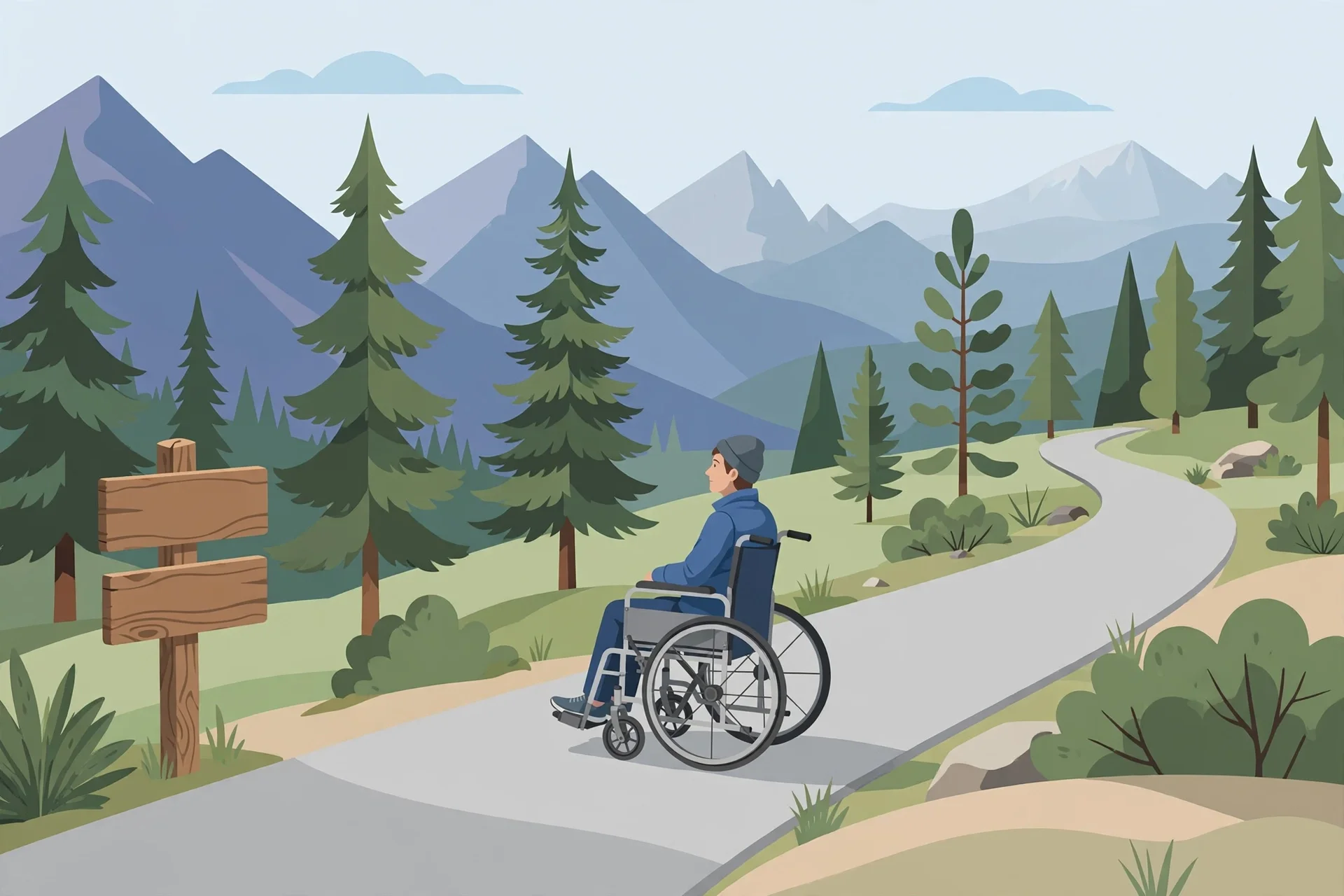
These are not your everyday push chairs. They have three wheels with big, soft tires that float over sand and gravel, a 50-pound frame, and dual disc brakes for controlled descents. They are non-motorized, so you will need a companion to push. Think of them as the difference between admiring a canyon from the parking lot and actually rolling down a dirt trail to the viewpoint.
Zion, the busiest of the five, has published the fine print, and it is worth reading before you go. Loans are single-day only, with the chair returned before the park closes for the day. No reservations — showing up early is the strategy. Both you and your companion fill out a waiver, and one of you shows an ID plus proof of insurance. A ranger then gives a short training session and runs a function check with you.
One heads-up unique to Zion: the all-terrain chair is too long to fit on the park shuttle buses. The ranger will handle this by giving your driver a permit to drive the private vehicle into the Canyon Scenic Drive instead. That is a workaround only a park insider would think to ask about, which is why talking to the rangers matters.
Your Pre-Trip Checklist
A little homework before the trip saves a lot of frustration at the trailhead. Start with a phone call — seriously, call or email the specific park you plan to visit. Ask whether the all-terrain chair is available on your dates, which trails are realistic with it, and what other accessibility services the park offers. The NPS explicitly recommends confirming borrowing details and trail access directly with the park, because each park runs its own show.
If you are ordering the Access Pass online, do it at least three weeks ahead. If you are grabbing it in person, remember it is only issued at 1,000-plus participating federal recreation sites, so check that your first stop is one of them.
For Zion specifically, pack a photo ID and proof of insurance for the waiver, and line up your companion — both of you sign, and the chair needs a pusher. No companion, no loan.
Finally, think about timing. The Utah parks are first-come, first-served for the loaner chairs, so plan to arrive early, especially on weekends and holidays. And pack the usual desert essentials: more water than you think, sun protection, and snacks. The chair solves the terrain problem; dehydration is still your problem.
The Morning of Your Visit
Show up early with your Access Pass, photo ID, and your companion. Head to the visitor center or the designated loan point and ask about the all-terrain wheelchair. You will fill out the waiver together — one of you presents the ID and insurance proof — and a ranger will walk you through a short training session and a function check of the chair.
At Zion, if your plan involves the Canyon Scenic Drive, the ranger will sort out the driving permit for your private vehicle, since the loaner chair cannot board the shuttle. At the other four parks, ask the rangers which trailheads make the most sense that day — conditions and crowds change, and they know.
Plan your route around daylight: the chair goes back before the park closes, same day. Snap a photo of the return point on your phone when you pick it up, so the end of a long trail day is one less thing to figure out. Then go enjoy the canyon — you have earned it.