Event details are for the 2026 displays named; dates, deadlines and platform rules change year to year, so re-check the event's own access page before travelling.
Reserve the platform, not just the ticket
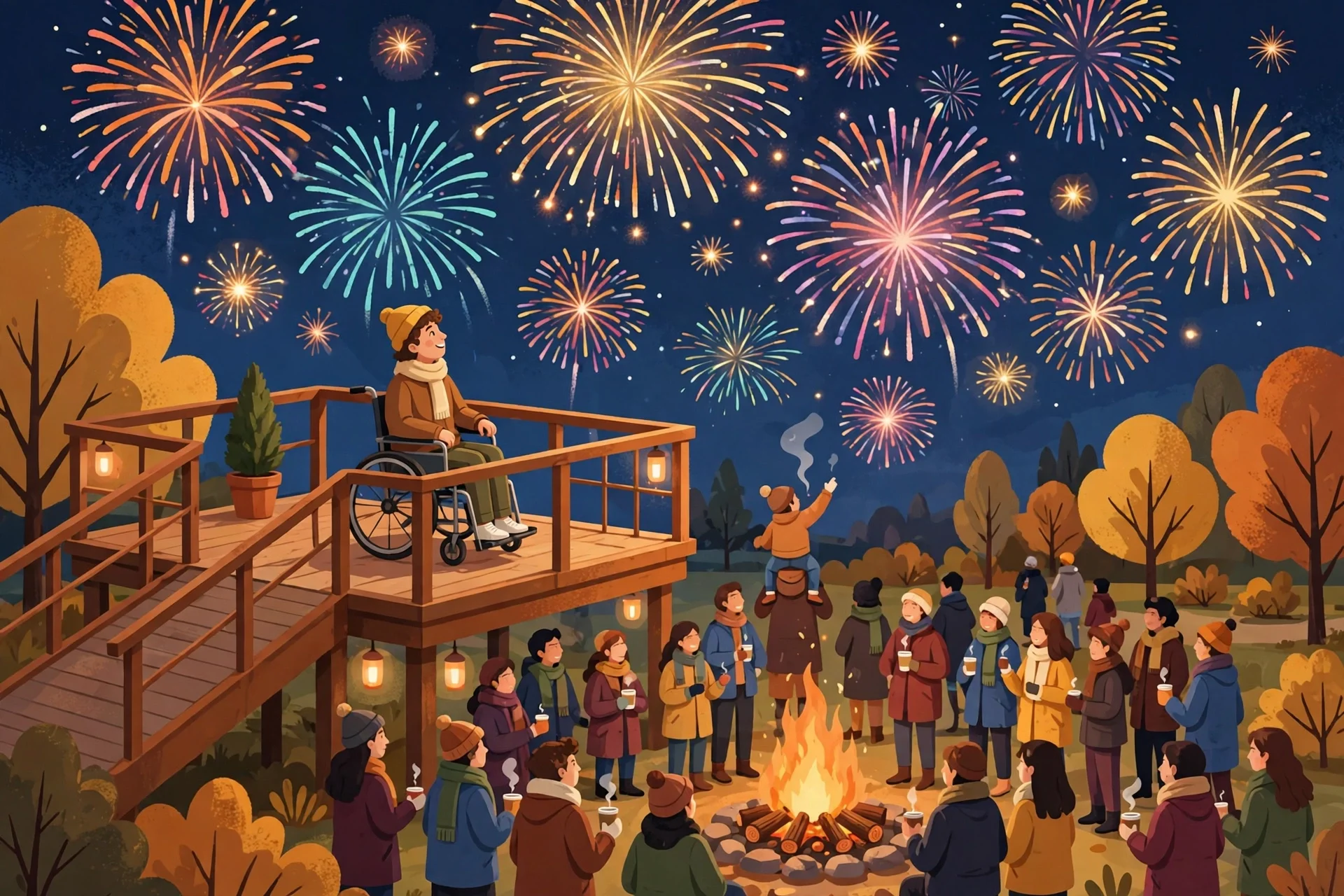
At Battersea Park Fireworks, the accessible viewing platform sits at the back of the fireworks viewing space, reached on hard standing from Albert, Alexandra, Rosery and Sun Gates, with Sun Gate the closest entrance. Space must be reserved in advance, priority goes to wheelchair users and people less able to stand, and once it is full no further guests are admitted. Two accessible toilets sit close to the platform, with more in the main toilet blocks. Blue Badge bays along Prince of Wales Drive near Alexandra Gate are first come, first served and cannot be booked, and the road closes at 5pm on Saturday and 4pm on Sunday, so badge holders must show their badge to stewards. Ticket holders who are registered disabled can also apply for a complimentary Essential Companion ticket after buying a general admission ticket, but companion tickets are not sold online.
Smaller events, different trade-offs
Beckenham Charity Fireworks 2026 takes a simpler approach: two disabled viewing areas, one on the grass at the front of the display and one on hard standing near the control tent, with no seating provided, so wheelchair users are fine but anyone who needs a seat should bring a folding chair, which is only permitted inside the disabled areas. Disabled toilet facilities are available, and a carer is admitted free with a paying ticket holder, but only if the carer ticket is applied for before 4 November. The lesson generalises: small events often beat big ones on atmosphere and carer policy, but their viewing areas are smaller, their ground is grass rather than hard standing, and their deadlines are earlier. Check the event's own access page, not a listings round-up, before you set off.
Quieter displays and the wet-ground plan
If noise or crowds are the barrier rather than the ground, look for quiet or low-noise shows. Leicester's Abbey Park runs a shorter, quieter display at 6.45pm before its main 8pm show, with a wheelchair viewing area and Blue Badge parking that must be booked in advance. Churchfields Farm runs low-noise displays on 1, 6, 7 and 8 November with a dedicated wheelchair viewing area, fast-track entry arranged in advance, free ear defender hire and on-site disabled parking. Whatever you choose, plan for wet ground: grass viewing areas turn to mud, hard-standing platforms stay usable, and a ground sheet or mudguard covers the gap between the two. Arrive before the gates fill, confirm the platform reservation in writing, and keep the event's access contact on your phone.
Bonfire Night 2026 checklist
Book the viewing platform or area first, then parking, then the companion ticket, in that order, because the platform is the item that sells out. Ask four questions: is the viewing surface hard standing or grass, how many accessible toilets sit near the platform, what time do roads and gates close, and what is the carer ticket deadline. For Battersea Park that means reserving the platform, arriving via Sun Gate, and remembering Blue Badge bays are unbookable. For Beckenham it means applying for the carer ticket before 4 November and bringing a folding chair if you need a seat. For a quiet show it means checking the early display time, since the quiet show often starts an hour or more before the main event.