Adapted boat fleets and availability change; contact operators directly to confirm the exact boat.
In brief
- Wide-beam adapted boats, not standard narrowboats, give real wheelchair access
- Training is provided for self-drive hire; crewed day trips are a gentler first step
- Adapted boats are few, so confirm the exact boat and book early
Choose a wide-beam boat, not just any narrowboat
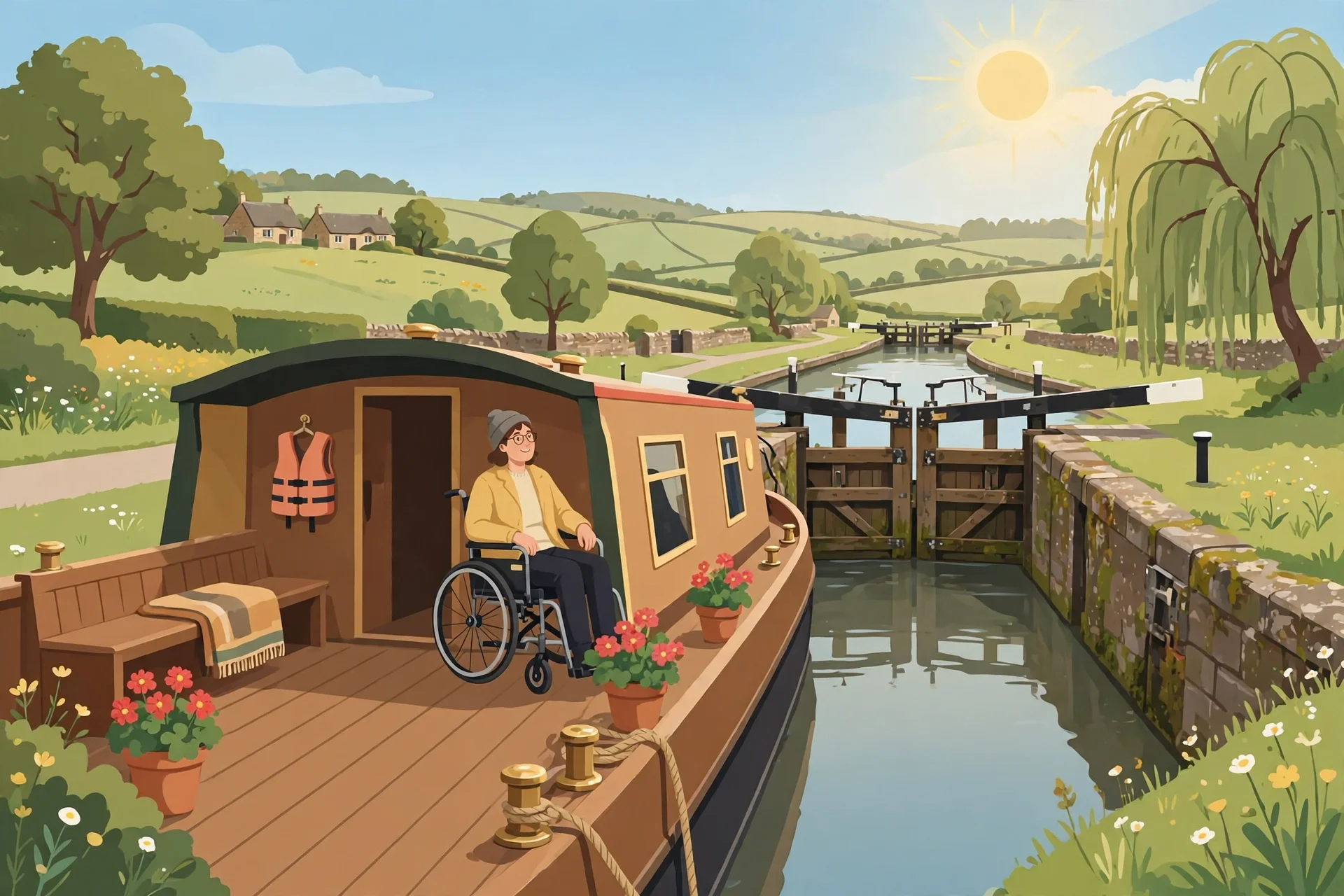
Standard narrowboats are narrow by design, with tight corridors and steps that rarely suit a wheelchair. Adapted boats are usually wide-beam craft with ramps or lifts to the deck, level access to the saloon and sleeping areas, accessible showers and toilets, and space to turn a chair. The Canal & River Trust lists adapted self-drive hire across its network, including wide-beam boats from the Bruce Wake Charitable Trust on the River Severn, Bruce Boats on the Kennet & Avon Canal, CanalAbility on the Lee & Stort navigations, the Peter le Marchant Trust on the River Soar, and the Lyneal Trust on the Llangollen Canal. Contact the operator directly for current details, because fleets and availability change.
Self-drive, crewed or day trip: pick the right format
Self-drive holidays run from a weekend to several weeks, and operators provide training so that at least one crew member can skipper the boat safely. If you would rather not steer, some trusts offer fully crewed day trips for groups of up to twelve, which is a good first taste of canal life without the responsibility of locks. The Lyneal Trust, a volunteer-led charity in Shropshire, runs accessible narrowboat holidays and day trips with volunteer skippers, and its boats are set up for guests with disabilities, illness or other vulnerabilities travelling with family or carers.
What adapted really means on board
Ask for specifics rather than accepting the word accessible. On Bruce Boats' four wide-beam boats, ramps and lifts give access to decks, saloon and sleeping areas, with fully fitted kitchens, accessible showers and toilets, a range of beds and bunks, and one boat fitted with an electrically operated hospital bed. Check the turning space in the cabin, the width of internal doors, whether the toilet has grab rails and a shower seat, and how you get on and off at moorings, since towpath surfaces and mooring heights vary.
Locks, moorings and daily routine
Locks are the physical part of a canal holiday: gates are heavy and towpaths can be uneven, so agree in advance who works the locks and whether you stay aboard while the boat rises or falls. Plan short cruising days at first, moor near pubs, shops and accessible toilets, and check where you can fill water and empty waste. Ask the operator what happens in bad weather, whether the boat has heating for cold evenings, and how charging works if you use a power wheelchair.
Booking questions to ask before you pay
Ask: what is the beam and internal door width; is there a lift or only a ramp; what accessible toilet and shower fittings are on board; is training included and how long does it take; what is the minimum crew and can a solo wheelchair user skipper with a companion; and what is the cancellation policy if access needs change. Book early, because adapted boats are few and popular, and confirm everything in writing, including which boat you are hiring, since sister boats in a fleet can differ.