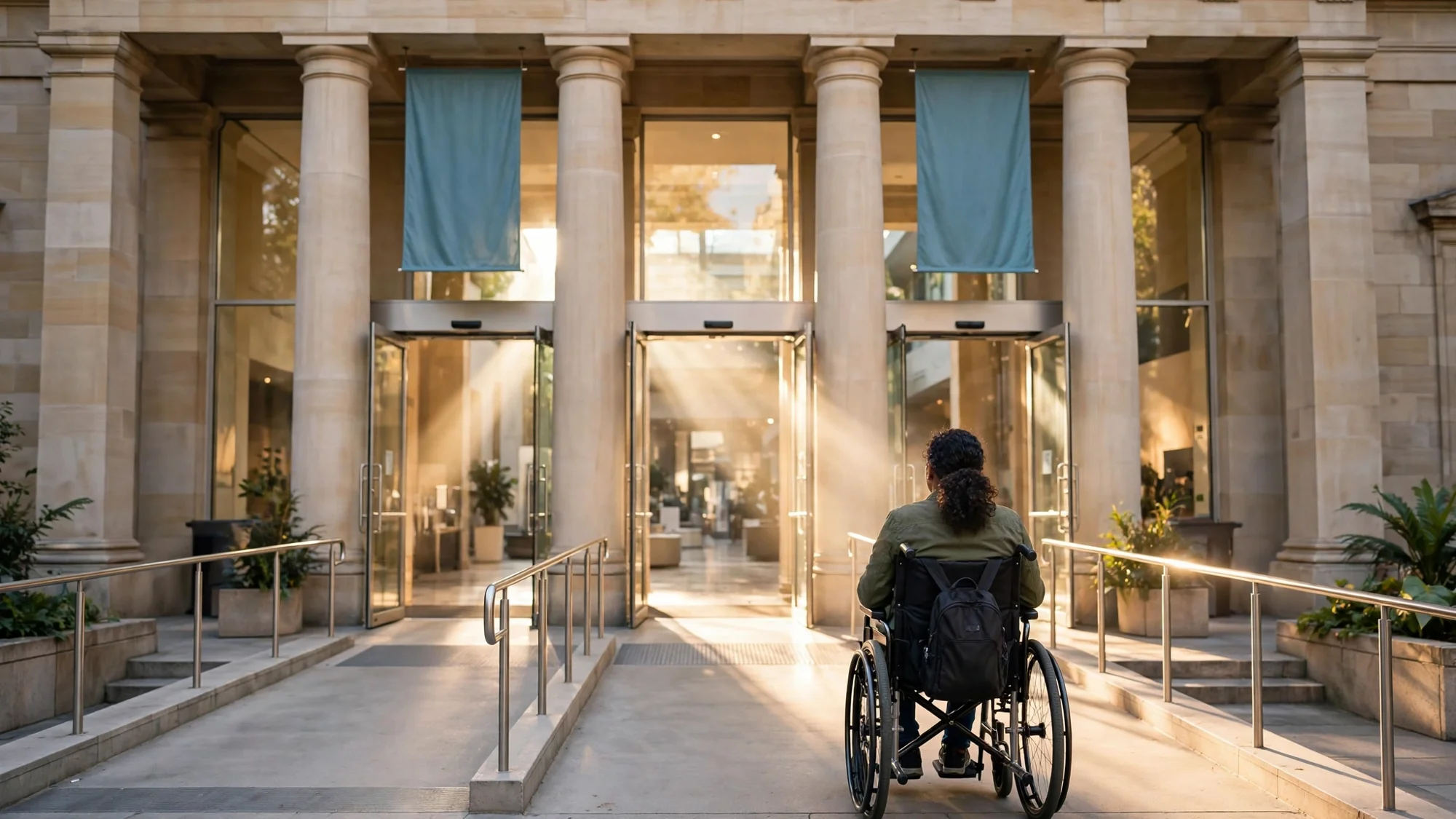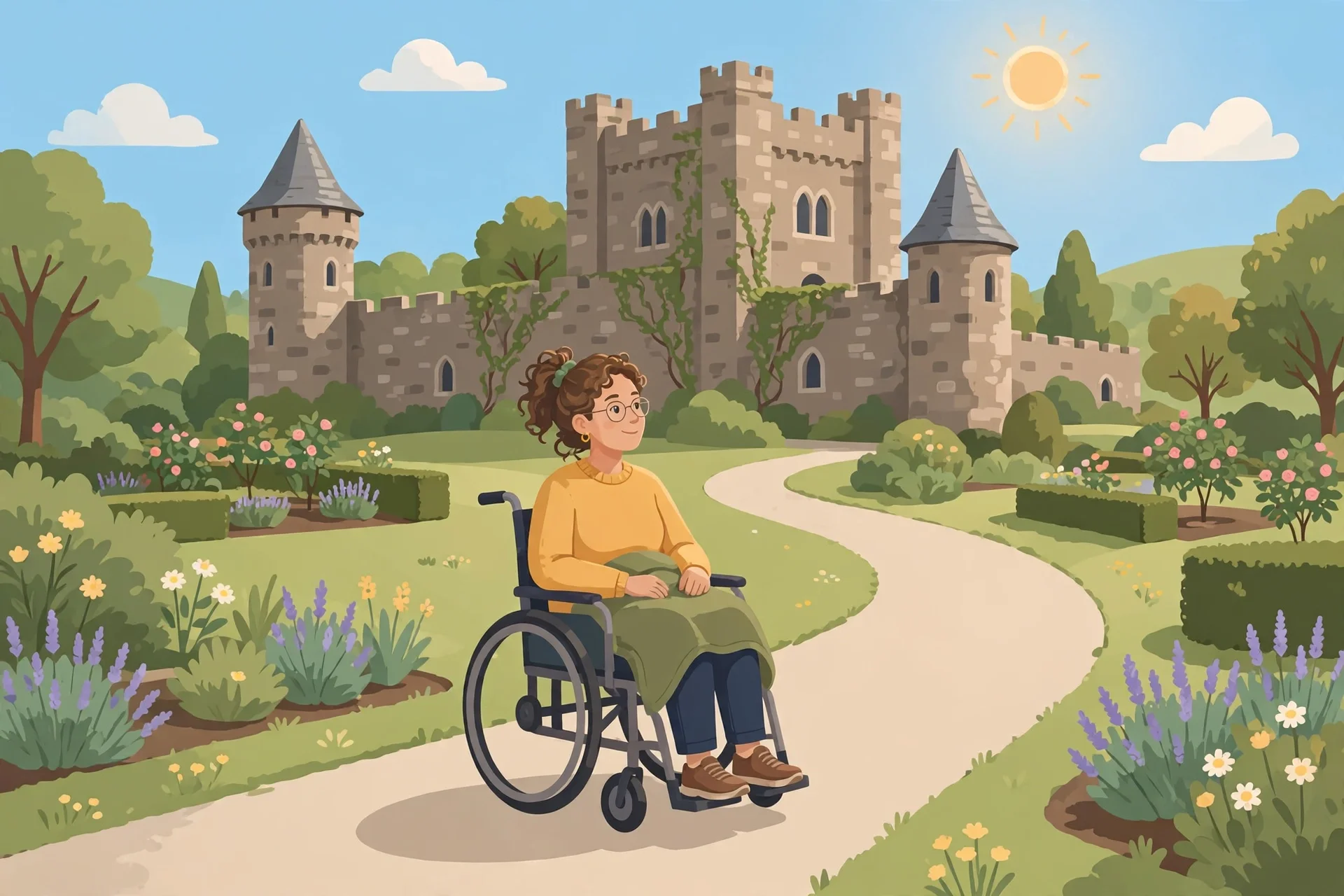
Historic site access varies room by room; read the per-site access page and call ahead before visiting.
In brief
- Read the per-site access page; general promises do not describe a castle
- Portland Castle and Snowshill Manor both offer ground-floor and garden access only
- Gardens, loan chairs and virtual tours can still make a good day out
Read the per-site access page, not the general promise
Every English Heritage and National Trust site has its own access information, and it is the only reliable source for that property. The pages list wheelchair access room by room, entrance and set-down arrangements, disabled parking distances, stairs, lift access, path surfaces and gradients, and whether wheelchairs are available on loan. Check the page close to your visit, because access arrangements change with conservation work, and call the site in advance if anything is unclear. A site that says limited access is not a bad visit, it is a visit you can plan properly.
Portland Castle: ground floor works, upper floors do not
Portland Castle shows the typical pattern. There is disabled access to the Captain's House, the ground floor of the castle, the gift shop and the Governor's Garden, with ten disabled bays in the car park five metres from the site entrance. There is no access to the first floor or the outer gun deck, and the route from the ground floor to the lower gun deck involves three to five steps. Paths are predominantly gravel with some stone surfaces, and benches are placed around the grounds and in most rooms, so a visit built around the ground floor and gardens works well.
Snowshill Manor: three rooms, a portable ramp and a virtual tour
Snowshill Manor in the Cotswolds is equally specific. The manor entrance is up three steps of about 150 millimetres each, with a temporary portable ramp available on request, and powered mobility vehicles cannot be accommodated inside because of entrance steps and narrow corridors. Once inside, wheelchair users can access three ground-floor rooms without further steps, while the other three ground-floor rooms each have a single stone step without a ramp, and the first and second floors are reached only by stairs. A virtual tour on a tablet shows the rooms you cannot reach, and only a small part of the formal gardens is wheelchair accessible, with surfaces varying including gravel paths.
Gardens are often the best part of the visit
At many historic sites the grounds carry the day even when the house does not. Portland's Governor's Garden, Snowshill's garden rooms and the grounds of most castles offer level or gently sloping routes, seating and space to move, even where towers and keeps are out of reach. Ask about path surfaces, because bonded gravel, tarmac and firm level paths suit wheels far better than loose gravel, cobbles and grass. Ask whether a wheelchair is available on loan, whether the site offers a set-down point close to the entrance, and whether Blue Badge parking is free, since English Heritage offers free Blue Badge parking at its sites.
Questions to ask before you book
Ask: which rooms and areas are step-free, and which are not; what are the path surfaces and gradients; is there a portable ramp or a wheelchair on loan; where is the nearest accessible toilet and is there an adult changing area; is there a set-down point and how far is disabled parking from the entrance; and is there a virtual tour or handling collection for the parts you cannot reach. If the answers show that only the gardens and ground floor work, decide whether that is enough for your day, and pair the visit with a nearby fully accessible attraction if it is not.