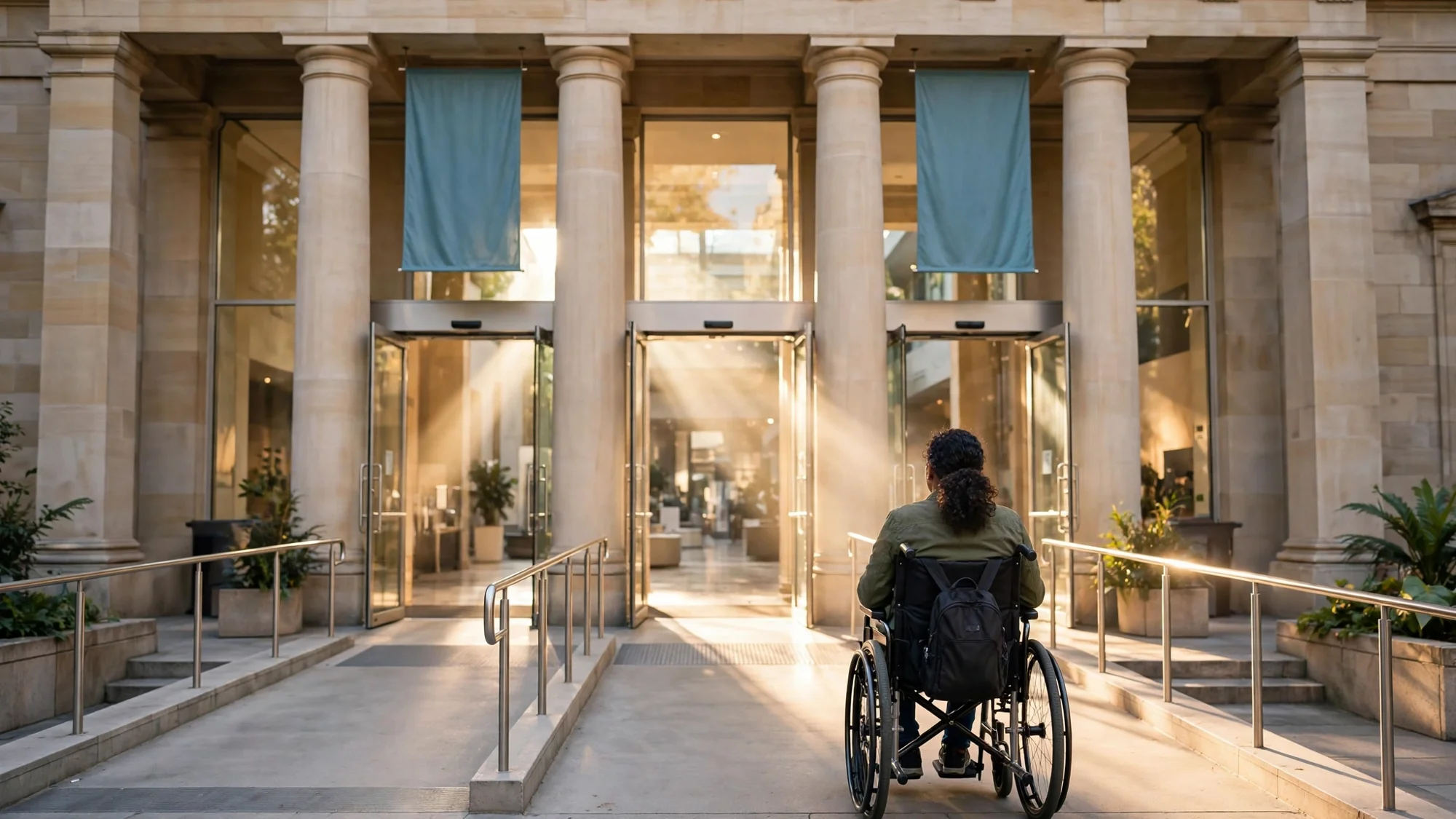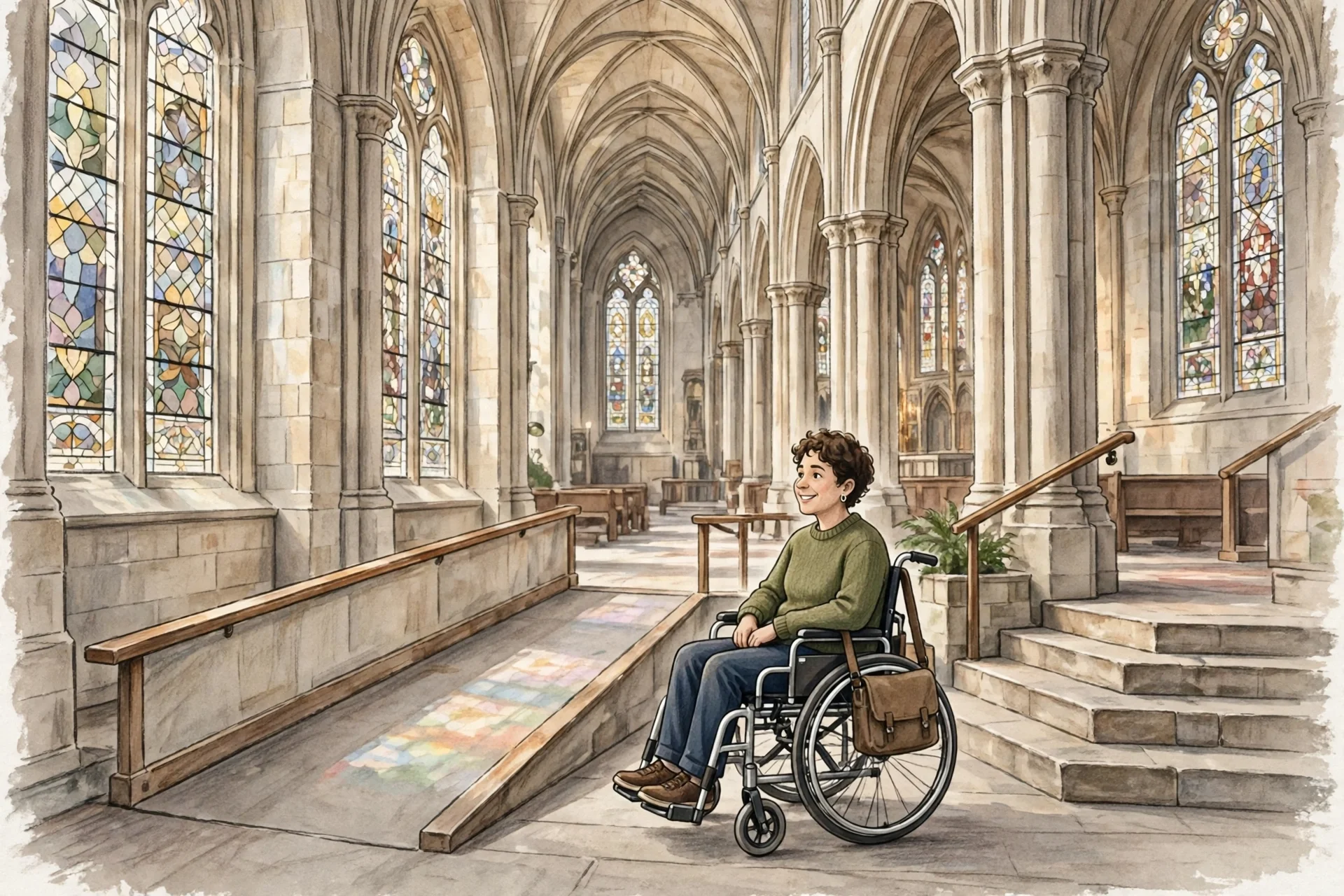
Historic church access varies by area; the per-site access guide is the reliable source.
In brief
- York Minster's main floor is one level; only the first section of the Quire is wheelchair accessible
- The Tower needs 275 steps; the Undercroft and Crypt are lift served
- Check service times, Changing Places and loan chairs before visiting any historic church
York Minster: one level for the main floor, steps for the rest
York Minster's access guide says the West End, Nave, North Transept, South Transept and East End are on one level, with paved stone floors throughout. There is stepped and ramped access to the Quire from the Nave, but only the first section of the Quire is accessible for wheelchair users, because three sets of shallow steps lead up to the high altar partway down. The Chapter House has convenient sloped access from the North Transept. The Undercroft, Treasury and Crypt are reached by stepped and lift access from the South Transept, with level or ramped access throughout the Undercroft and a platform lift to the Treasury and Crypt. The Tower is the exception that proves the rule: it has no wheelchair access, requiring 275 stone steps up a spiral staircase. Wheelchairs are available on request, registered assistance dogs are welcome, and accessible toilets are available, although the Minster does not currently have a Changing Places toilet, with the nearest at York Explore Library on Museum Street.
Services, quiet times and the questions that matter
Because cathedrals are working churches, services, choir rehearsals and concerts change the atmosphere and sometimes close areas, so check the day's service times before you go, and expect the building to be cold even in summer, as York Minster itself warns. Stone floors are generally sound but uneven in places, so practical footwear helps, and light levels vary, especially in the Undercroft, which is lit artificially throughout.
Five questions to ask any historic church
Before visiting any cathedral or large church, ask: is the main entrance ramped or stepped, which parts of the floor are level, is there a lift to the crypt or undercroft, is there a Changing Places facility or only a standard accessible toilet, and are wheelchairs available to borrow? If the church is small and has no published access guide, a phone call to the parish office will usually answer all five questions.
Making the visit work
Arrive through the accessible entrance rather than the main tourist door if they differ, and ask staff to show you the ramped route to the shop, since York Minster notes there is no ramp access directly into its shop from street level, although flat-level access exists from inside the Nave. Large-print and braille documents and a hearing induction loop are available at York Minster, and many cathedrals offer audio description pages and visual stories for exhibitions, so ask what formats exist for the exhibition you want to see. Treat the visit as a main-floor experience with a crypt or undercroft if the lift is working, and enjoy the stained glass, which at York Minster is best appreciated with binoculars for the finer detail.