UK ferry travel. Operator procedures vary by route and vessel; the 48-hour notice point is the operator and GOV.UK guidance position, not a guarantee for every sailing.
In brief
- Book assistance at least 48 hours ahead and get it confirmed in writing
- Ask how boarding works on your specific vessel before you travel
- On overnight routes, book adapted cabins early and confirm the layout
Book assistance at least 48 hours before you sail
Tell the operator about your needs when you book, or at least 48 hours before departure, so port and ship staff can prepare. Stena Line, for example, asks passengers to give at least 48 hours notice of accessibility, mobility, medical or assistance needs, including travel companions, medical equipment, mobility aids and assistance dogs. If you booked through a third party, contact the operator directly to make sure the request reached the port and ship teams. Say what kind of help you need in plain terms: step-free boarding, a parking space near the lift, help with luggage, or an accessible cabin on an overnight sailing. Ask the operator to confirm the request in writing, and keep that confirmation with your ticket. If your needs change, update the operator as early as you can, because some arrangements, such as an adapted cabin or a specific boarding method, depend on the vessel and cannot be improvised at the gangway.
At the port: check-in, parking and boarding
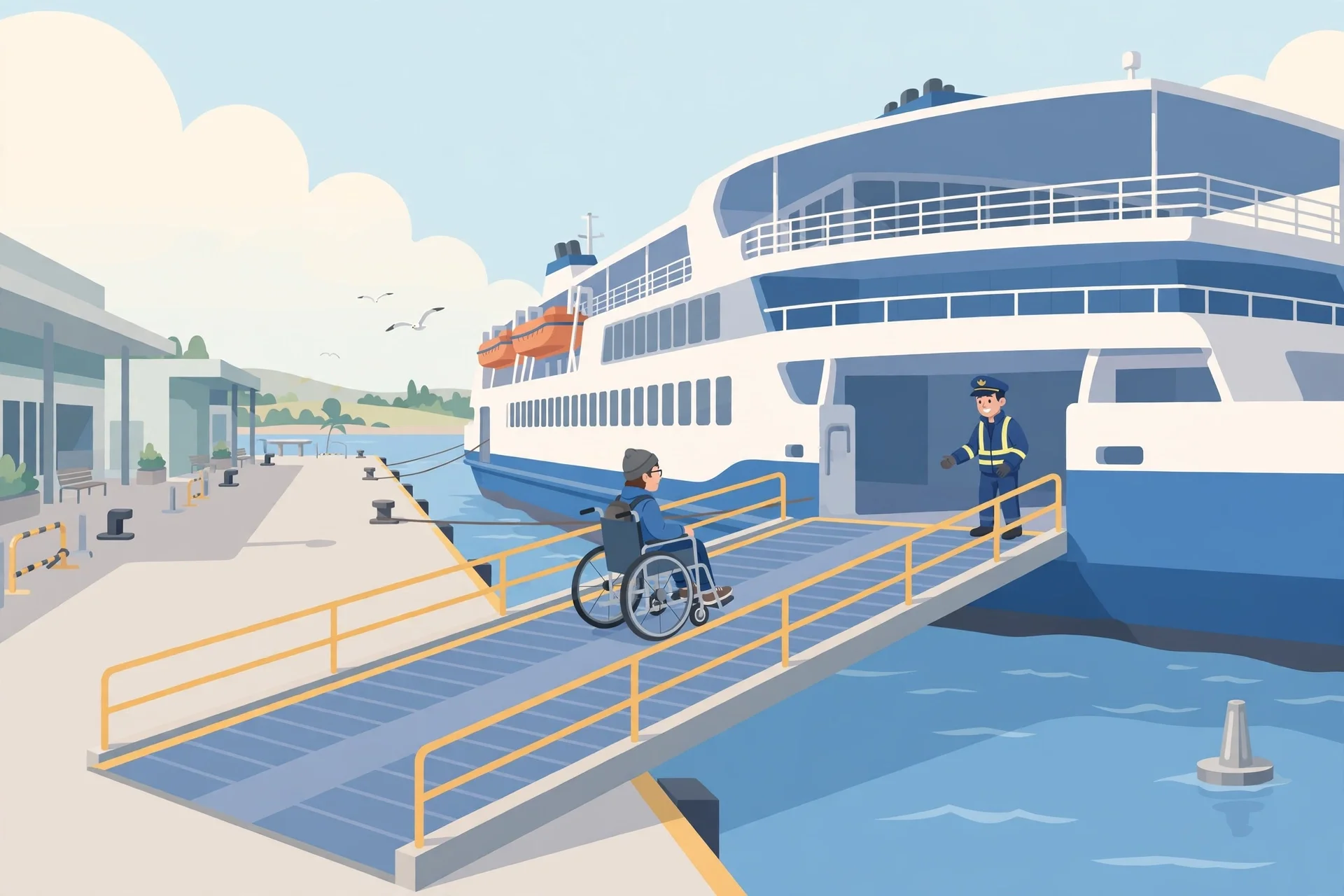
Arrive in good time and follow the operator instructions for your sailing. At the port you can expect step-free access, accessible parking and seating areas, and help with boarding, luggage and walking aids when these have been arranged in advance. Boarding may be by gangway or by bus transfer, depending on the port and the vessel, so ask in advance which method applies to your sailing and whether your wheelchair can stay with you or must be stowed. If you travel by car, ask where to park for the shortest step-free route to the lift and the passenger areas. If you use a power wheelchair, confirm the boarding route can take its weight and width, and agree with staff where it will be parked on board and how you will reach it.
On board: cabins, seating, toilets and safety
Most public areas on board larger ferries are wheelchair accessible, with accessible toilets, cabins, seating, clear signage and hearing support. On overnight routes, ask specifically about adapted cabins: they are limited in number, they differ between vessels, and they are usually allocated on a first-come basis, so book early and confirm the cabin layout suits your transfer method. Find out where the accessible toilets are relative to your seat or cabin, and ask crew about the emergency procedure for your location, including how you would be assisted if lifts are out of use. If you need to charge a power wheelchair, ask the crew where power is available and whether charging on board is permitted for your sailing.
If assistance fails or equipment is damaged
Keep a record of what was booked, who you spoke to, and what actually happened, with times. UK maritime passenger guidance describes assistance as free of charge, and says that if a ferry operator requires you to travel with a companion for safety reasons, that companion travels free on a ferry. It also says that if mobility or medical equipment is lost or damaged during the journey, the operator pays for repairs or a replacement, including temporary hired equipment. If you are refused boarding because the ship cannot safely carry you, the guidance says you are entitled to rerouting or a ticket refund. Complain first to the operator with your sailing details, then to the relevant complaint handling body, and keep copies of everything you send.