London examples come from the official Transport for London accessibility pages; Uber product details come from Uber's official uberACCESS page (UK). Policies differ by city and country, so readers should verify rules for their own destination. On 2026-10-05 direct page fetches (browser_open) failed repeatedly with browser-service errors, so facts were verified by cross-reading multiple independent official search-result excerpts from both domains; both URLs below were copied verbatim from search results.
Licensed taxis vs rideshare: two different ways to ride
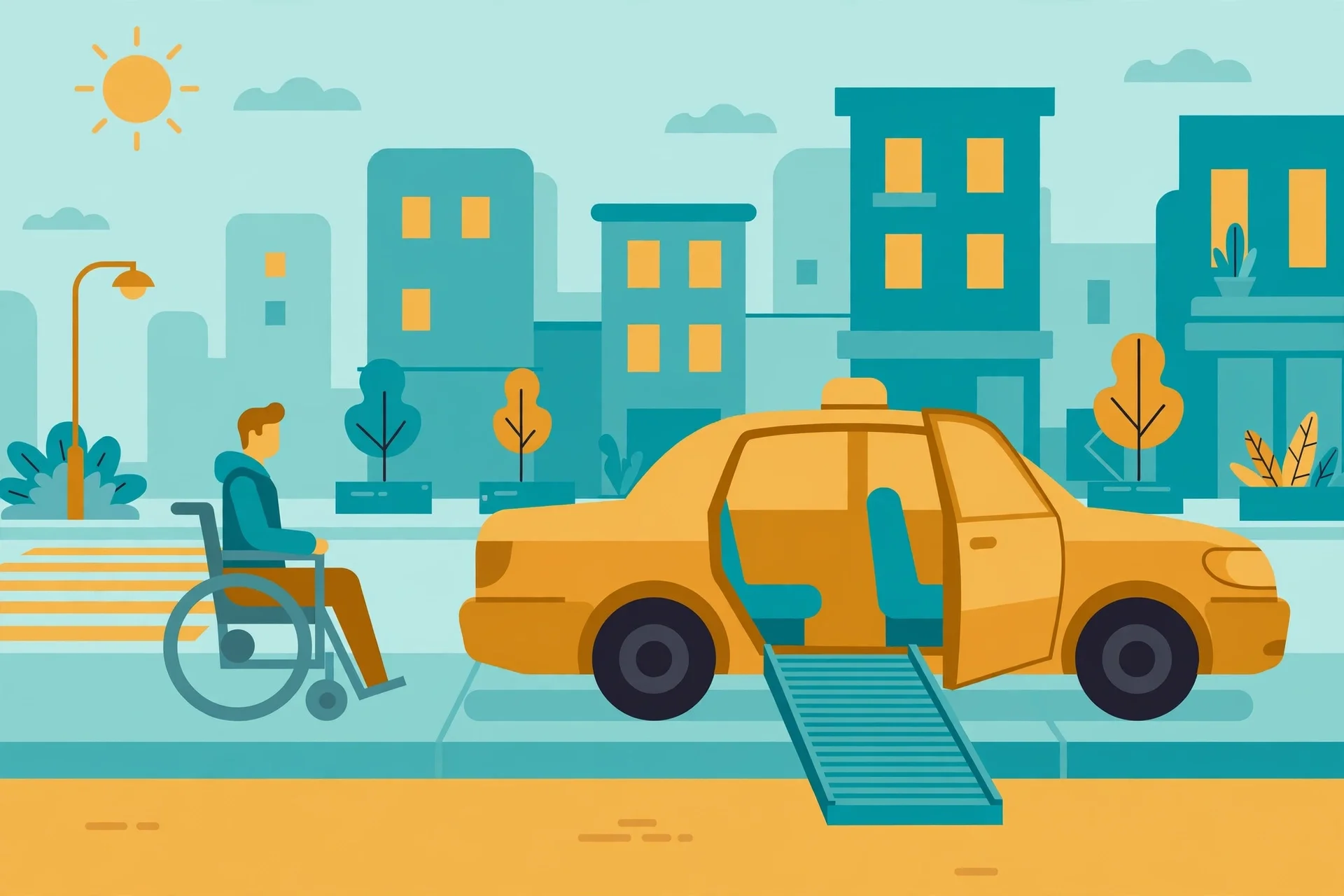
In London, every licensed taxi (black cab) is wheelchair accessible by regulation. Transport for London states that drivers must carry wheelchair users, deploy the boarding ramp, secure the chair in the passenger compartment, and make no additional charge, under Sections 164A, 165 and 165A of the Equality Act 2010. You can hail one on the street or book through a dispatch company. Rideshare platforms work differently. Uber offers two tiers: Uber Access, a fully wheelchair-accessible vehicle for riders with non-folding wheelchairs that cannot fit in an UberX, and Uber Assist, a standard UberX car for riders who need extra help and travel with a folding wheelchair, an assistance animal, or a visual or hearing impairment. Drivers on both tiers have completed an online disability-equality training developed with Transport for All and Inclusion London. The key difference: taxis must serve you anywhere they are licensed, while rideshare accessible options exist only in select cities, so check the app for your city first.
How to book in the app, step by step
Open the ride app, enter your destination, and look for the accessible option before confirming, exactly as you would pick any other ride type. In Uber this appears as Access or WAV. If you use a folding wheelchair, you can also book a standard ride: drivers are expected to accommodate walkers, canes and folding wheelchairs, and must make reasonable efforts to stow a folded chair in the boot. Because the accessible fleet is smaller than the standard one, allow extra time for the pickup, especially outside central areas or at off-peak hours. Availability, city coverage and booking style (on-demand or reservation) all vary by market. Uber's own page warns that its information may not apply in your country, region or city and can change without notice, so treat what you see in the app as the final authority.
Five things to confirm when you pre-book
First, the vehicle type: make sure you selected the accessible option, not a standard car. Second, your wheelchair's size and type: non-folding chairs need a proper wheelchair-accessible vehicle, so give the service your chair's dimensions if it asks. Third, the pickup point: tell the driver exactly where you will be and flag any access constraints, such as steps or a narrow gate. In London, pre-booked taxi and private-hire drivers have a legal duty to help a disabled passenger identify and find the vehicle when they are told the passenger needs assistance. Fourth, your assistance needs: do you need help transferring, or only ramp deployment? Say so in advance. Fifth, your booking channel: note whether you booked by app, phone or web, and keep the booking reference. Rules differ widely outside London, so never assume another city matches what you read about it.
When the vehicle arrives: what to expect
A trained driver should deploy the ramp or lift and help you board. In London taxis, the driver must secure your wheelchair in the passenger compartment and is not allowed to leave the meter running while helping you or securing the chair. Drivers who refuse wheelchair passengers or charge extra can be prosecuted; TfL asks passengers to report refusals to its taxi and private-hire team. On Uber, Access drivers have completed disability-equality training and their vehicles are designed so you can ride facing forward in your chair; Assist drivers are trained to support you in a standard car. If something goes wrong, such as a refusal or a no-show, report it through the app's help center or the local transport regulator, and keep the regulator's contact saved in your phone.
Rules change by city: always verify locally
London's rules are unusually strong: every licensed black cab is accessible and extra charges are banned by law. Elsewhere, coverage is patchier, and Uber Access and WAV operate only in select markets. Never assume that a policy you read about one city applies to another. Before any trip, open the app in your destination city to see which accessible options actually appear, check the local transport authority's accessibility page, and for important journeys such as airport connections, book earlier than you think you need to, since accessible vehicle supply is smaller. If a city page looks outdated or silent on wheelchair access, call the local dispatch or regulator before relying on it. Confirming the facts for your exact destination is the single most reliable step in this guide.