Procedures differ by airport and airline. The autonomous transfer model is specific to Changi Airport's Terminal 2 and 3 transit areas (announced 3 Sep 2026). The 48-hour booking guidance and fee/waiting-time notes are from Changi Airport's wheelchair page. Checked 1 Oct 2026.
In brief
- Wheelchair assistance is typically arranged per flight leg — the team that meets you on arrival is not automatically the one taking you to your next gate.
- Book with the airline for every segment, ideally at least 48 hours before departure; at Changi, autonomous WHILL units now carry transit passengers from the Special Service Lounge to their next boarding gate.
- Confirm onward assistance at your first airport, tell the crew before landing if the first flight is delayed, and leave a generous connection buffer.
Book assistance for every leg, not just the trip
Airlines handle wheelchair requests per flight, so a connecting itinerary means the arrival assistance and the onward assistance are booked as separate segments. Changi Airport advises passengers to book wheelchair service from their airline (or travel agent) when booking the flight, ideally at least 48 hours before departure, and to contact the airline directly for requests made less than 48 hours before the flight. Airline staff may also ask whether you can walk short distances, which helps them identify the level of assistance you need. Because handlers, terminals, and equipment can differ at each airport, assume the arrival team and the onward team are different until you have confirmed otherwise.
Who meets you when you land
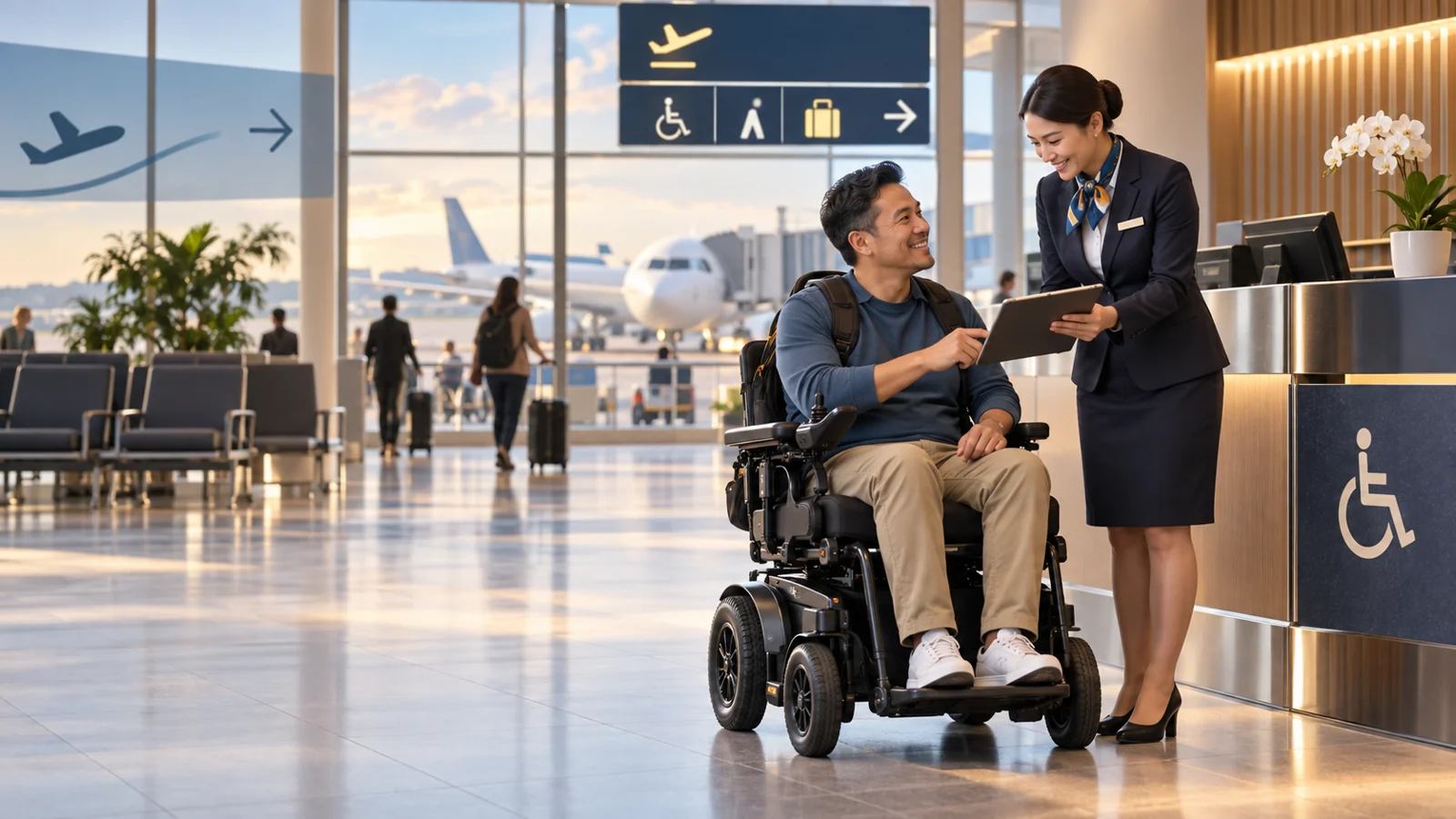
At most airports, assistance staff meet passengers at the aircraft door or at the arrival gate. At Singapore's Changi Airport, passengers may instead be greeted by the airport's WHILL Autonomous Service: since late August 2026, autonomous wheelchairs have been remotely dispatched to arrival gates in the Terminal 2 and 3 transit areas based on incoming flight schedules, greeting passengers as they disembark and carrying them to the Special Service Lounge for passengers with reduced mobility (PRMs). This fleet of up to 18 units is WHILL's largest airport deployment to date, announced on 3 September 2026 following a 10-unit trial that ran from March 2025. It is an airport-run service, not airline-run, and most airports still use human escorts — so treat Changi's model as one example, not the global norm.
How connecting passengers get to the next gate
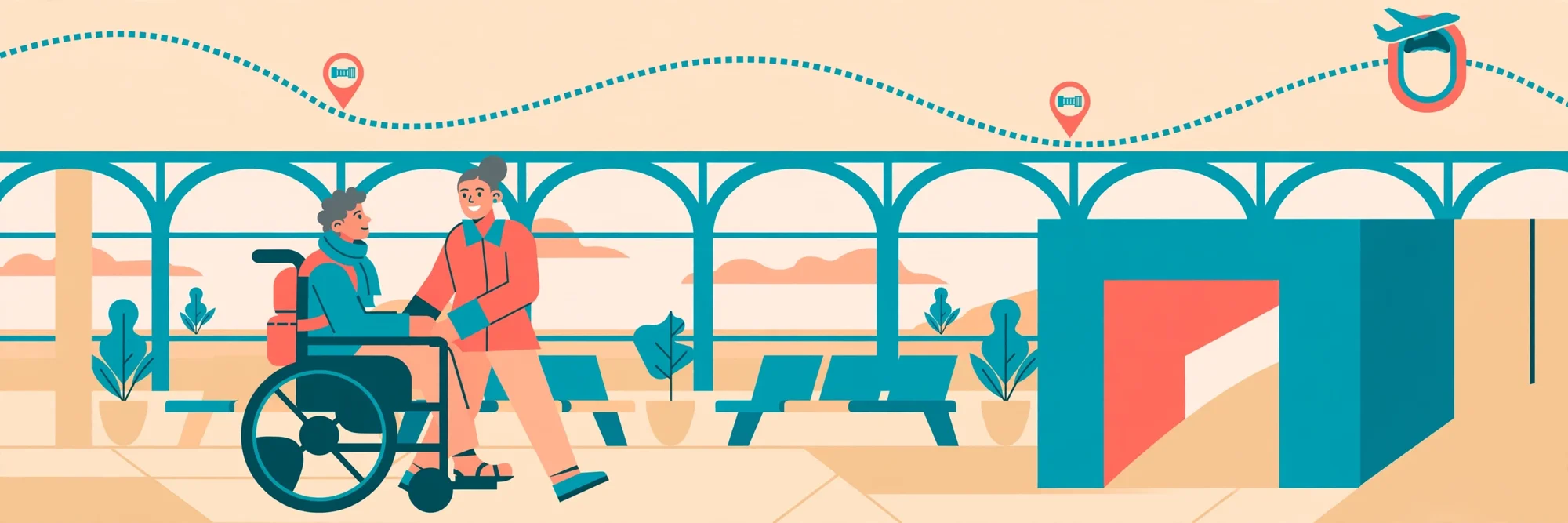
This is the part most travellers miss: arriving at the airport does not end the assistance journey when you have a connection. At Changi, for connecting passengers, a WHILL unit is redeployed to the Special Service Lounge to carry them onward to their next boarding gate — the transfer between the arriving flight and the onward flight is a second, distinct assisted leg. At other airports the equivalent step is usually a handover to a second assistance agent at the gate or lounge. The practical point: confirm at your first airport — or with your airline before you travel — that wheelchair assistance is also in place for the onward leg, especially when the connection is tight.
Confirm transit assistance at your first airport
When you check in or board your first flight, ask the airline to confirm that wheelchair assistance is on the booking for every segment, including the connection. If your first flight is delayed, tell the crew before landing so they can radio ahead for your onward assistance — the earlier the heads-up, the better the chance the next team is waiting. Be aware that during periods of high demand some waiting time for airline wheelchair service may be expected, and that additional charges may apply depending on the airline, so it is worth checking your airline's own special-assistance page before you travel.
Leave enough connection time
Wheelchair handoffs between legs take extra time: deplaning, meeting the assistance team, and moving between gates or terminals. Build margin into your connection and avoid the shortest bookable transfers when you need assistance. And remember the 48-hour rule: requests made less than 48 hours before departure are handled on a best-effort basis, so if your connection is tight or was booked late, contact the airline directly to make sure the onward leg is covered.