Applies to air travel with wheelchairs. IATA guidance reflects the 67th (2026) edition of the Dangerous Goods Regulations as published on IATA's passenger page; DOT rules apply to flights touching the United States under the Air Carrier Access Act. Airline policies vary — confirm with your carrier. Sources checked 2026-10-17.
Before You Book: Tell the Airline Everything
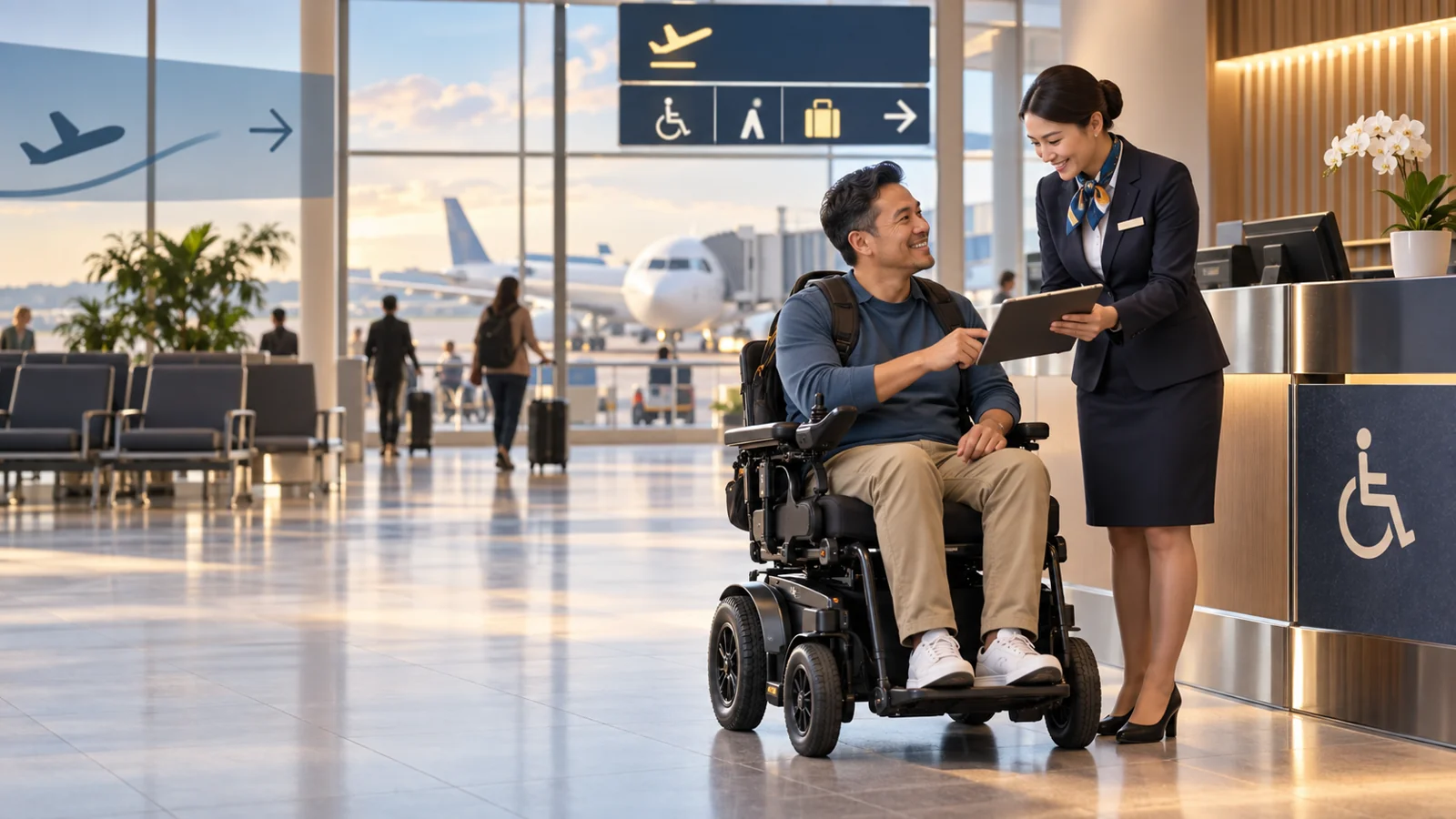
Tell the airline at booking what assistance you need — wheelchair assistance or guided assistance — and confirm the details on every airline in your itinerary. A note on one booking does not always travel to the next carrier, so the U.S. Department of Transportation advises confirming accessibility needs with all airlines involved in your journey.
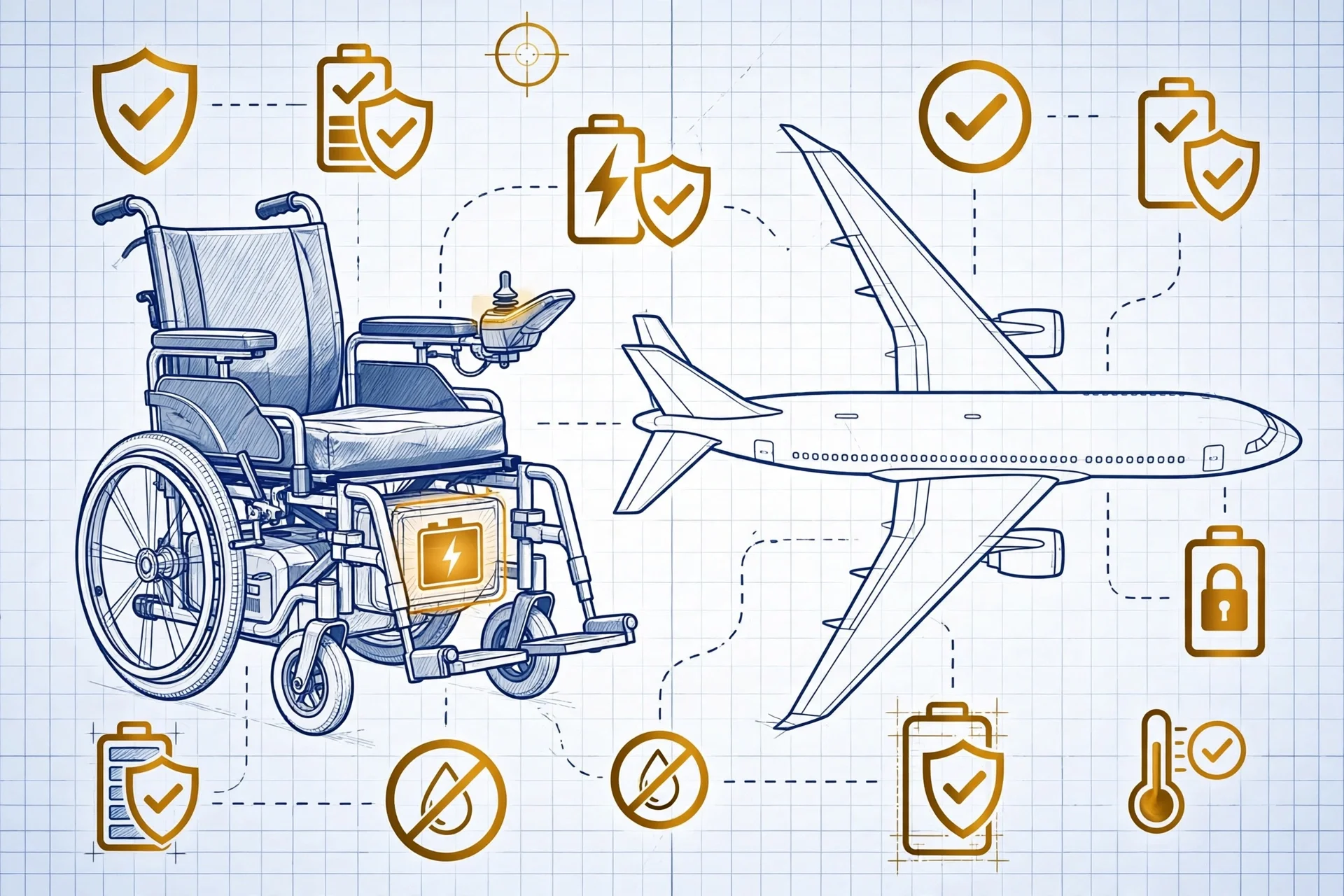
For a battery-powered chair, IATA asks passengers to make advance arrangements and to give the airline the type of battery installed plus handling instructions for the chair, including how to isolate the battery. Put this in writing — an email or the airline's assistance form — and keep a copy for travel day.
If your chair uses lithium batteries, IATA directs you to the manufacturer or distributor for the appropriate documentation. Ask for it early; it is the paperwork check-in staff may ask to see.
The DOT's tip list says travellers with a battery-powered wheelchair should arrive one hour before the normal check-in time. Build that hour into your plan rather than on top of an already tight connection.
- Photograph your chair from several angles before you leave home. - Note how detachable parts come off and go back on. - Save the airline's assistance confirmation and your battery paperwork where you can reach them at the airport.
At the Airport: Batteries, Breakdown, and the Gate
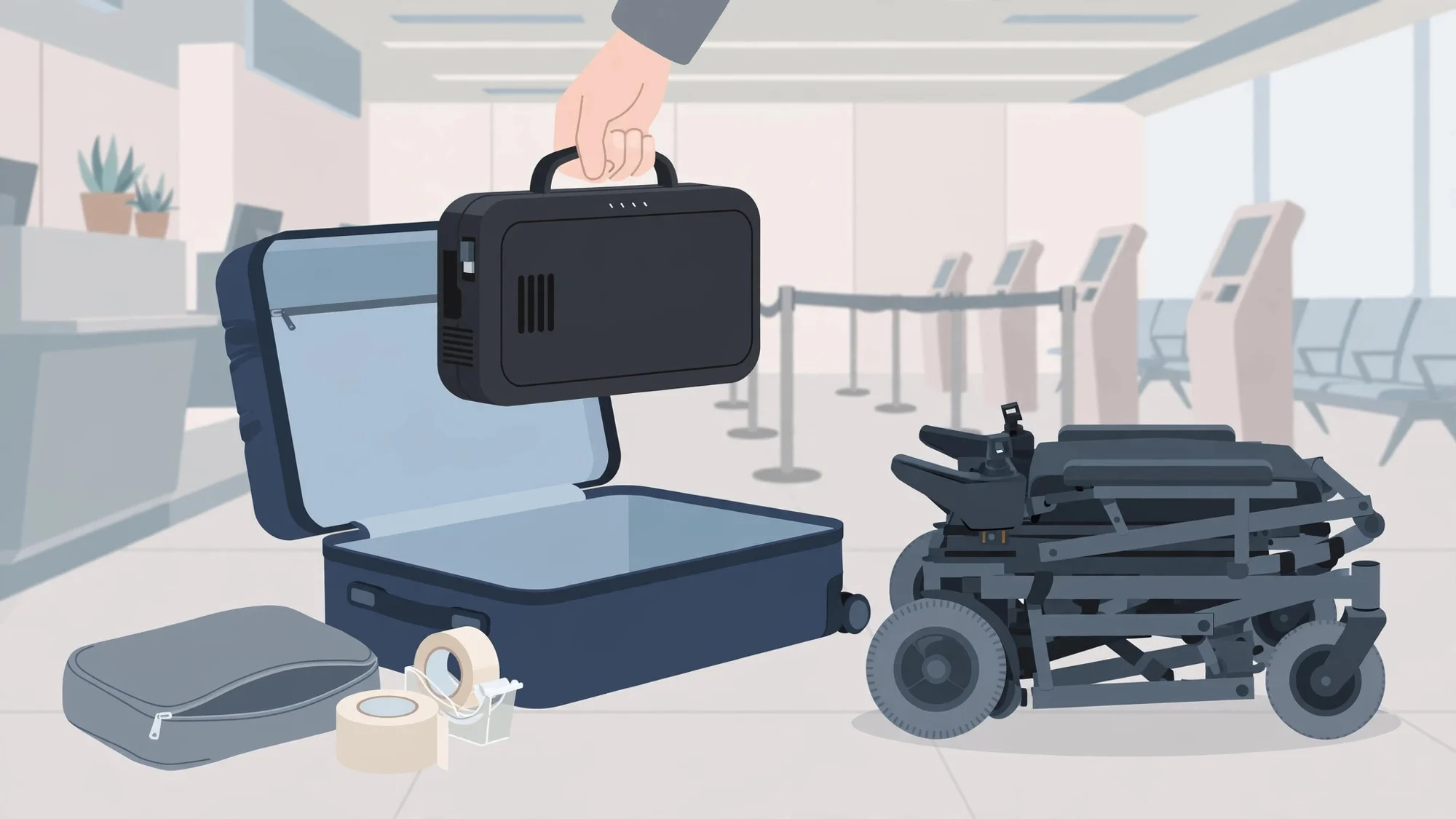
Know your battery type before you fly. IATA's passenger guidance says most modern chairs use gel-type non-spillable batteries, which are treated as non-dangerous and can travel in the cargo hold with the checked baggage. Older wet-cell batteries are different: they must be disconnected and, depending on the aircraft, removed from the chair and packed in a special box. If you are unsure which type you have, check the battery label or ask your supplier before travel day — not at the counter.
Lithium-battery chairs have additional requirements, which is exactly why IATA says to get documentation from the manufacturer or distributor first. Carry that documentation with you.
- Take removable parts into the cabin where you can: cushion, bags, and anything that detaches easily. Loose items are the first things to go missing in the hold. - Power the chair down and show staff the battery isolation point you documented earlier. - You are entitled to stay in your own wheelchair until you reach the gate. Staff take it there for loading, and it is returned to you at the gate when you land. If anyone tries to take it earlier, ask to speak with the airline's Complaints Resolution Official — airlines must make one available to you at no cost.
After Landing: Inspect Before You Roll Away
Your chair should be waiting at the gate on arrival. Do not leave the gate area before checking it: look over the frame, castors, armrests, and the battery connection, then power it on and drive a few metres to test the joystick response and the brakes.
- If anything is damaged or missing, tell airline staff immediately and ask for the Complaints Resolution Official. Damage reported later is harder to resolve. - Ask for assistance through the terminal to baggage claim, the terminal entrance, or your pick-up point. Airlines are required to help through these areas, and staff assisting a passenger who cannot move independently must not leave them unattended for more than 30 minutes. - Keep your battery paperwork and your pre-flight photos with you until you are out of the airport; both make any claim much simpler.