Wearing a Hidden Disabilities Sunflower lanyard tells airport staff, without a word, that you have a non-visible disability and may need extra help, understanding, or a little more time. It is voluntary, requires no disclosure or documentation, and is recognized at hundreds of airports worldwide — but it is not a fast-track pass and does not replace booked assistance.
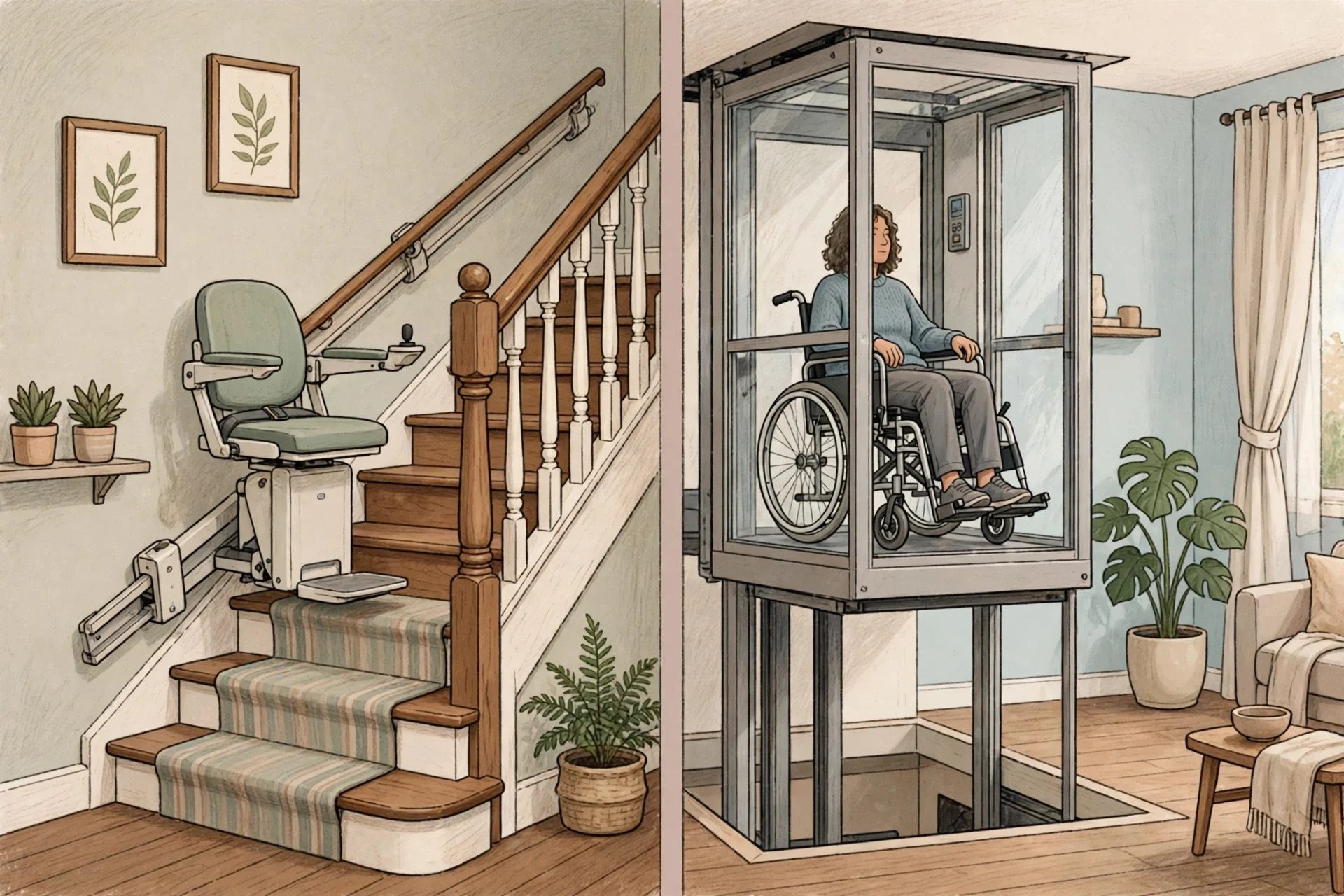
If you use a wheelchair and live in a two-storey home, the choice comes down to one question: do you need to take your wheelchair with you between floors? A stairlift only carries the person — the wheelchair stays downstairs. A through-floor home lift like the Stiltz Trio+ carries you and your chair together, ramp and all. This guide compares both options using facts from Stiltz and from Handicare (the company behind Age UK Trading stairlifts), covering space, installation, servicing and cost, so you can decide with your occupational therapist or home surveyor.
Making a tight flight connection in a wheelchair depends on assistance being booked for the connection itself — not just the first flight. Airlines generally ask for assistance requests at least 48 hours before departure, and airports advise arriving 2–3 hours early, but the connection window is where trips most often fall apart. This guide covers how to book connections that actually work, what to tell the airline, and what to do when things go wrong.
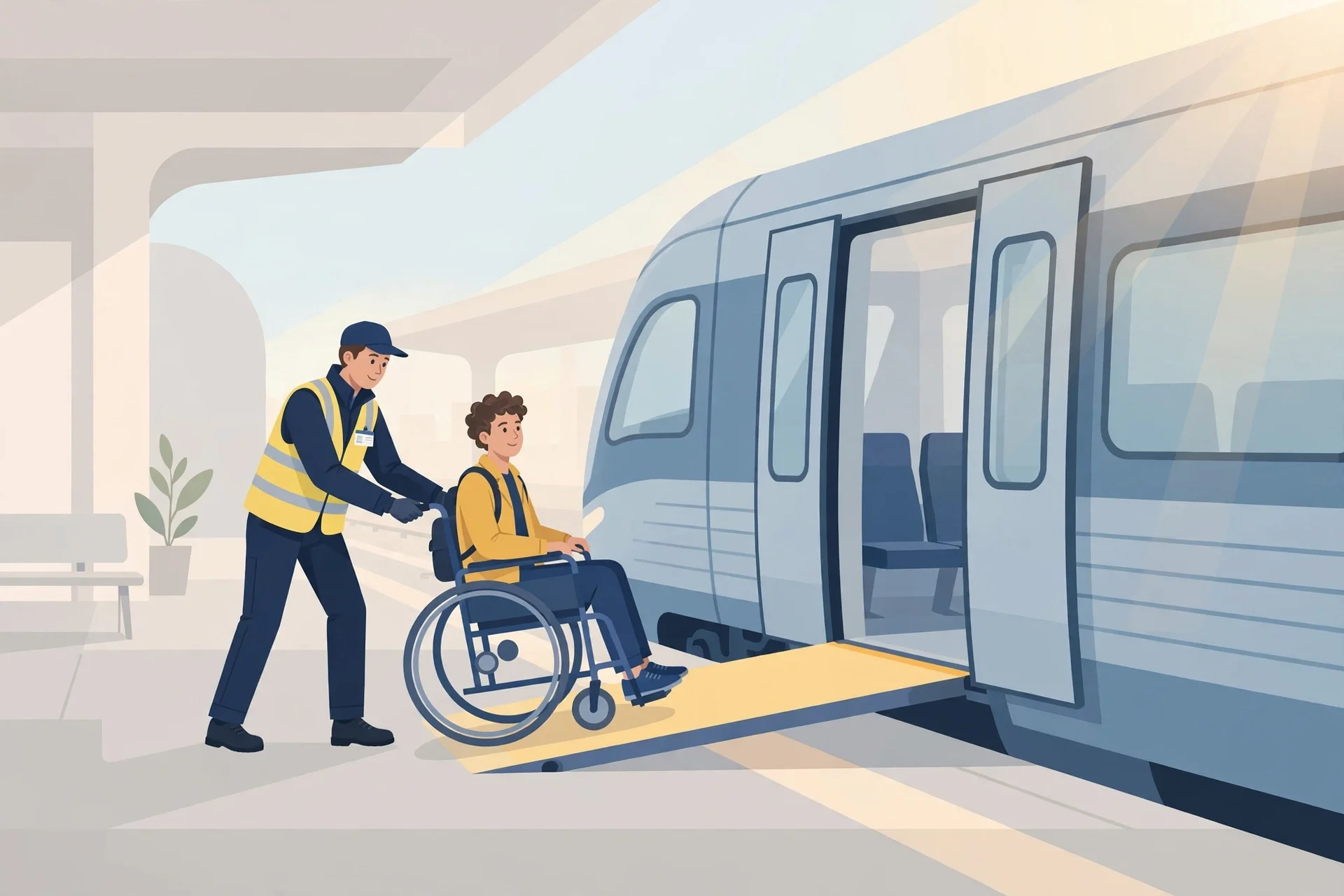
In the UK you can book free Passenger Assist at least 24 hours before travel by calling 0800 0223720, and in the US Amtrak asks you to reserve accessible space in advance through its accessible travel service. Both systems will meet you at the station, get you and your chair on board with a ramp or lift, and hand you over at your destination — but only if you tell them you are coming.
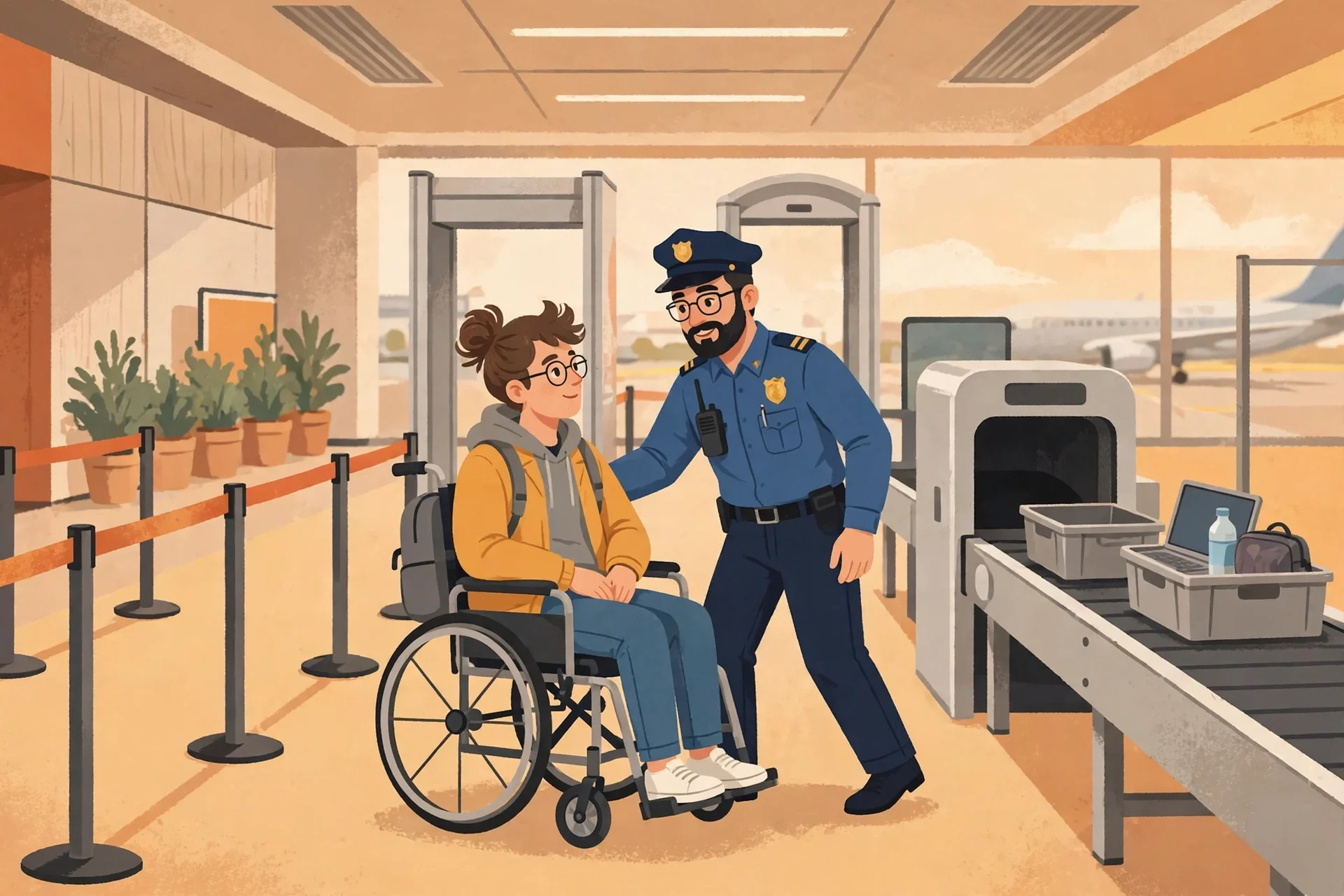
TSA Cares can make US airport security screening easier if you travel with a wheelchair — but it does not provide the wheelchair itself. Call (855) 787-2227 or use the online form at least 72 hours before departure to request a Passenger Support Specialist, and arrange wheelchair service through your airline when you book. This guide explains how the two systems work together so nothing falls through the gap.
Tunstall Healthcare has launched ILOS, the Independent Living Operating System — an open platform that connects housing, health and social care data so telecare teams can spot changing needs before they become crises. Announced on 1 October 2026 after a 12-month beta trial, ILOS is now available for commercial deployment across the UK's alarm receiving centres.
An open day is the best chance to find out whether a university will actually work for you as a wheelchair user, not just whether its prospectus says it is accessible. UCAS advises disabled students to contact the university disability team before the day, and its own student stories show that the answers you get on the day are a useful test of the institution itself. This guide covers what to arrange in advance, what to test on campus, and what to do if you cannot attend in person.
Self-driving wheelchairs are no longer experiments: as of 2026, several major US airports offer autonomous mobility chairs that let eligible passengers travel to their gate without waiting for a staff escort. Los Angeles and Miami run full commercial services, while Seattle, Detroit and Anchorage operate pilots — here is where to find them, who can use them, and what to expect.
Absolutely. As a wheelchair user, you can get into more than 2,000 federal recreation sites free with a lifetime Access Pass, and five of Utah's most famous national parks now lend out beefy all-terrain wheelchairs at no charge. The whole system runs on one card, one phone call to the park, and a same-day loan form. Here is how the pass works, what gear you can borrow, and what to do the morning of your visit.
Village halls are the most local venue most people will ever use: a coffee morning, a club, a class, a party, all within a few miles of home. That closeness is also the risk, because a hall run by volunteers may never have published an access guide at all. Cambridgeshire ACRE supports trustees with over 40 information sheets covering accessibility among other topics, and a Devon audit of 290 village halls found halls seating 51 to 100 people for a sit-down meal in 49 per cent of cases. This guide gives you the questions that turn a village hall from a guess into a plan.
A Jobcentre Plus visit works best when you ask for a Disability Employment Adviser before you arrive, and know that Access to Work is a separate grant for people in or about to start paid work. Disability Employment Advisers can advise on adjustments, arrange employment assessments and refer you to work programmes, whether you are working or looking for work. This guide separates the office visit from the grant, so you ask the right team for the right help.
Ask how an alert is triggered, who receives it, which connection it needs and how delivery is confirmed. An SOS label alone does not establish a monitored emergency service.
Allow optional first-party analytics to understand page visits, clicks and approximate visitor countries. We do not collect search text, form entries or precise location. Privacy and choices