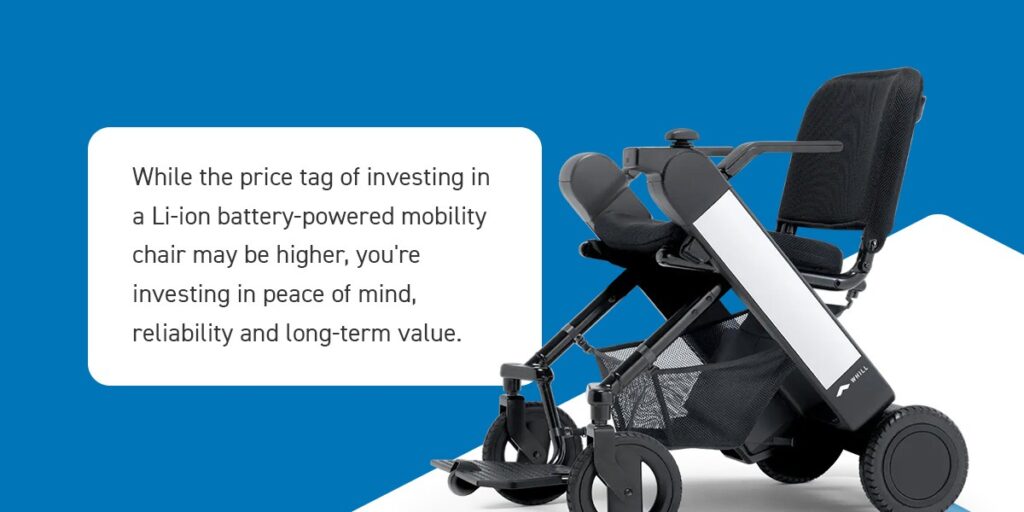
Lithium and lead-acid batteries: compare the whole system
Chemistry affects a mobility device, but it is not a standalone upgrade choice.
Read the guide
Practical answers, organised around the way you live.
97–108 of 226 articles
Chemistry affects a mobility device, but it is not a standalone upgrade choice.
Read the guideYes — and you don't have to book ahead. Every London bus (except heritage routes 9 and 15) is a low-floor bus with a ramp and a designated wheelchair space, and wheelchair users get priority over that space even when a pushchair is already in it. Drivers are supposed to pull tight to the curb, lower the bus, and ask other passengers to make room. Here is exactly how boarding works, what to do when the space is taken, and the free extras TfL offers.
Read the guidePractical uncertainty and feelings about identity both deserve space in a buying conversation.
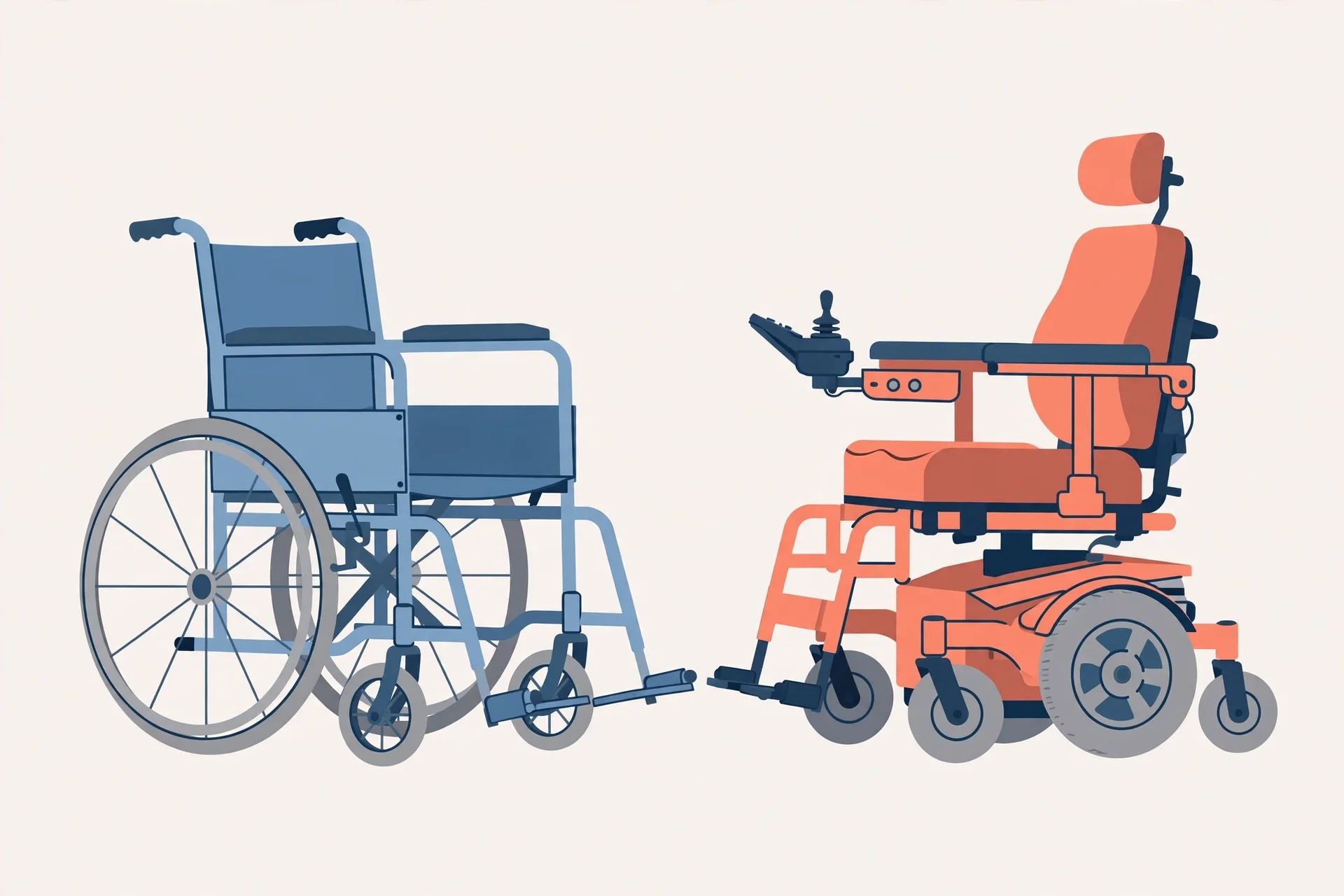
Read the guideThe first big decision in choosing a wheelchair is manual versus powered — and it usually comes down to your level of independence: whether you can propel yourself, where you will use the chair, and how your needs may change. This guide walks through the honest trade-offs of each, so you can arrive at an assessment knowing the right questions to ask.
Read the guideThe choice between a manual and a powered wheelchair usually comes down to three things: whether you can propel a manual chair safely all day, where you will use the chair most, and who will maintain it. In the UK, the NHS wheelchair service assesses exactly these factors before prescribing either type — and its categories are a useful framework even if you are buying privately.
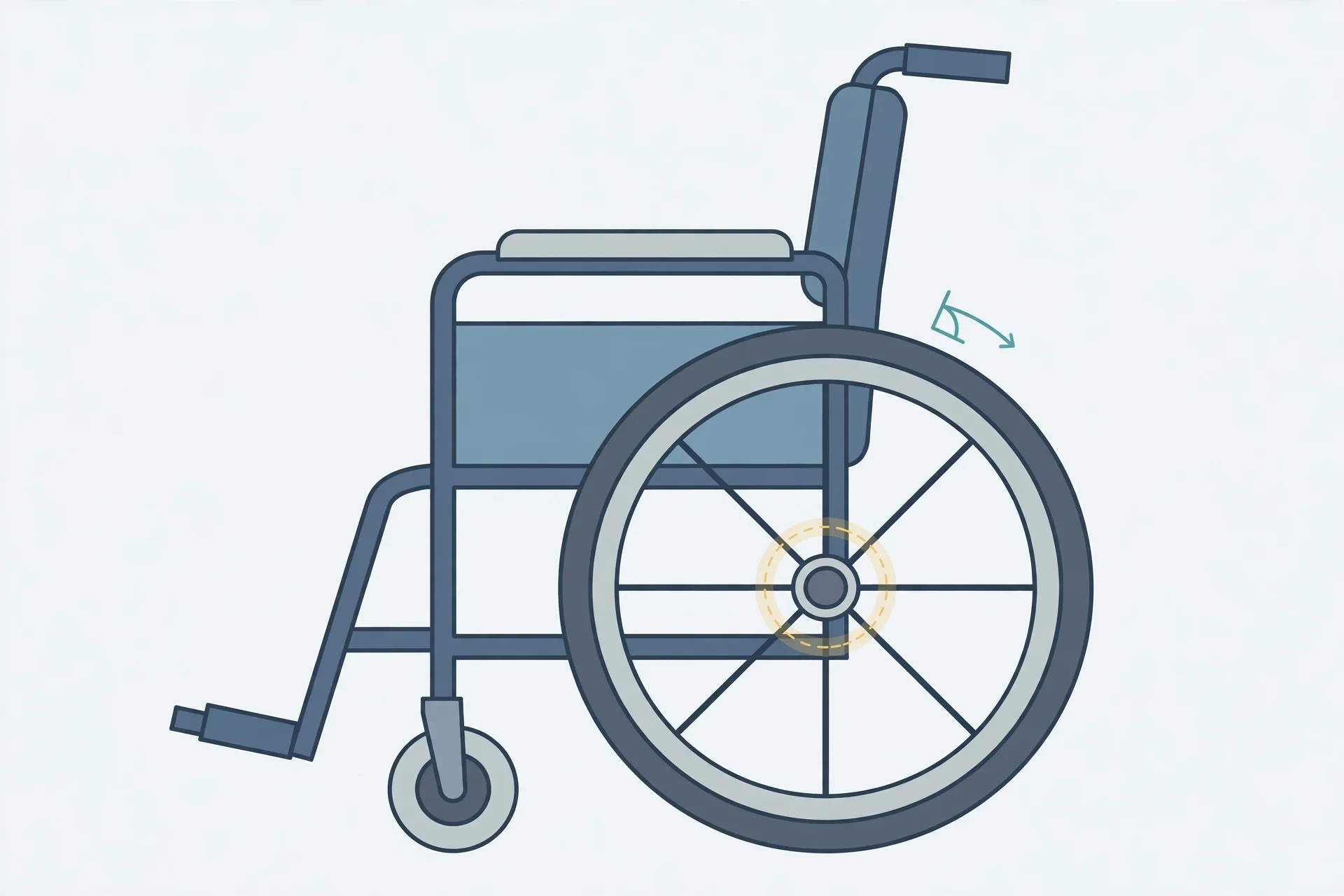
Read the guideMoving a manual wheelchair's rear axle forward generally makes the chair easier to push — less rolling resistance, a longer push stroke and more of the handrim within reach — but it also makes the chair tippier backwards. Clinicians call this balancing the centre of gravity, and getting it right is one of the highest-value adjustments on an active wheelchair. Here is what the clinical guidance says.
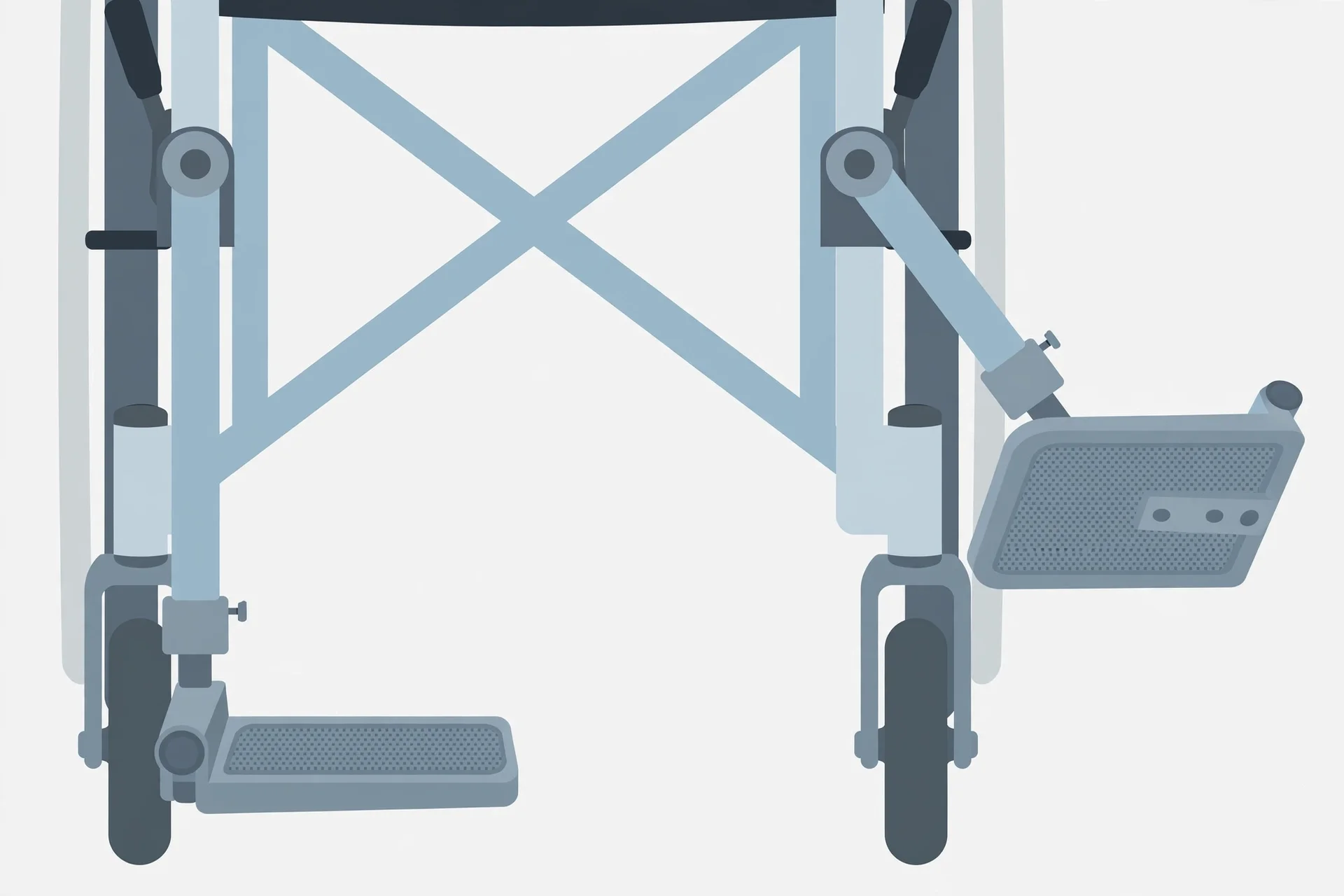
Read the guideSwing-away footrests are the safest bet if you transfer in and out of your chair often; elevating leg rests suit days when your legs need raising. Here is the full menu, how each type works, and how to get the height right.
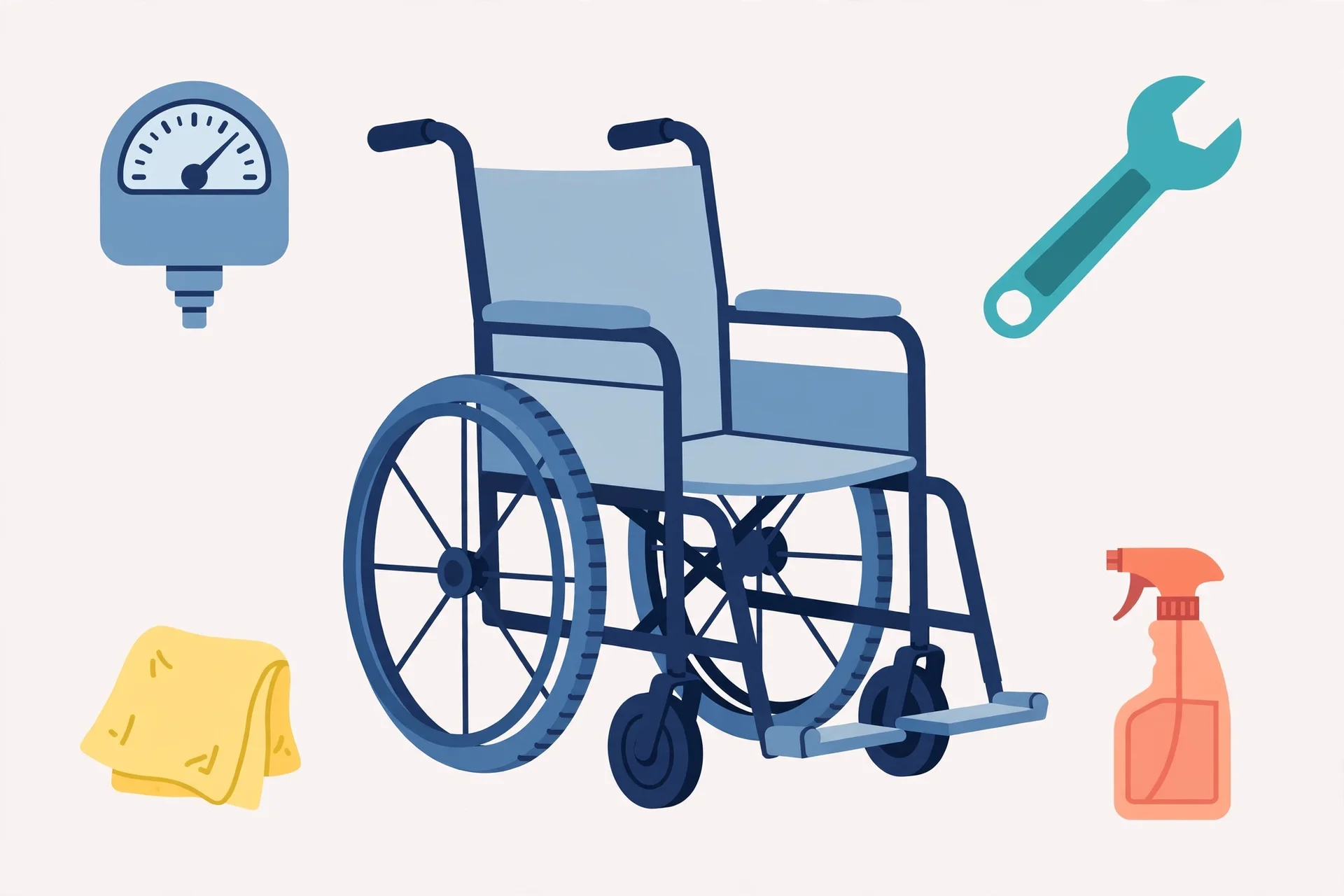
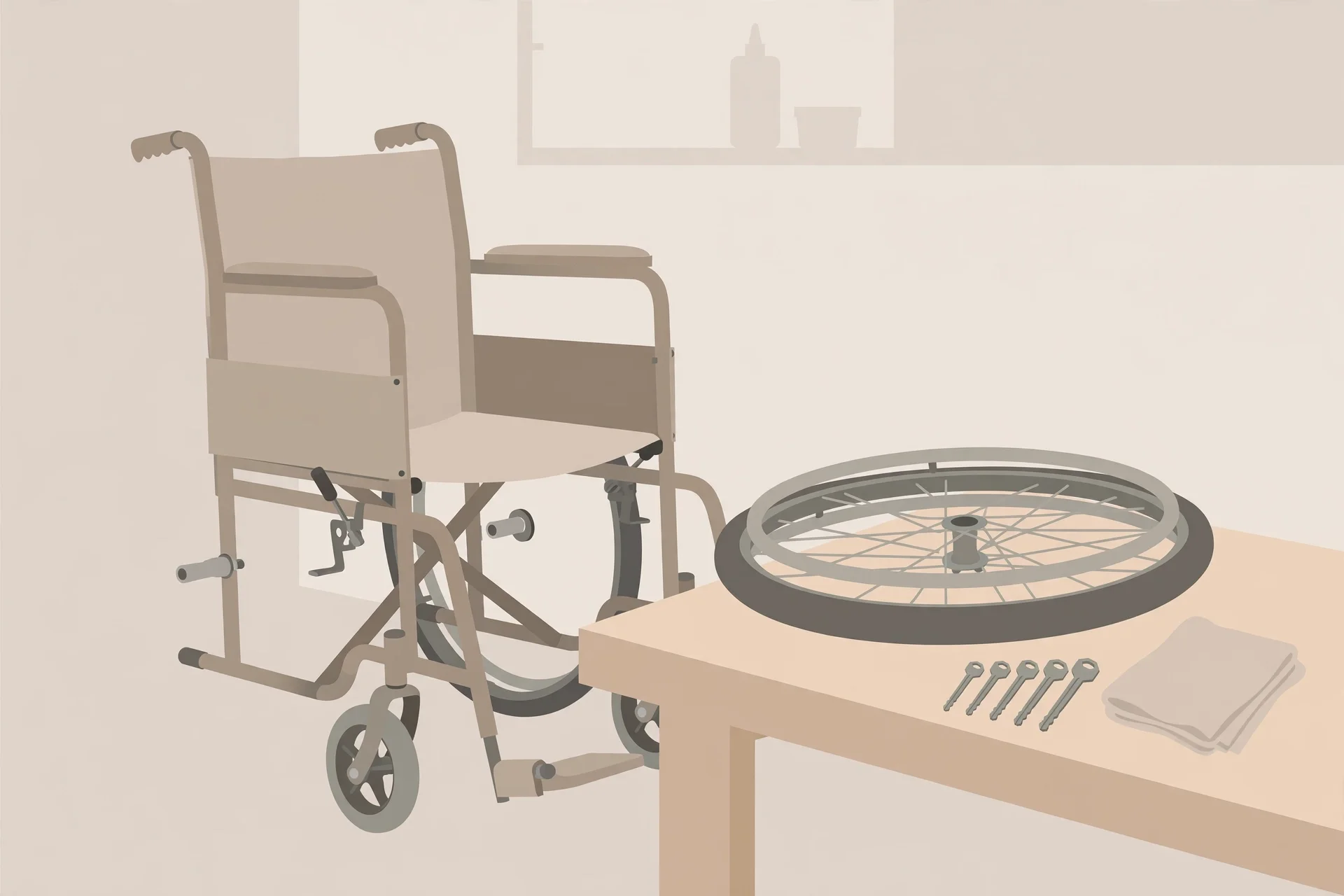
Read the guideA manual wheelchair stays safe and reliable through short, regular checks rather than occasional overhauls. Manufacturer guidance — including Ottobock's wheelchair manuals — breaks maintenance into quick pre-ride checks, monthly inspections and proper cleaning. This checklist distils that guidance. It covers manual wheelchairs only; power wheelchairs have different needs and are covered in a separate guide on this site.
Read the guideA manual wheelchair is a simple machine, and simple machines reward simple habits. Wipe it down and check the tyres and wheel locks every week, go over the hardware and castors every month, and have a qualified technician inspect it once a year. Follow that rhythm — drawn from rehabilitation maintenance guidance and manufacturer schedules — and most breakdowns never happen.
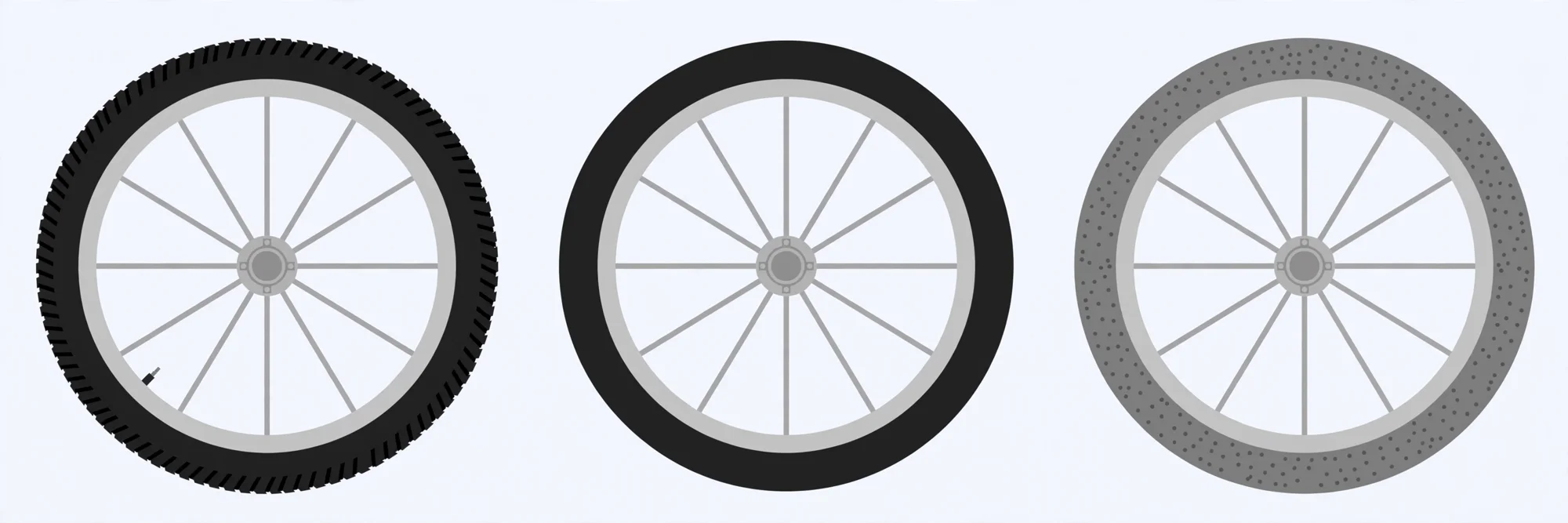
Read the guidePneumatic tires roll easiest and ride softest, but solid and foam-filled tires win if you want zero maintenance. The right choice comes down to your weight, your terrain, and whether anyone can pump a tire once a month. Here is what the research and the manufacturers say.
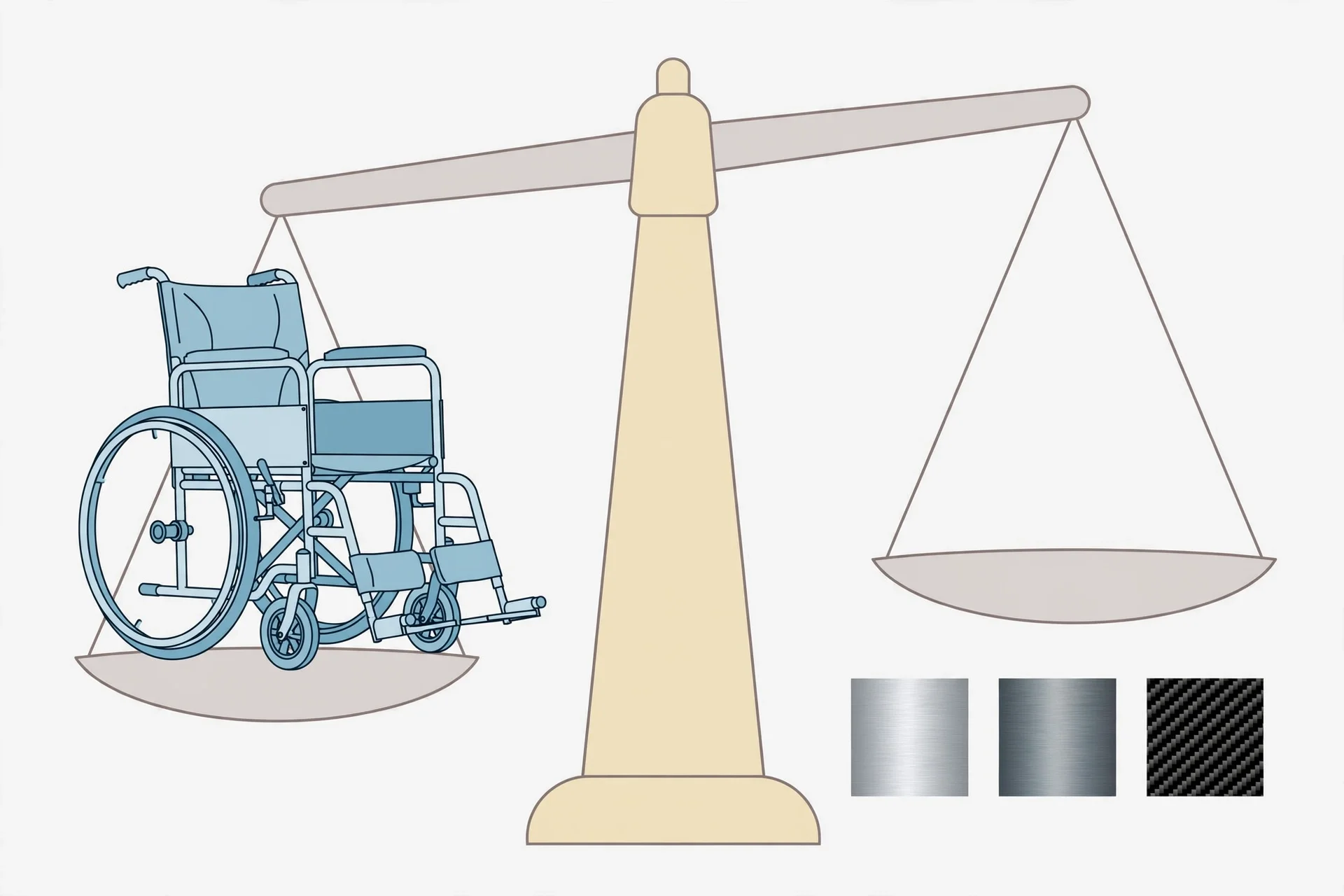
Read the guideWheelchair weight matters — every push moves the chair as well as you, and someone has to lift it into the car. But weight alone does not decide how a chair performs: clinical guidance stresses that proper configuration (axle position, seat set-up) matters at least as much as the number on the scale. This guide explains what makes a manual wheelchair light or heavy, and how to weigh the trade-offs when choosing.
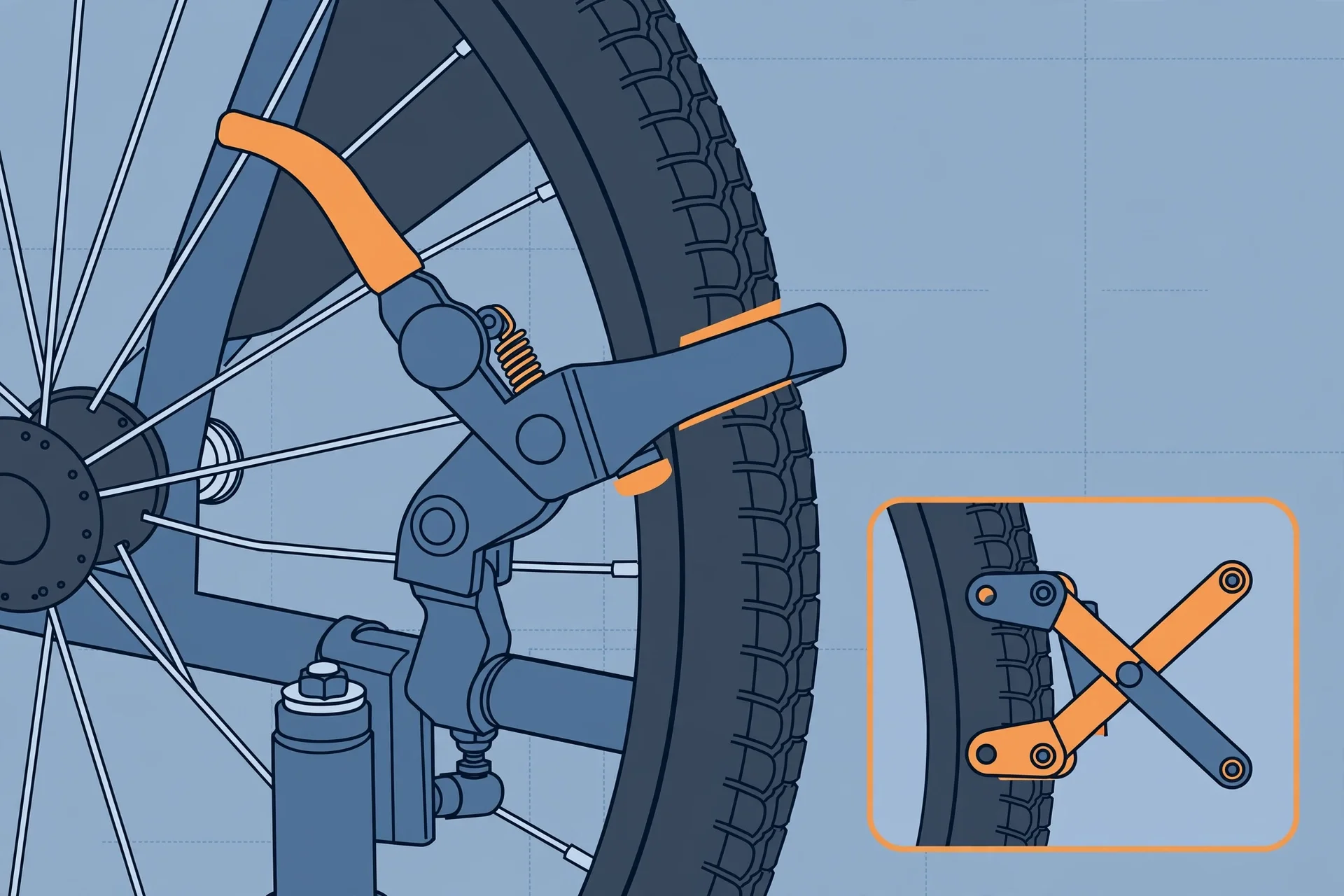
Read the guideManual wheelchair wheel locks come in several distinct types — knee-lever, scissor, push-to-lock and pull-to-lock, one-handed, and attendant-operated drum brakes — and they all do the same job: keeping a parked chair from rolling away. This guide explains how each type works and the simple everyday checks that keep them reliable, based on current manufacturer instructions for use.
Read the guideAsk how an alert is triggered, who receives it, which connection it needs and how delivery is confirmed. An SOS label alone does not establish a monitored emergency service.
Read more